Light and Atmosphere
The Living Room That Thinks It Has Stadium Lights
A dark, polished everyday room built from cherry, cola, copper, smoked glass, layered viewing zones, and lighting dramatic enough to make Tuesday night feel televised.
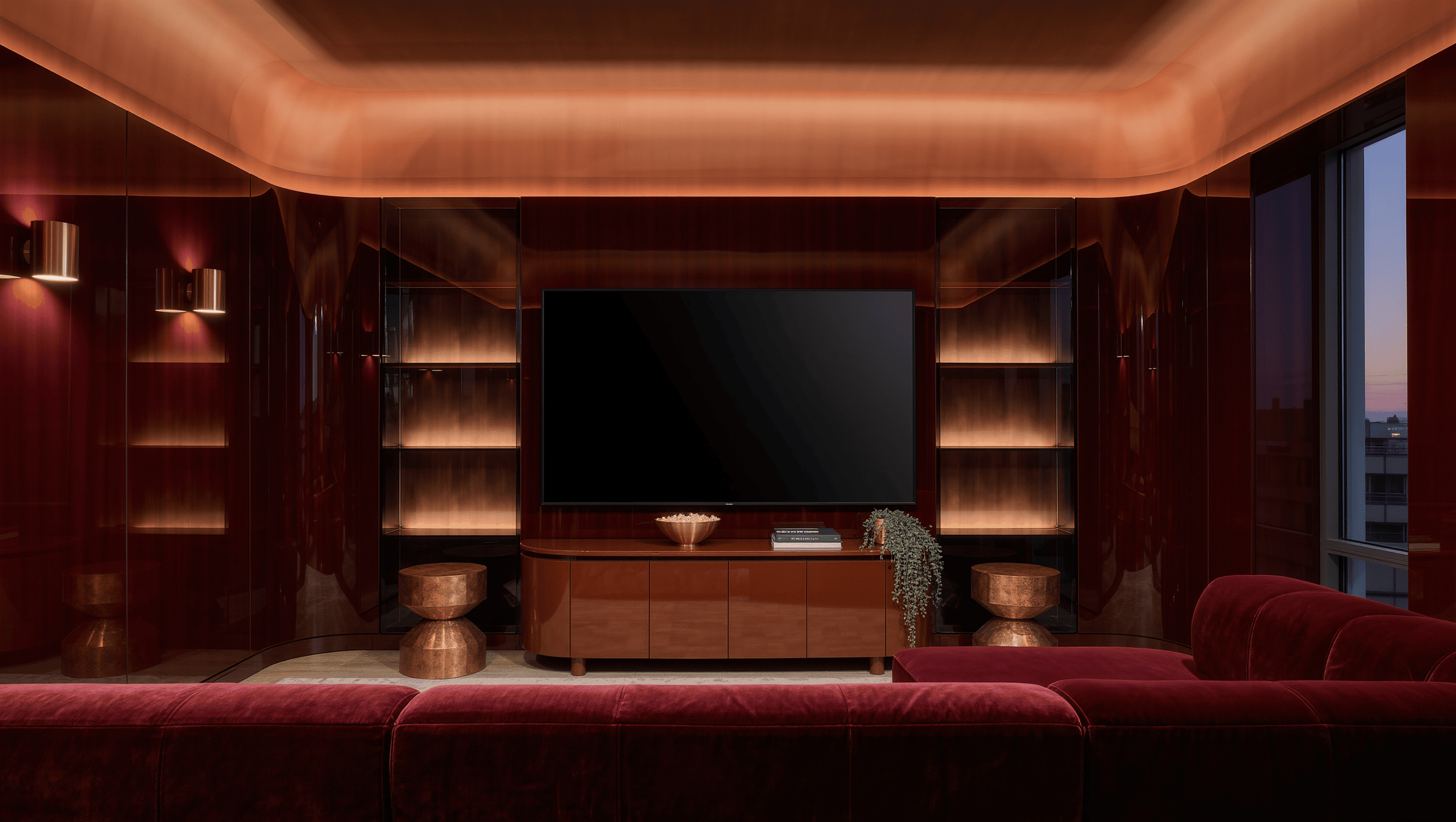
Some media rooms look as though a television arrived first and the rest of the furniture surrendered. One enormous black rectangle commands the wall. Every chair points toward it. The ceiling light is either painfully bright or completely off. Conversation becomes a side effect.
This room starts with Tangled Thistle’s Atmosphere Library: tart cherry, cola brown, copper light, smoked glass, and the directional glow of a stadium after sunset.
The goal is an everyday living room or den that can carry a major watch night without behaving like a sports bar for the other 364 days.
Decide What the Room Should Feel Like After the Screens Go On
Decide how often the screen leads and what else the room must do: conversation, reading, games, music, work, children’s play, or hosting.
The television can be an important focal point without becoming the room’s only relationship. Secondary uses need credible seats, light, surfaces, and storage rather than being treated as interruptions to viewing.
Turn Down the Stadium Lights

Design the seating for two modes: screen and social.
Keep the primary sofa in a comfortable viewing relationship, then place at least one chair or movable seat so it can address both the screen and another person. Swivel chairs, lighter occasional chairs, or a seating angle can allow the room to change without a furniture evacuation.
The main route should pass behind or beside the seating group, not between the screen and viewers.
Make the Screen Part of a Wall
A television becomes more dominant when it sits as a black rectangle on a pale, empty plane. A darker or more visually structured background can reduce that contrast and allow the screen to recede when off.
This does not require surrounding it with crowded shelving. Use a dark wall, broad cabinet, acoustic panel field, restrained millwork, or substantial artwork nearby. Keep the composition quiet enough that viewing does not become visual competition.
Cherry, Cola, and Copper Without the Sports-Bar Costume
Cola brown can appear in timber, leather, upholstery, or a broad rug. Cherry or oxblood should carry one focal object or textile field rather than scatter across accessories. Copper or warm bronze belongs where it catches light: a fixture, table edge, hardware, or narrow frame.
Black and smoked glass can support the screen and tables, but they need matte textile and warm material nearby. Avoid logos, novelty signs, themed memorabilia walls, and red distributed at maximum saturation.
The Screen Is a Lighting Problem
One bright ceiling fixture produces glare, flattens the room, and makes viewing uncomfortable. Total darkness creates eye strain, unsafe routes, and a room that cannot support conversation.
Use low ambient light, a controlled source behind or near the screen where appropriate, and shaded lamps away from direct reflection. Keep bright bulbs out of the screen angle and test from every regular seat.
The room needs several scenes: ordinary conversation, reading or games, viewing, and post-event cleanup. Each should be achievable without turning on every source.
Light the People, Not Just the Wall
Watch parties and movie nights still involve food, faces, and movement. Provide enough side or table light for drinks and conversation before and after the main event.
A copper or warm-metal source can create the stadium-edge glow without turning the room orange. Reflection should appear in selected lines, not across every surface.
Acoustics Are Part of the Experience
Sound should be intelligible at a reasonable level and should not make ordinary conversation impossible. Rugs, curtains, upholstery, books, felt, and other suitable absorption can reduce harsh reflection.
Place speakers and seating according to the room and equipment rather than assuming symmetry alone produces good sound. Avoid blocking vents, controls, or required equipment clearance.
Serving and Hosting Without Blocking the View
Provide distributed surfaces so drinks and food do not rely entirely on one coffee table. Keep the refill route outside the main sightline and protect the path to the kitchen or service area.
Used dishes, waste, and extra supplies need a destination that does not become another station in front of the screen.
Storage Should Make the Event Disappear
Games, controls, cables, blankets, serving pieces, and occasional memorabilia need closed or edited storage near use. The room should return to ordinary life without leaving event equipment on every surface.
Dark cabinetry can reduce visual noise, but its doors and drawers must open without blocking circulation or occupied chairs.
The Quiet Part of the Room
Keep one zone that does not face the screen directly: a reading chair, window position, games table, or conversational edge. It allows the room to support someone who is not watching and prevents the architecture from becoming a single-purpose auditorium.
This secondary zone should be connected through material or light, not isolated as leftover furniture.
The Clever Move
Run a screen-off test. Turn the television off for an evening and use the room for conversation, reading, or games.
Notice whether the seating still relates, whether lamps support the activity, and whether the black screen remains the strongest object. Correct those relationships before adding themed decor or more viewing furniture.
A Working Sequence
- List screen and non-screen uses by frequency.
- Protect the route and create two seating modes.
- Reduce contrast around the television.
- Build conversation, viewing, and cleanup lighting scenes.
- Add acoustic softness and distributed landing surfaces.
- Provide point-of-use storage.
- Use cherry once, cola as warmth, and copper as controlled light.
- Test the room with the screen off.
What to Leave Alone
Do not replace comfortable seating solely to create a darker palette. Do not hide good architecture behind a wall of equipment. Do not force the screen off-center or into an unsafe installation merely to make it appear less important.
The room succeeds when the screen can lead for a big night and then return to being one participant in a living room with other ambitions.


