Room for Drama
Outside, but Make It a Room
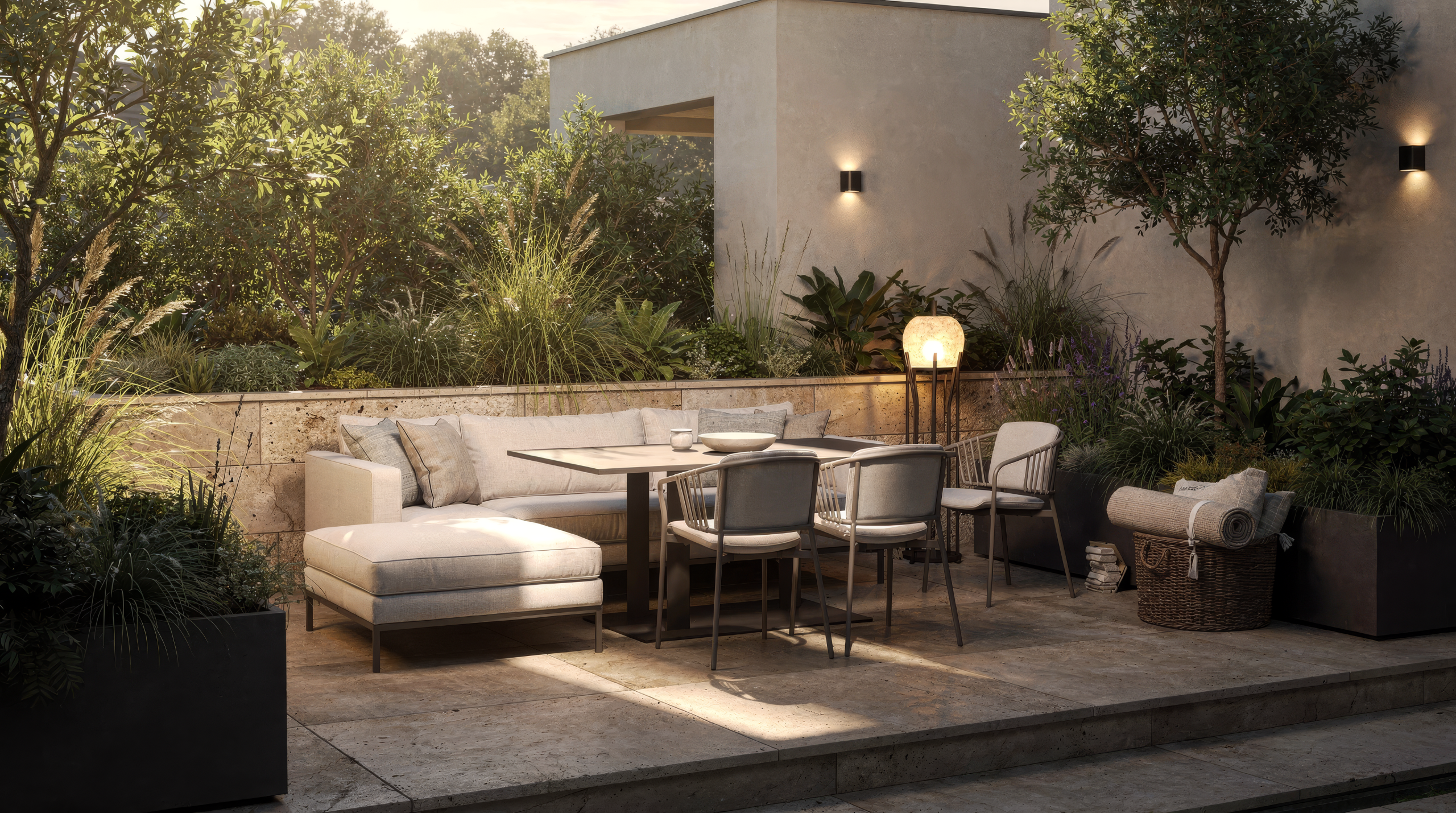
Outside, but Make It a Room is Room for Drama’s editorial collection for patios, porches, balconies, garden structures, yards, and exterior spaces designed around shelter, boundary, light, comfort, and a clear reason to stay.

Outside, but Make It a Room
The sky is not a ceiling. The space still needs a point of view.
Yards, patios, porches, balconies, garden structures, outdoor dining areas, private retreats, and the uncertain territory between indoors and out. An exterior becomes a room when people know where to sit, why to stay, how to move through it, and what happens after sunset.
Outside is not the absence of architecture
Patio furniture is not a room. It is only the beginning of an alibi.
A convincing outdoor room has a job, an edge, a center of gravity, and a reason to remain occupied when the novelty of being outside wears off. It responds to sun, wind, privacy, access, planting, sound, maintenance, and the fact that weather has no interest in preserving the photograph.
01 / A boundary
The room needs an edge, even when the edge is alive.
A wall, hedge, pergola, curtain, change in paving, line of planters, overhead canopy, or shift in level can tell the body that it has arrived somewhere rather than stopped temporarily in the yard.
02 / A reason to stay
A room needs a verb, not merely a view.
Eat, read, gather, nap, garden, work, bathe, make, play, or watch the weather arrive. A clear activity determines the furniture, surface, shade, light, storage, and amount of privacy that actually matter.
03 / A longer day
The room should not disappear when daylight does.
Layered light, warmth, wind protection, reachable surfaces, and a believable path back indoors determine whether the room survives evening or becomes an expensive arrangement admired through glass.

Enclosure without imprisonment
The outdoors should remain outdoors. It simply needs enough structure to become somewhere.
The strongest outdoor rooms do not attempt to reproduce a living room under hostile conditions. They use the qualities of the site: moving air, changing light, sound, scent, shadow, vegetation, distance, and the pleasure of being slightly less protected than usual.
Enclosure can be partial. A canopy creates a ceiling without closing the sky. A hedge makes privacy without building a wall. A rug or paving field establishes a floor. A cluster of lights lowers the perceived ceiling after dark. The room is formed by relationships, not by pretending rain has been abolished.
The six materials of an outdoor room
Furniture matters. The conditions around it matter more.
Ground
Paving, gravel, decking, grass, tile, stone, or a rug establishes where the room begins, how chairs sit, how water moves, and how confidently people cross the threshold.
Edge
Walls, fences, screens, planting, curtains, level changes, and views determine privacy, orientation, exposure, and whether the room feels held or stranded.
Overhead
Trees, umbrellas, pergolas, awnings, roofs, and open sky control shade, weather, scale, and the degree to which the room feels protected without losing its exterior character.
Comfort
Seat depth, support, surface temperature, wind, insects, reachable tables, and the distance back to the house decide whether anyone remains after the first drink.
Planting
Plants can divide, screen, shade, soften, direct movement, hold scent, frame a view, and change the room over time. Greenery is spatial material, not garnish.
Light
Path light, task light, low ambient glow, illuminated planting, and a controlled focal point create depth and safety without turning the garden into a parking lot.
Design across time
A successful outdoor room changes its behavior without losing its identity.
Morning
Where does the first useful shade land? Is there a dry chair, a place for coffee, and a path that does not require moving last night’s cushions before becoming human?
Afternoon
Heat, glare, wind, traffic noise, and competing routes become obvious. The room may need movable shade, a second orientation, or permission to rest during its worst hour.
Evening
Light should reveal routes, faces, food, and planting at different heights. One bright source flattens the room; several controlled pools of light create depth and intimacy.
Off-season
A room should still read as a room when cushions are stored, leaves have dropped, or snow occupies the floor. Structure, planting, and one durable focal point carry the composition.
Enter by the outdoor problem
Find the exterior space that is waiting for a stronger premise.
Outdoor Rooms
The main spatial library for exposed and transitional spaces, including function, access, enclosure, comfort, light, and weather.
Created Outdoor Rooms
Build a convincing room where architecture does not already provide one, using boundaries, overhead conditions, ground planes, and focal points.
Awkward Outdoor Spaces
Narrow side yards, exposed corners, sloped ground, interrupted footprints, and places where access or weather keeps winning.
Hosting Layouts
Arrange arrivals, drinks, food, conversation, movement, and weather contingencies without turning the host into outdoor traffic control.
Plant Rooms
Use planting to divide, screen, frame, soften, shade, and direct the room while respecting light, watering access, and growth.
Light and Atmosphere
Plan task support, glare, contrast, shadow, timing, and visual hierarchy so the room remains legible and compelling after dark.
Before the matching lounge set
Test the room while the furniture is still capable of being innocent.
Spend several ordinary days observing sun, wind, noise, privacy, routes, views, insects, drainage, and the distance to whatever must travel from the house. Then place borrowed chairs, a temporary table, portable shade, and a light source. Use the room at the hour it matters. The site will explain what the catalog cannot.
Map the ordinary route
Carry food, cushions, tools, children, pets, laundry, or a drink through the actual path. A beautiful destination that requires an expedition will be used accordingly.
Test the difficult hour
Use the space in heat, wind, darkness, or the time when neighbors become audible. The strongest design move often solves the least photogenic hour.
Plan the reset
Decide what remains outside, what needs cover, what comes indoors, where it goes, and how much effort the room demands before weather arrives without an appointment.

Make somewhere worth staying
Do not decorate the yard. Give it a life.
Stay here for atmosphere and outdoor spaces with a point of view. Outdoor Rooms has the spatial reasoning, and Space Intelligence is for the evening your own porch, patio, balcony, or yard needs a first move rather than another saved photograph.
Keep going
Patio furniture is not a room. These are the rooms.
Every outdoor piece the publication has argued, from balconies to whole yards.
 Awkward SpacesUnder the Deck Is a Room. You’ve Been Storing a Lawnmower In It.
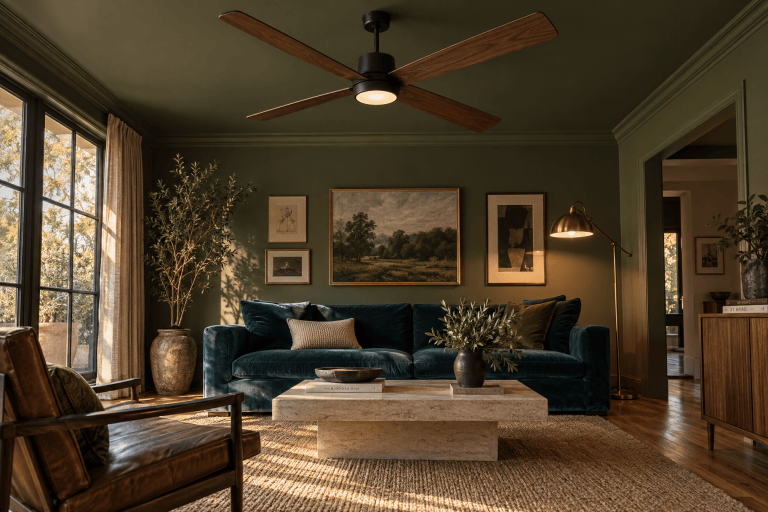 Function and FlowThe Ceiling Fan Can Stay
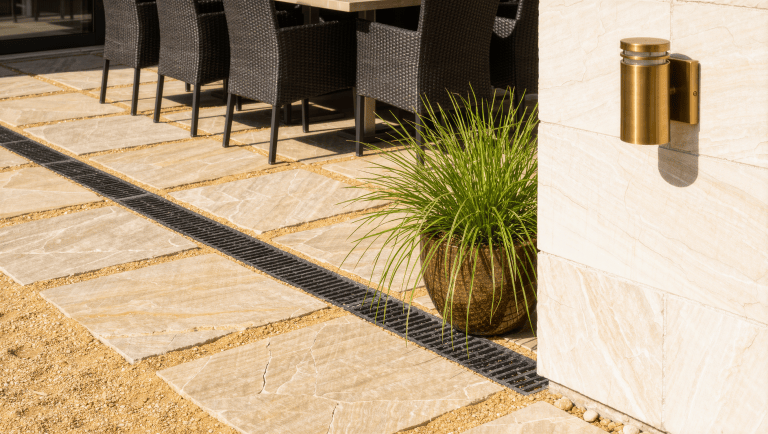 Function and FlowThe Driveway Is the Biggest Room You Refuse to Use
 Function and FlowThe Hell Strip Is the Most-Seen, Least-Designed Land You Own
 PracticeThe Brief Is Where the Room Meets Reality
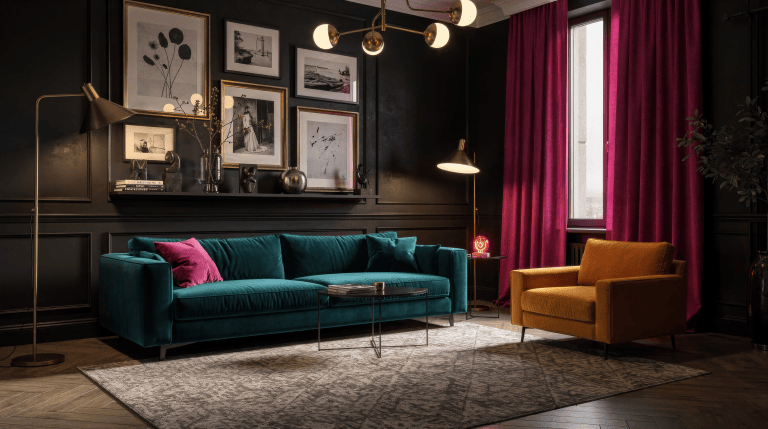 Light and AtmosphereThe Day You Realize You’re Probably a Maximalist
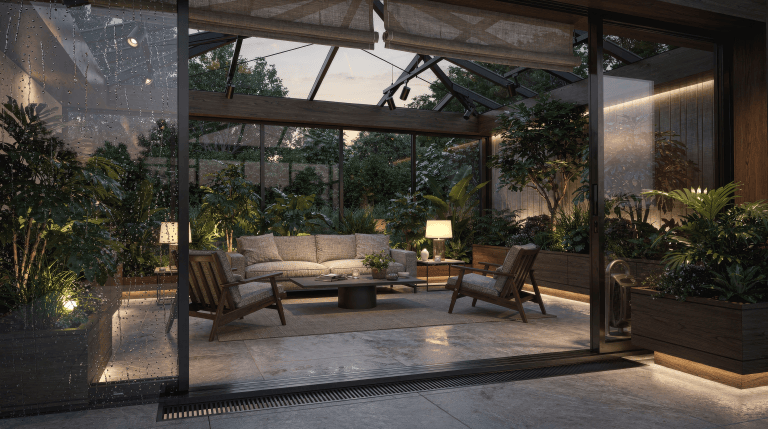 Light and AtmosphereThe Conservatory Has Its Own Weather
 Light and AtmospherePortable Lamps Are Finally Solving the Places Wiring Forgot
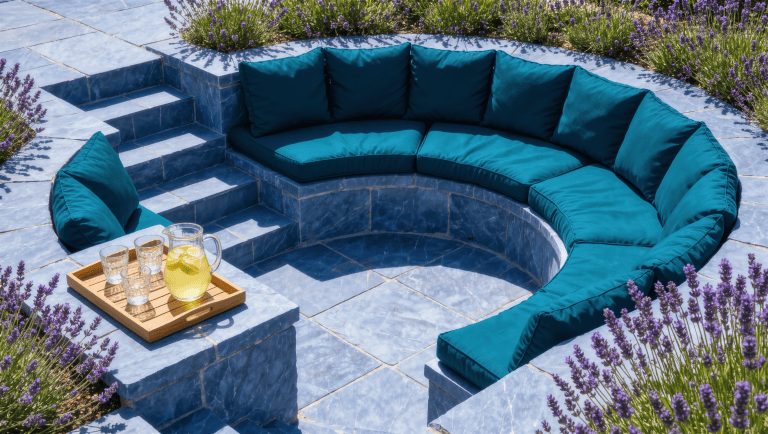 Function and FlowThe Outdoor Conversation Pit Has to Work Before the Fire Is Lit