Furniture and Scale
Convertible Furniture Finally Looks Like Furniture
Convertible furniture is finally getting more useful and less tragic. The second function still has to earn the hardware, floor space, and daily inconvenience.
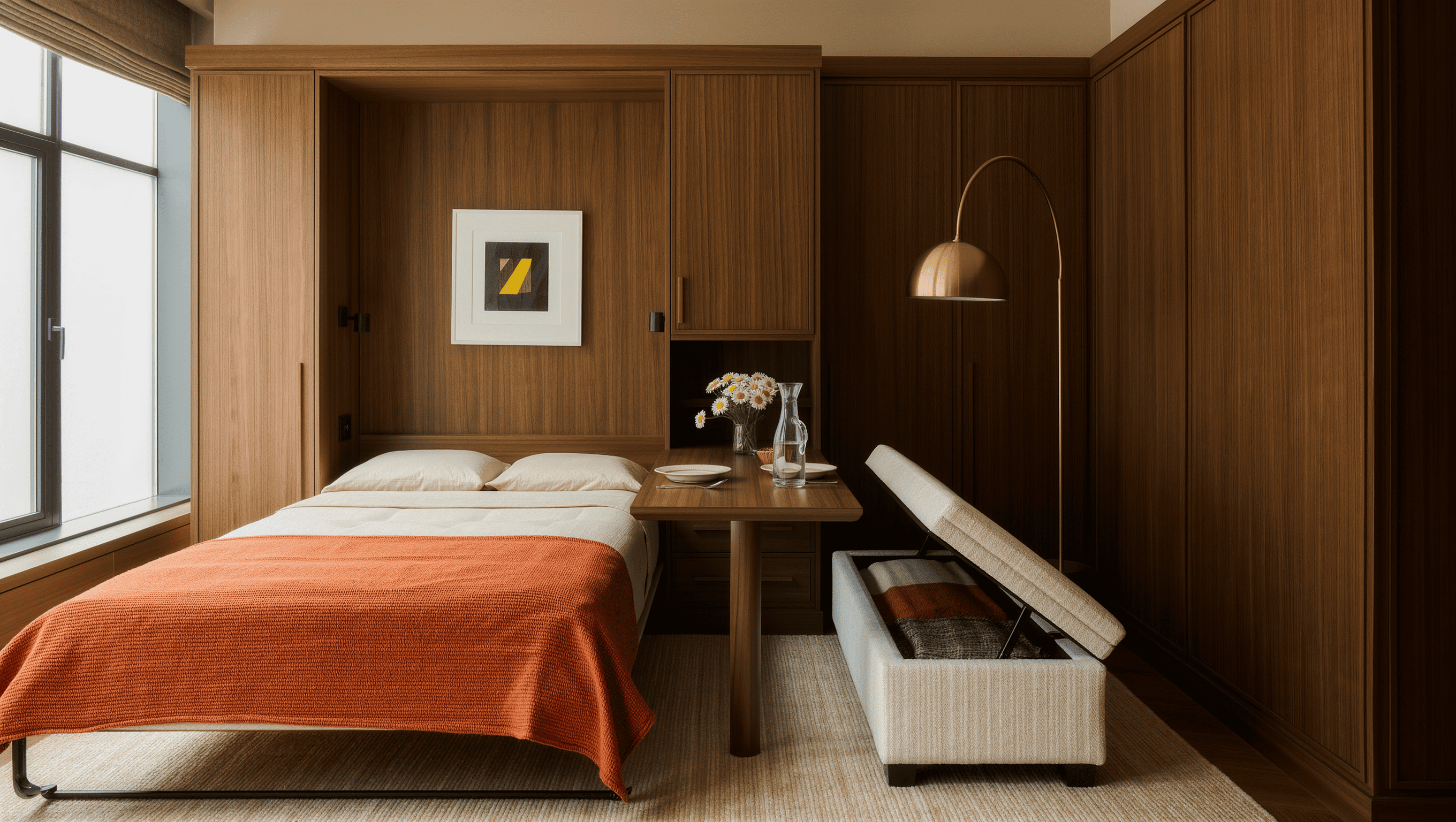
For years, “multifunctional furniture” sounded less like a design category and more like a threat.
Somewhere nearby was a lumpy sofa bed, a table with twelve moving parts, or a coffee table that needed two adults, an instructional video and a small amount of resentment before dinner could happen.
That category is finally getting more interesting. Small-space coverage in 2026 is full of pieces that change function without immediately looking like emergency furniture: chairs that become guest beds, tables that rise to working or dining height, storage pieces that earn a second job, cabinets that shift instead of simply sitting there. IKEA’s 2026 PS collection is explicitly built around playful functionality, and the broader small-space trend is toward furniture that works harder without spending its entire life apologizing for being practical.
I support this development. With suspicion.
A hinge is not a personality
The first question is not “what else does it do?” The first question is whether you need that second job badly enough to live with the piece every day.
A lift-top coffee table makes sense if somebody regularly works, eats, crafts, sorts paperwork or builds an unnecessarily competitive puzzle from the sofa. If nobody does any of those things, you bought a heavier coffee table with more hardware and one more place for crumbs to disappear.
A chair bed earns its keep when guests actually stay over and a permanent bed would waste precious floor space. If the sleeping function happens once every presidential administration and the chair is mediocre the other 1,459 days, this was not flexibility. This was optimism with upholstery.
If the transformation is annoying, the second function does not exist

This is where I get impatient. Can one person change the piece without clearing half the room first?
If the console needs the lamp removed, artwork relocated, dining chairs fetched from somewhere else and a hidden leaf excavated from the back of a closet, you do not have a flexible dining table. You have a seasonal ritual.
Good transforming furniture changes state with one or two obvious actions, and the pieces needed for the second use already have somewhere to live. That is the same reason multi-use rooms work better when the reset is simple. Friction kills flexibility faster than lack of cleverness ever will.
The closed photo is lying by omission
Small-space furniture is almost always shown in its most flattering position. Closed. Tidy. Nothing around it. Cute.
Now open it.
Does the chair bed block the doorway? Does the lift table rise directly into your knees? Does the swivel cabinet sweep through the only useful walking route? Can the storage ottoman open without removing the tray, book, remote, candle and decorative object that mysteriously colonized the top by Tuesday?
The real dimension is the largest footprint the piece creates during normal use. Measure that one. The compact closed version is only one scene in the movie.
I still want it to look good when it is doing nothing clever
This is the part of the trend I actually like: the practical pieces are getting better looking.
Most of a sleeper chair’s life is spent being a chair. Most of a lift-top table’s life is spent being down. Most of a storage stool’s life is spent with the lid shut. The boring mode is the room. It needs the right scale, fabric, shape, color and visual weight whether or not there is a trick hiding inside.
I do not want to sacrifice the character of a room because the furniture is “smart.” Smart can wear velvet. Smart can have a ridiculous stripe. Smart can be sculptural. Practical and visually alive are not opposing political parties.
One excellent trick is enough
There is a point where multifunction becomes a full-time job. I do not want the sofa becoming the bed while the wall becomes the office and the bookcase becomes the dining room unless I live in fourteen square feet and have exhausted every ordinary option.
Usually one transforming piece can solve the painful constraint. Let that be the clever thing. Keep enough of the room stable that it still feels like somewhere a person lives rather than a showroom where an employee is about to demonstrate the cabinetry.
Small rooms do not need a magic act. They need furniture that earns its square footage twice and still behaves itself the rest of the week.
Research note: 2026 direction informed by The Spruce’s small-space trend reporting and IKEA PS 2026.


