Function and Flow
Do We Really Need to Decorate Around a Permanent Black Rectangle?
TV concealment is getting more sophisticated, from art screens and dark walls to sliding panels and cabinetry. The right solution is the one the household will actually use without compromising viewing height, ventilation, access, or the room around it.

The television is allowed to exist. It just does not need to announce itself twenty-four hours a day like a very large, very glossy relative who refuses to leave.
Hidden-TV ideas are everywhere again in 2026: art screens, sliding panels, cabinet doors, lifts, dark feature walls, framed displays, even projectors that leave the wall blank when the room is off duty.
Any television can be made to disappear, given enough money. The interesting question is whether the disappearing act makes daily life better or simply adds another mechanism nobody uses after month two.
Try the version with no moving parts first
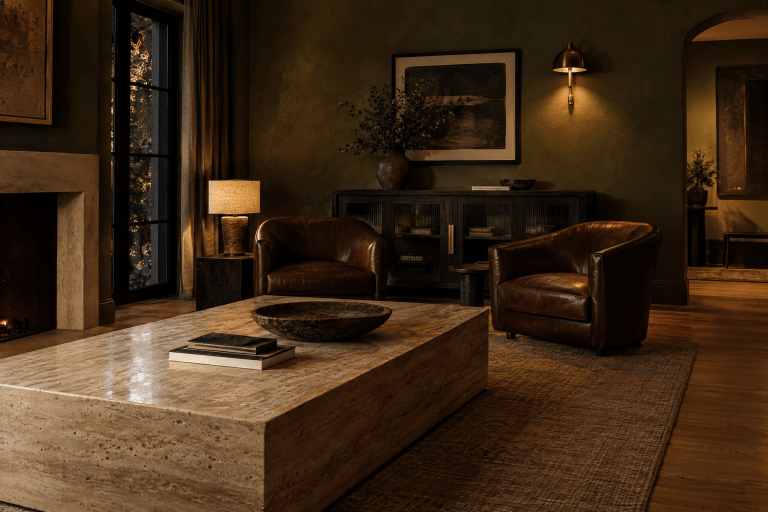
A dark wall, surrounding cabinetry, art nearby, or a framed art-style screen will reduce the television’s dominance without adding a single moving part.
This is usually the strongest first move because it works every day, automatically, whether or not anybody can be bothered. No doors to close. No panel to slide. No motor to service. Every mechanism on this page competes with a household’s willingness to operate it, and the household wins that argument eventually, every time.
If the room still feels screen-dominated after the simple moves, concealment may be worth the complexity. Most rooms do not get that far.
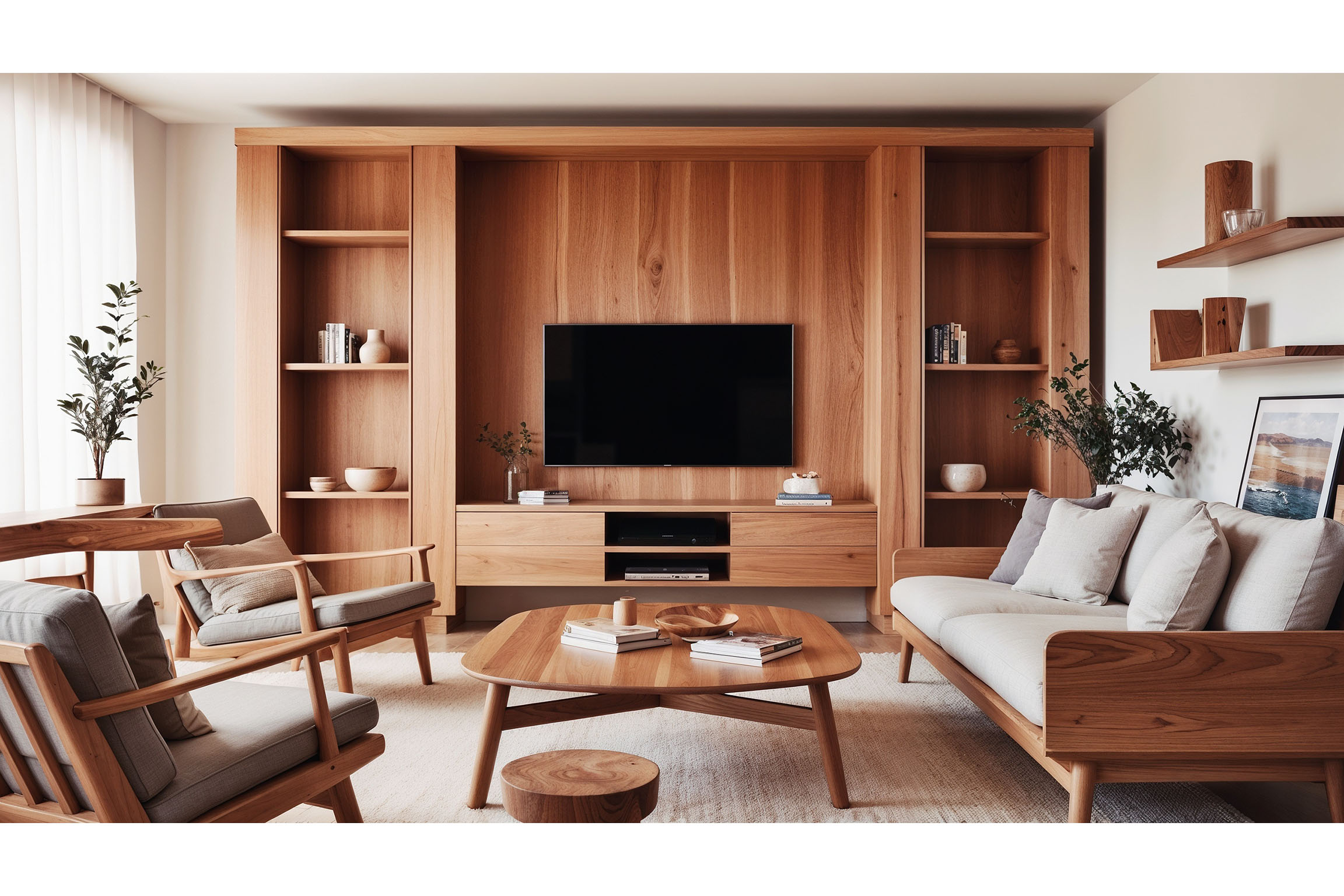
Art-style televisions can soften the black-rectangle effect when off, especially in smaller living rooms where a separate media room is unrealistic. They still need power, mounting, cable planning, and a wall composition that makes sense at television scale.
Choose artwork that can tolerate being very large. A tiny watercolor enlarged to the visual presence of a sofa stops reading as art and starts reading as evidence. And camouflage is what art mode is. It is not invisibility, and anybody sitting within ten feet of it knows exactly what they are looking at.
If you still want a mechanism
They get more expensive, more permanent and more temperamental in roughly this order, and each one buys a little more disappearance than the last.
Sliding panels
A beautiful panel that covers the television when closed has to occupy space when open. Obvious, until the panel overlaps a bookshelf, blocks a sconce, hides the only useful cabinet, or has to have decorative objects cleared off something before every film. Draw both states. Closed and open are two separate elevations and both of them have to work, and if only the closed one looks good the design is unfinished.
Cabinet doors
Bifold, pocketing, retracting and hinged doors can all conceal a screen. The best hardware is whatever makes the television usable in one motion and then gets completely out of the way. If the open doors narrow circulation or sit in the viewer’s peripheral vision all evening, the cabinet has traded one visual problem for two physical ones, and nobody will close it again by March.
Motors and lifts
Lifts and automated panels can be genuinely elegant in rooms where the screen has to vanish. They also add moving equipment, access requirements, power, clearances and failure points. Ask where the mechanism can be serviced without dismantling the room. Ask what happens if it stops halfway. Ask whether this household really wants to press a button every single time. The answer may well still be yes. It should be an informed yes, made by the person who will be standing there at eleven at night when it sticks.
A projector, which is not the easy option
A retractable screen or a projector can leave a wall genuinely quiet when nothing is playing, which no television does. It also brings its own requirements: throw distance, light control, sound, mounting or furniture placement, and a surface capable of the image quality you are expecting. Not simpler. Just a different kind of visible technology, with the visibility moved to the ceiling.
Installation boundary: Television mounting, electrical work, motorized systems, and concealed wiring should follow equipment requirements and appropriate building practices. Heavy moving panels and lifts need proper support and safe clearances.
The hiding place must not damage the thing it is hiding
A television that rises out of a tall cabinet or sits above a fireplace often ends up higher than is comfortable, because the concealment architecture dictated the position and nobody re-checked the eyeline afterward. Set the viewing relationship first, then design the concealment around it. A room should not develop a neck problem because a cabinet elevation looked balanced on paper.
Airflow does not disappear along with the screen either. Closed cabinets still contain electronics, and consoles, receivers and streaming devices all produce heat that has to go somewhere. Leave appropriate ventilation and access. Do not put a screen inside a beautifully sealed box and assume the technology appreciates the atmosphere.
Hiding it does not promote anything else
This is the assumption underneath most concealment projects and it is wrong. Covering the television does not automatically make the fireplace, the window or the art wall more important. Furniture orientation and lighting establish hierarchy, and they will go on establishing the old hierarchy behind a closed panel. A room whose seats all face a concealed screen is a room facing a concealed screen.
Your Living Room Has a Social Life Beyond the Television is the broader argument: with the screen off, do the seats still relate to people and to the room?
There is a cheap way to find out, and it does not involve a millwork quote. Cover the television with a curtain or a safe temporary panel when it is off, and watch what happens to your own behavior. Not whether the room photographs better. Whether anybody keeps bothering to cover it. If the cover stays up and the ritual turns out to be satisfying, concealment is worth real money. If it is shoved aside after two evenings, the honest answer was always a dark wall, and the dark wall costs a gallon of paint.
Trend source line: 2026 design coverage is expanding beyond one “Frame TV” solution into sliding art panels, cabinetry, lifts, mirrored screens, darker feature walls, and other methods that reduce the screen’s permanent visual dominance. Sources: House Beautiful and WIRED.
Same problem, elsewhere in the house
Room notes
Keep the room on the record.
One useful note at a time: what to test, what to ignore, and what changed when the room got another vote.