Light and Atmosphere
The Room That Has Already Called Valet
Create a polished, hospitality-inspired room with tailored upholstery, lacquered surfaces, strategic brass, flattering light, and practical places for bags, drinks, and coats.
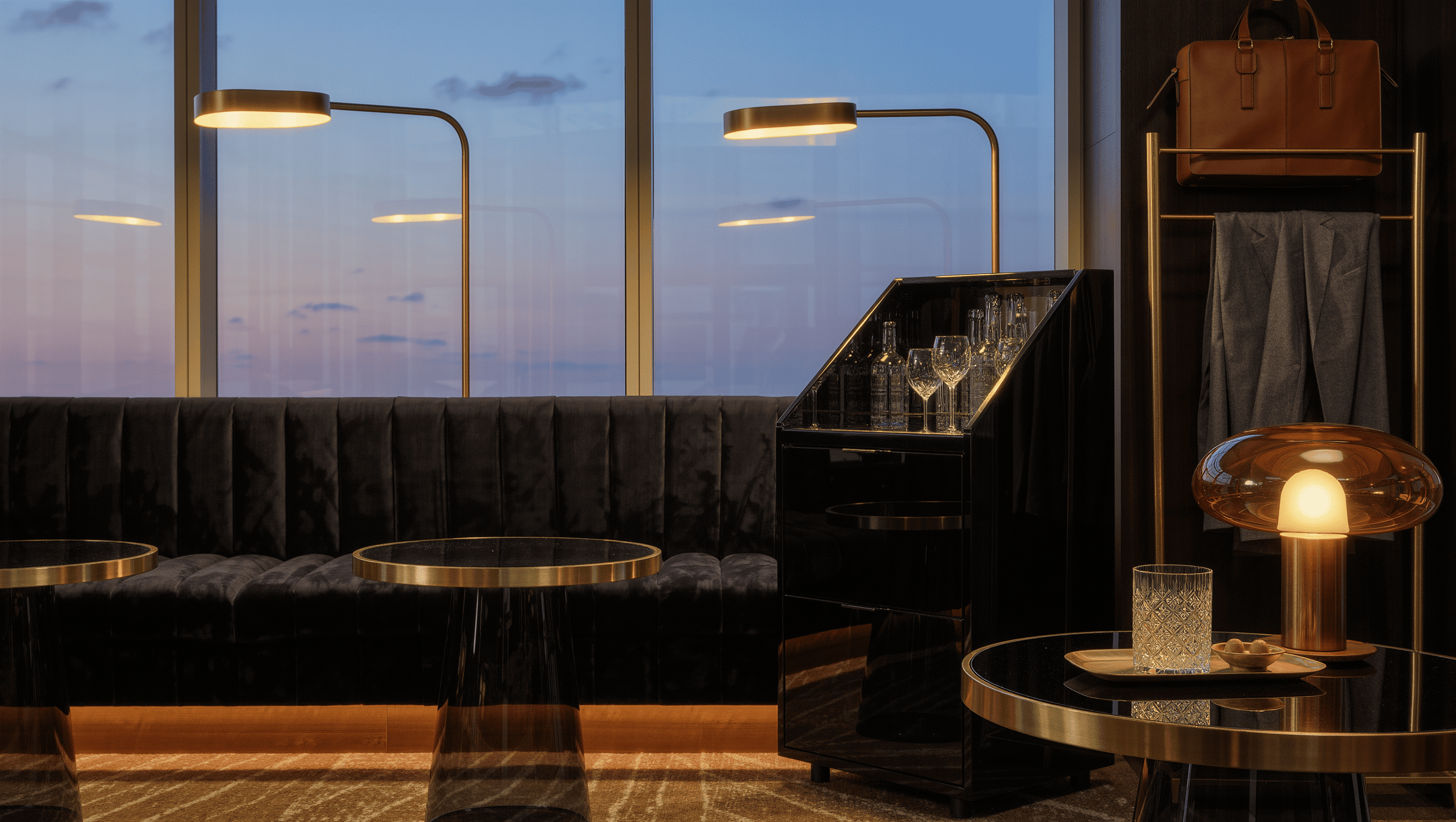
Some rooms look as if they have already called valet. The trick is capturing that sense of arrival without turning the house into a hotel lobby.
Hospitality polish comes from choreography as much as luxury: where the coat goes, where the drink lands, how the light hits the face, and whether the room appears ready before anyone enters. Expensive finishes cannot compensate for a guest standing in the doorway holding a bag because no surface has accepted the assignment.
Start with a tailored silhouette
Choose one or two pieces with crisp structure: a sofa, dining chair, console, upholstered bench, or substantial table. Pair them with softer textures so the room feels composed rather than corporate.
Tailoring is about edges and proportion more than price. A clean slipcover, well-scaled curtain, neatly placed rug, or disciplined arrangement can create more polish than a room full of status objects.
Design the arrival sequence

Walk through the room as a guest. Where does a coat go? Is there a place for a bag that is not the floor? Can someone set down a drink without crossing the room? Is the route to seating obvious?
Use a console, hook, side table, tray, bench, or small cabinet where those actions actually occur. Keep enough surface empty that the room can absorb arrival without destroying the composition.
For the functional side of this choreography, see Rooms in Real Life.
Give the host a service route too
Hospitality is not only about the guest path. Trays, glasses, food, coats, extra chairs, and cleanup also move through the room.
Keep one route clear enough for serving without repeatedly asking seated people to move. If the room hosts often, where the host walks matters as much as where the guest sits.
Use shine in measured doses
Lacquer, polished stone, brass, dark glass, glossy paint, and mirrored surfaces can create evening glamour. One reflective plane often does more than several metallic accessories scattered around the room.
Balance shine with matte or tactile material: linen, wool, wood grain, leather, plaster, or woven fiber. The contrast keeps the room from reading like a showroom and makes the reflective pieces more visible.
Light people flatteringly
Layer shaded lamps and wall or accent light around the room so faces are visible without being overexposed. A strong ceiling fixture can provide general light, but it should not be the only source if conversation is the main event.
Check the room from seated eye level. Avoid bare bulbs and reflections that glare into glass, mirrors, or screens. Fixed electrical changes require appropriate professional installation.
Explore Atmosphere for more on how light, material, sound, and temperature shape hospitality.
Give every primary seat a landing place
A room feels prepared when a guest can sit down and know where a glass, phone, or book can go. The surface does not need to be large, but it needs to be reachable.
Do not over-furnish the room with matching side tables if one shared table or movable surface can do the job. The choreography should feel generous, not repetitive.
Give service objects a quiet home
Coasters, remotes, chargers, napkins, extra glassware, throws, and the practical objects that support an evening should be close enough to use and easy enough to put away. Closed storage can preserve the polished look without forcing the host to stage the room from scratch every time.
A hospitality-inspired room feels prepared, not sterile. The useful objects are there; they simply do not dominate the visual field when they are not needed.
Use scent and sound with restraint
Hospitality is sensory. Soft acoustics, a music level that permits conversation, and a restrained scent can change the experience before anyone notices the furniture.
Do not use fragrance to cover poor ventilation or make scent compulsory. The room should feel considered without becoming a perfume counter.
Let one thing be slightly decadent
A deep color, oversized lamp, dramatic curtain, sculptural chair, large artwork, or unusually glossy surface can create the sense of occasion. Restraint elsewhere keeps the room from feeling themed.
The most effective decadent move usually changes scale or light rather than simply adding more decoration. One enormous shade can transform the whole room. Twelve small gold objects mostly create dusting.
Keep the practical objects attractive enough to stay visible
A tray, carafe, blanket, wastebasket, or tissue box may be part of the room’s normal use. If it genuinely needs to remain visible, choose a version that belongs to the material language instead of hiding and retrieving it constantly.
This is different from buying decorative versions of every necessity. Only the persistent objects deserve the design attention.
Make guest capacity expandable
If the room occasionally hosts more people than it seats every day, use folding chairs, stools, benches, or movable pieces that have a realistic storage home.
Do not let occasional capacity force a permanent furniture crowd. The room should look complete when no one is coming over.
Plan the end of the evening
Where do glasses, blankets, serving pieces, guest coats, and moved furniture go after everyone leaves? A room that takes an hour to restore will slowly stop feeling effortless.
Keep the reset short enough that hospitality does not create a maintenance hangover.
Keep the room personal
Hospitality polish should support the home’s identity rather than erase it. Books, art, inherited objects, photographs, or unexpected color prevent the room from feeling professionally anonymous.
The room does not need a front desk. It needs the quiet competence of a place that already knows where your coat, glass, and attention are going next.
Readiness reads as luxury
The room that has already called valet is not really about luxury. It is about readiness. Arrival is legible, seats are supported, light makes people look good, practical objects have quiet homes, and the room can recover after use.
That is what makes hospitality feel polished rather than staged.


