Multi-Use Rooms
The Home Office Still Belongs to the Job You Left
A room can continue enforcing the schedule, hierarchy, and visual language of a job that no longer exists. Use a room-life mismatch inventory before buying a new desk or repainting everything.
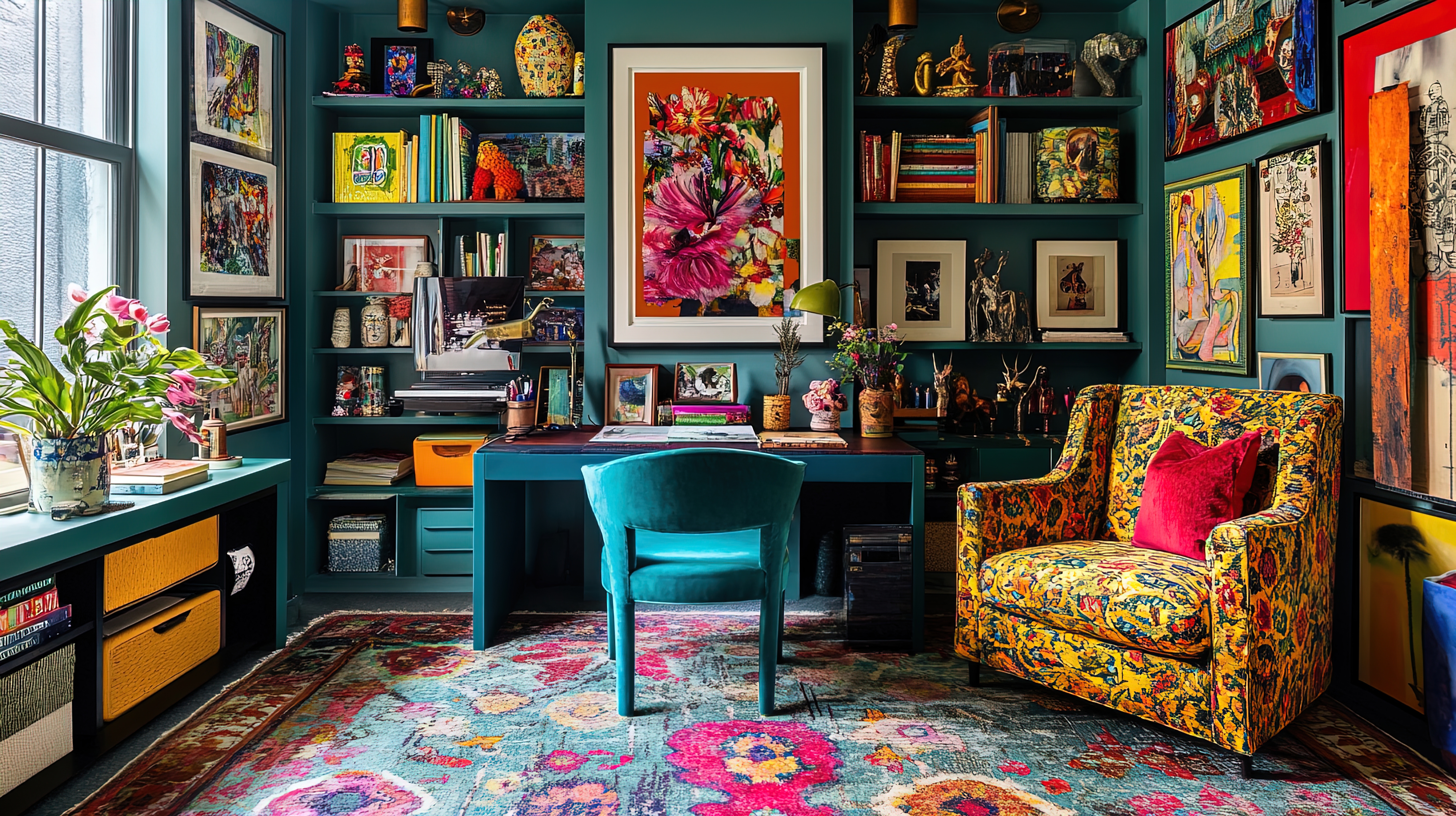
A home office can outlive the job that created it.
The laptop changes. The meetings stop. The room continues to hold the old posture: command center, emergency desk, temporary compromise, or shrine to a professional identity that has already moved on.
Once the job changes, people often preserve the room because it still looks competent. Competence is persuasive. It can also be spatially expensive.
Describe the former life
What was the room built to support: eight hours of video calls, confidential paperwork, creative production, client visits, study, or simply survival during a disrupted season?
Its furniture, lighting, storage, and visual background were selected for that workload. Write down the old schedule and the objects that existed because of it. The exercise makes it easier to see which decisions are still receiving premium square footage without a present-tense reason.
Describe the current life

What actually happens here now? Occasional administration? Reading? A side project? Household paperwork? Exercise equipment avoiding eye contact? A closed door that represents work even when nobody is working?
The mismatch usually appears in time, posture, and access. A room designed for continuous occupation may now need to support short visits. A large desk may defend territory that the household needs for another activity. Closed storage may preserve records that no longer require immediate reach.
Separate emotional value from physical footprint
Not every remnant is clutter. The office may hold achievement, stability, grief, relief, unfinished ambition, or fear that reducing the room means reducing the person you were while using it.
A respectful redesign does not require declaring the old work meaningless. It requires deciding which objects carry meaning and which objects merely carry dimensions.
A diploma, favorite chair, meaningful object, or well-made desk may deserve to stay even when the rest of the room changes. Meaning does not require preserving the entire floor plan around it.
Audit the furniture by hours of use
How many hours per week does the desk get used now? The printer? Filing cabinet? Secondary chair? Video-call background? If an object occupies a large share of the room and serves an activity that happens once a month, the mismatch is measurable.
Frequency should influence footprint. A small administrative task may need a compact work wall, drawer, or shared table rather than a full office landscape.
Audit the storage by access frequency
Old work creates paper, cables, devices, reference books, samples, equipment, and records. Some require retention. Fewer require prime daily access.
Separate active materials from archive. Keep active items near the current work position. Move retained but low-use items to less privileged storage where appropriate. Dispose of obsolete material securely when it no longer needs to exist.
Do not use premium room space to store work history simply because the folders already fit the cabinet.
Check the light for the work that remains
If the room now supports reading, occasional laptop work, sewing, household administration, or another task, place useful light for that activity rather than preserving a video-call lighting arrangement nobody needs.
Use Lighting to rebuild the room around current tasks and evening use.
Decide whether the desk should shrink, move, or stay
A large desk can remain if it still supports work, making, drawing, spreading papers, or another current activity. If it mostly holds objects, test a smaller surface or a different position before replacing it.
Tape the proposed footprint and use the room for a week. The newly released space may be more valuable as reading, exercise, guest capacity, storage access, or simply open floor.
Add the present-tense function before removing the old one
If you want a reading area, bring in the chair and lamp temporarily. If the room might become a guest office, test the bed or sleeper footprint. If it should become a hobby space, stage the actual tools.
Reversible testing prevents the office from being dismantled for a fantasy use that never becomes more practical than the old one.
Keep one clear work zone if work still happens
Reducing the office should not make the remaining work more chaotic. Give current work one contained zone with power, storage, light, and a shutdown sequence.
The goal is not to make work disappear. It is to stop a smaller present-day workload from occupying the room at its former scale.
Design the closing scene
If the room now has more than one use, the workday needs an exit. Close the laptop, contain active papers, switch off task lighting, and clear the surface that belongs to the next mode.
A room that keeps broadcasting “work” after work has ended is still serving the former job emotionally, even if the furniture footprint has changed.
Room–life mismatch inventory
- Former room job: What work, schedule, and identity was this room built to support?
- Current room job: What activities happen here in an ordinary week?
- Mismatch: Which furniture, storage, lighting, or boundaries still serve the former life?
- Worth preserving: What remains genuinely useful, meaningful, or difficult to replace?
- Available change: What can be reduced, shared, relocated, or made reversible?
- Present-tense decision: What one change would make the room acknowledge the life happening now?
Test the change for two weeks
Choose a change that affects use rather than appearance. Reduce the desk footprint. Move archival records out of immediate reach. Add the chair required for reading. Establish office hours for a room that now has more than one job. Remove the visual background designed for calls nobody attends.
Then live with the new arrangement for two weeks before buying replacements. The room may not need a makeover. It may need permission to stop reporting to a former employer.
Redraw it for the current week
A home office should serve the work and life that exist now. Preserve what is useful or meaningful, archive what no longer needs premium access, and make the floor plan answer to the current week rather than the old job description.
The room is allowed to keep the evidence of where you have been without continuing to live there.
Room Case · the receipts
Job → Friction → Constraint → Hypothesis → Test → Result → What changed.
Seven fields stay fixed here because this is one place where consistency helps. If the ending is missing, it stays missing until the room has lived long enough to answer.
-
01
Job
Support the work that happens now instead of preserving the floor plan of an old full-time role.
-
02
Friction
A large desk and old work storage still occupy prime territory for tasks that now happen briefly or rarely.
-
03
Constraint
Meaningful objects and records may need to stay retrievable even if they no longer deserve permanent floor area.
-
04
Hypothesis
Removing the largest object tied to the former job will reveal how much space current work actually needs.
-
05
Test
Take the largest old-work object out of active use for two weeks without discarding it and note whether the room improves or anyone misses it.
-
06
Result
Still waiting on Recheck. The room has not lived with the change long enough for us to call it a result.
-
07
What changed
Not yet. We are keeping this open until Recheck gives us a reason to keep, change, or reverse the decision.


