Function and Flow
The Empty Middle Is Allowed to Stay Empty
Not every open patch of floor in a large room is a design problem. Some of it is circulation, visual relief, or the space that makes the rest of the room work.
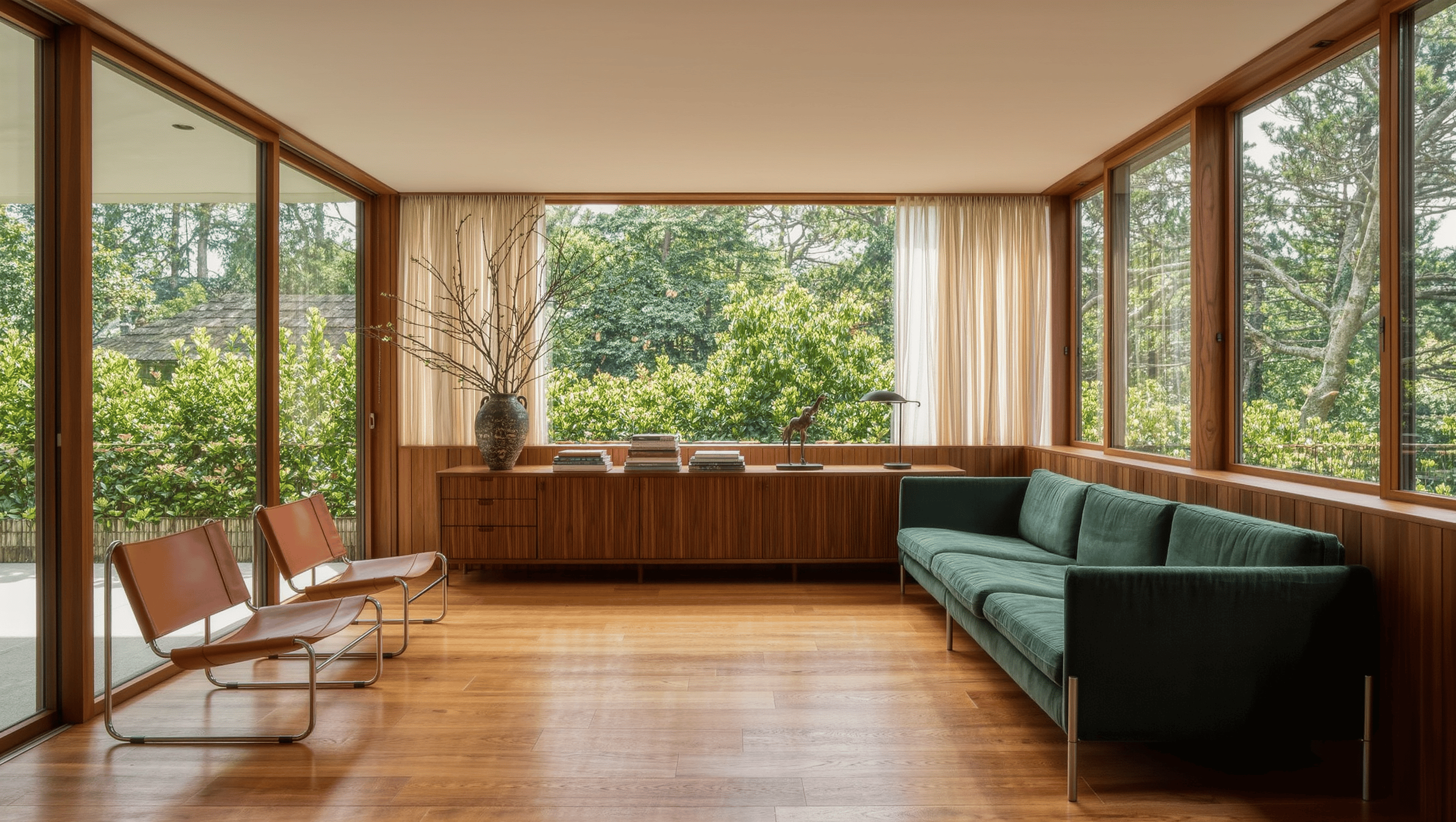
A large room can trigger a peculiar kind of decorating panic: visible floor begins to look like an assignment. A bench appears. Then a pedestal. Then a pair of chairs no one sits in. The room gains objects but loses clarity.
Empty space is not automatically wasted space. In a large interior, it may be doing three very useful jobs: carrying movement, protecting a view, and giving the major furniture enough room to read as a group.
First decide whether the emptiness is functional
Watch what happens in the room for a few days. Does that open strip connect the kitchen to the stairs? Does it give people a clean route to the patio? Does it keep a fireplace visible from the entry? Does it let several people move around a dining table without turning the chair backs into barricades?
If yes, the empty floor already has a job.
The problem is not that the space contains nothing. The problem would be interrupting a useful path because an inspiration photo made you feel guilty about hardwood showing.
Negative space makes large furniture look intentional

A substantial sofa, oversized rug, long console, or large piece of art needs breathing room. Without it, big furniture looks crammed despite the room’s generous dimensions.
This is why adding many medium-size pieces can make a huge room feel oddly busy. The square footage is large, but the visual pauses have been removed.
A better hierarchy is often fewer, stronger pieces with purposeful gaps between them. The room stays expansive without feeling abandoned.
Do not confuse a dead zone with a pause
Intentional negative space makes the rest of the composition clearer. A dead zone feels disconnected from both movement and use.
A corner that nobody enters because a sofa back blocks it is a dead zone. A twelve-foot patch of floor that lets guests circulate around two seating groups may be a pause. A blank wall seen from across the room may be visual rest. A blank wall with a random end table pressed against it because something had to go there is still blank, only now with an end table.
Protect the room’s long views
Large rooms often have one luxury that smaller rooms cannot offer: distance. A long sightline to a window, fireplace, staircase, sculpture, or piece of art can create much of the drama by itself.
Do not automatically interrupt that line with a chair, console, or plant. Stand at the main entry and look across the room. Then stand at the kitchen threshold, the stair landing, and the most-used seat. The open area may be the thing allowing those views to work.
Use low pieces when the center needs something
Sometimes the middle genuinely needs an anchor. If so, the answer does not have to be another full seating zone. A low bench, substantial coffee table, pair of ottomans, sculptural table, or long low cabinet can create visual weight without building a wall of furniture through the center.
Keep the reason specific. A bench can provide flexible seating or mark an edge. Ottomans can move between groups. A table can become a useful surface. Decorative furniture with no plausible use is just floor tax.
Make the empty area look deliberate
Intentional space usually has a readable edge. The rug stops here. The sofa back creates a line. The lighting shifts. The flooring changes direction. A pair of large planters marks a transition. The route is obvious.
If the void feels accidental, strengthen the boundaries around it rather than filling the void itself.
Try the removal test
Take one nonessential object out of the middle of the room. Then another. Photograph the space from the main entrance and from the primary seating area. Look for whether the furniture groups become stronger and the architecture more visible.
If the room improves, the extra square footage was not asking to be occupied. It was asking to be respected.
The best large rooms do not use every inch. They decide which inches matter. Keep the paths generous, let strong objects have air around them, and leave some floor unapologetically empty when emptiness is the thing making the system work.


