Light and Atmosphere
Sculptural Lighting Should Still Know How to Light the Room
Statement fixtures are everywhere in 2026, but a light can be sculpture without becoming an expensive object that leaves the room functionally dim.
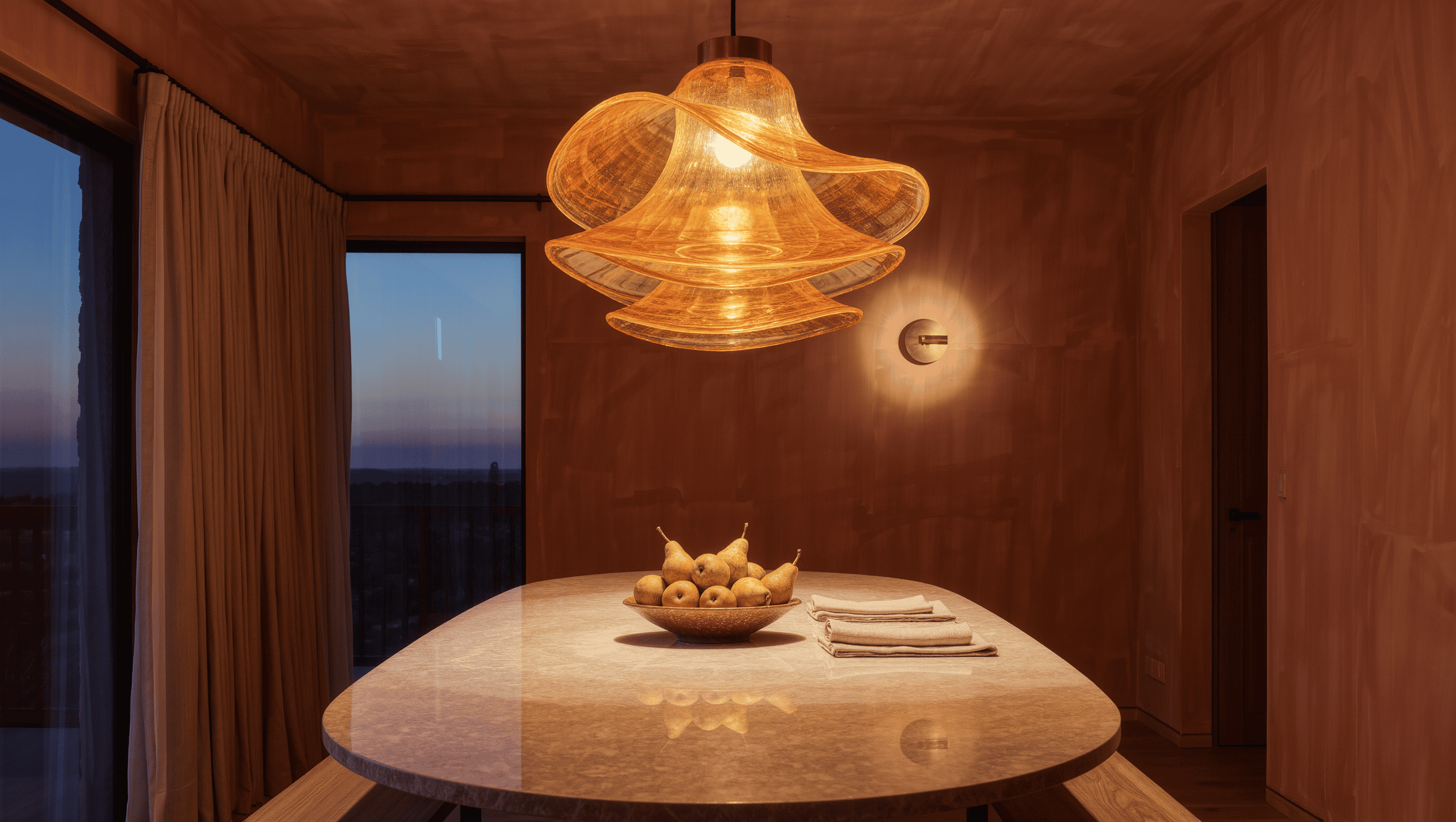
Lighting has been promoted from utility to jewelry, sculpture, architecture, and occasionally a small indoor weather system. The good news is that fixtures have become more interesting. The less useful news is that a beautiful object hanging from the ceiling can still be terrible at lighting a room.
Sculptural lighting works when form and illumination cooperate. If the fixture is the visual event, it still needs to throw light where the room needs it or make peace with the fact that other fixtures will do the practical work. Drama is allowed. Dysfunction does not become design just because it came in hand-blown glass.
Decide whether the fixture is the star or the worker
A pendant over a dining table can usually do both because the table gives it a clear target. A sculptural chandelier in a tall living room may be mostly about scale and composition. That is fine. Problems start when one artful fixture is expected to provide enough general, task, and evening light simply because it was expensive and has a memorable silhouette.
If the fixture is the star, let it be the star. Give it negative space. Use quieter lamps or sconces to do the supporting work. If the fixture is the worker, judge the beam, diffusion, glare, and height before you fall in love with the profile photo.
Material changes the light, not just the mood board

Alabaster, opal glass, linen, paper, plaster, metal mesh, stained glass, and clear glass do not merely look different. They transmit, diffuse, soften, color, or block light differently. A shade that glows beautifully may cast very little useful light downward. A clear globe may look delicate and still produce glare. A dark metal shade can create excellent focused light and leave the ceiling nearly black.
This is one of those places where pretty is not enough. The fixture has to make the room better when it is turned on, not just when it is photographed off.
The scale test is more interesting than the trend
Oversized lighting can be fantastic when the room has enough visual volume to hold it. High ceilings, long tables, double-height spaces, and large entries can absorb a generous fixture. Small rooms can also handle drama, but the fixture has to respect head clearance, sightlines, and the fact that people still need to walk through the room without orbiting a chandelier.
A small room does not require a timid fixture. It requires a deliberate one. A bold pendant over a compact table can be exactly right if it is visually strong and physically out of the way. A giant fixture hanging into a circulation path is not maximalism. It is an obstacle with excellent styling.
Do not make every fixture audition for attention
The fastest way to make sculptural lighting feel generic is to put statement fixtures everywhere. One strange, beautiful, slightly excessive object can give a room conviction. Four of them can turn the ceiling into a showroom.
Let one fixture carry the theatrical gesture. The rest can be restrained, low, warm, architectural, or nearly invisible. Contrast is what makes the dramatic piece feel dramatic.
How to scale this without buying the chandelier first
Start with the least permanent version of the idea. A sculptural table lamp can test whether the room wants more shape. A plug-in sconce can add material and silhouette without opening a wall. A large paper or fabric pendant can bring volume without the cost of stone or art glass. If the room benefits from the gesture, then the investment fixture has a job to step into.
Value matters more than pedigree. Murano can be extraordinary. So can a beautifully proportioned fixture from a much less glamorous source. The question is not whether the piece has a story impressive enough for the caption. The question is whether the room would miss it if it disappeared.
Sculptural lighting should make the architecture feel more alive, not make everyone forget the architecture exists. Let the fixture be strange, luminous, oversized, textured, glamorous, or a little ridiculous if the room can hold it. Just make sure the light is doing more than posing.


