Furniture and Scale
Brigette Romanek: Eclectic Rooms Work When They Still Feel Like Home
Brigette Romanek is useful to study because her eclectic rooms stay coherent through emotional temperature, comfort, architecture, art, scale, and disciplined surprise.
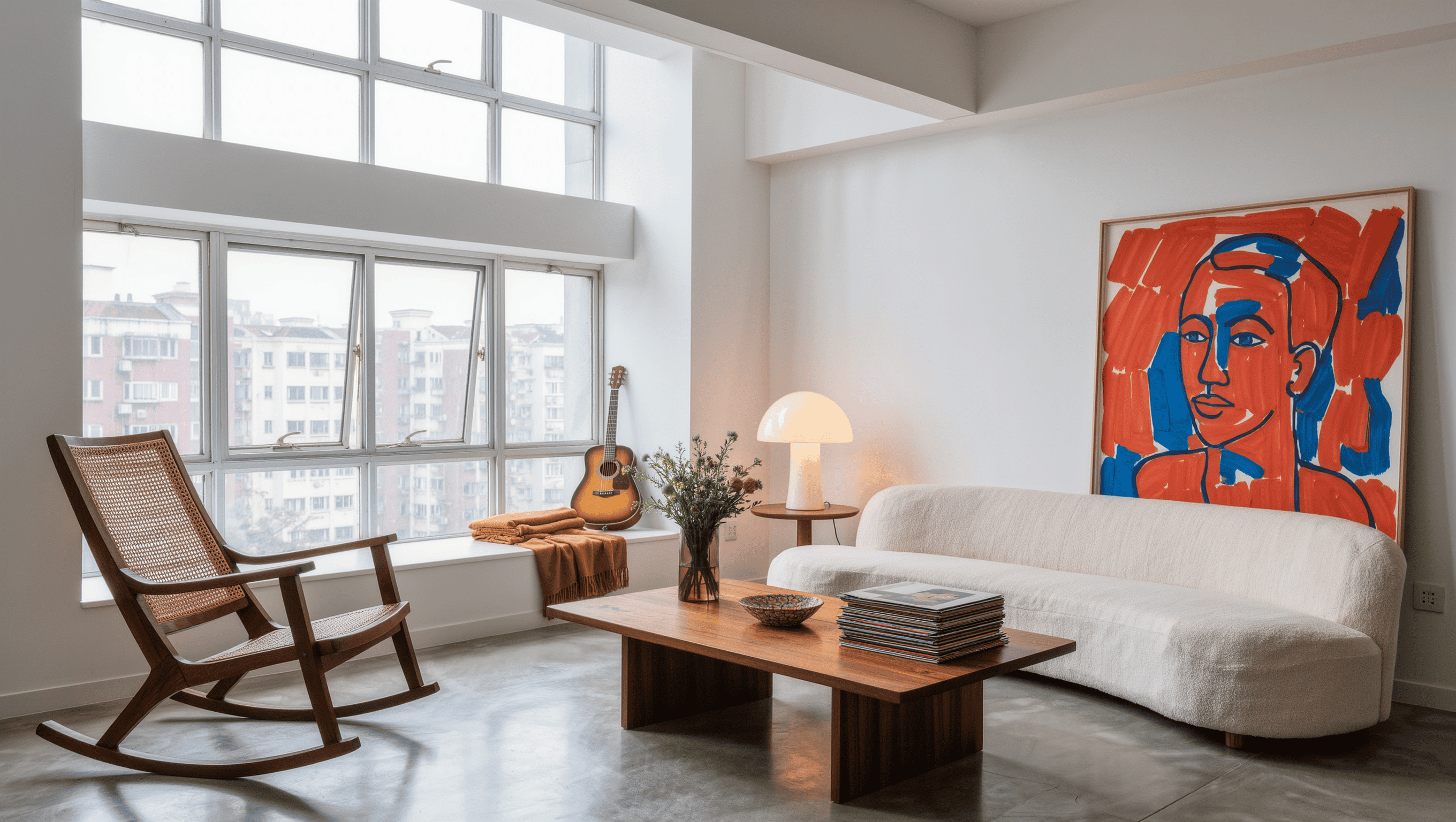
“Anything goes” is not a point of view. It’s what happens before the point of view arrives, which is why eclecticism is one of the easiest words in design to use and one of the hardest things to actually edit. Brigette Romanek’s rooms hold important contemporary art, vintage furniture, strong color, and one slightly odd object without reading like a showroom assembled by category — glamorous and cinematic, but still homes. The styles disagree. The emotional temperature usually doesn’t.
Comfort is the luxury signal, not the thing hidden before the photo

Traditional luxury signals value through polish and formality. Romanek’s rooms make a different case: deep seating, family life, pets, and objects with real history can coexist with collectible design and expensive art without lowering the level of the interior. That’s worth stealing at any budget — a room feels more generous when the best seat is actually comfortable and people can set down a drink without negotiating with a styled tray.
Architecture gets to keep its accent inside that mix, too. Historic windows, molding, and ceiling proportions can stay part of the story while newer furniture and art shift the period and energy — the old shell makes the new object look more deliberate, and the contemporary art keeps the old room from turning nostalgic. Before erasing a feature because it doesn’t match the new furniture, ask whether the mismatch is actually the useful tension.
Scale is what different styles actually agree on
A vintage chair sits beside a contemporary table when their proportions make sense together; an antique cabinet shares a wall with modern art when the masses balance. When style is intentionally inconsistent, scale becomes the most reliable common language — interesting objects aren’t exempt from fitting the room, however much history or design pedigree they carry.
Art gets the same treatment as architecture here, not furniture. A large or forceful piece can organize a wall, a palette, a whole sightline — it isn’t the accessory category that shows up after the furniture’s approved. If the art is significant, let it affect color placement and how much visual competition sits around it. A serious artwork surrounded by six decorative substitutes is usually being asked to attend its own networking event.
What actually holds the mix together
The pieces can come from different periods because they’re still contributing to one shared feeling — cocooning, bright, relaxed, glamorous. That’s the useful editing device: when two objects have nothing stylistically in common, ask whether they create the same emotional temperature instead. A worn vintage chair and a severe contemporary table can coexist if both support the room’s larger mood. Two individually beautiful pieces can still fight if one wants a quiet refuge and the other wants a nightclub.
And one surprise is usually enough. An odd lamp or peculiar object reads as intentional against calmer decisions around it; collect surprises until surprise becomes the baseline and nothing is surprising anymore — the room is just busy. The shallow version of relaxed luxury is predictable: pale upholstery, a sculptural chair, one oversized artwork, a vintage object placed where the eye can certify the room isn’t too new. I would not copy that ingredient list. I would copy the editing question — what emotional experience is this room trying to create, and does every major piece actually contribute to it?
Source: Romanek Design Studio’s site and stated background; Architectural Digest’s AD100 profile of the practice.


