Function and Flow
Home Bar Lighting Should Make Glass Look Good and Labels Legible
Home bar lighting has two jobs: create atmosphere and support the work. Layer shelf light, task light, reflected glow, and room light so bottles sparkle without turning the counter into a dark stage set.
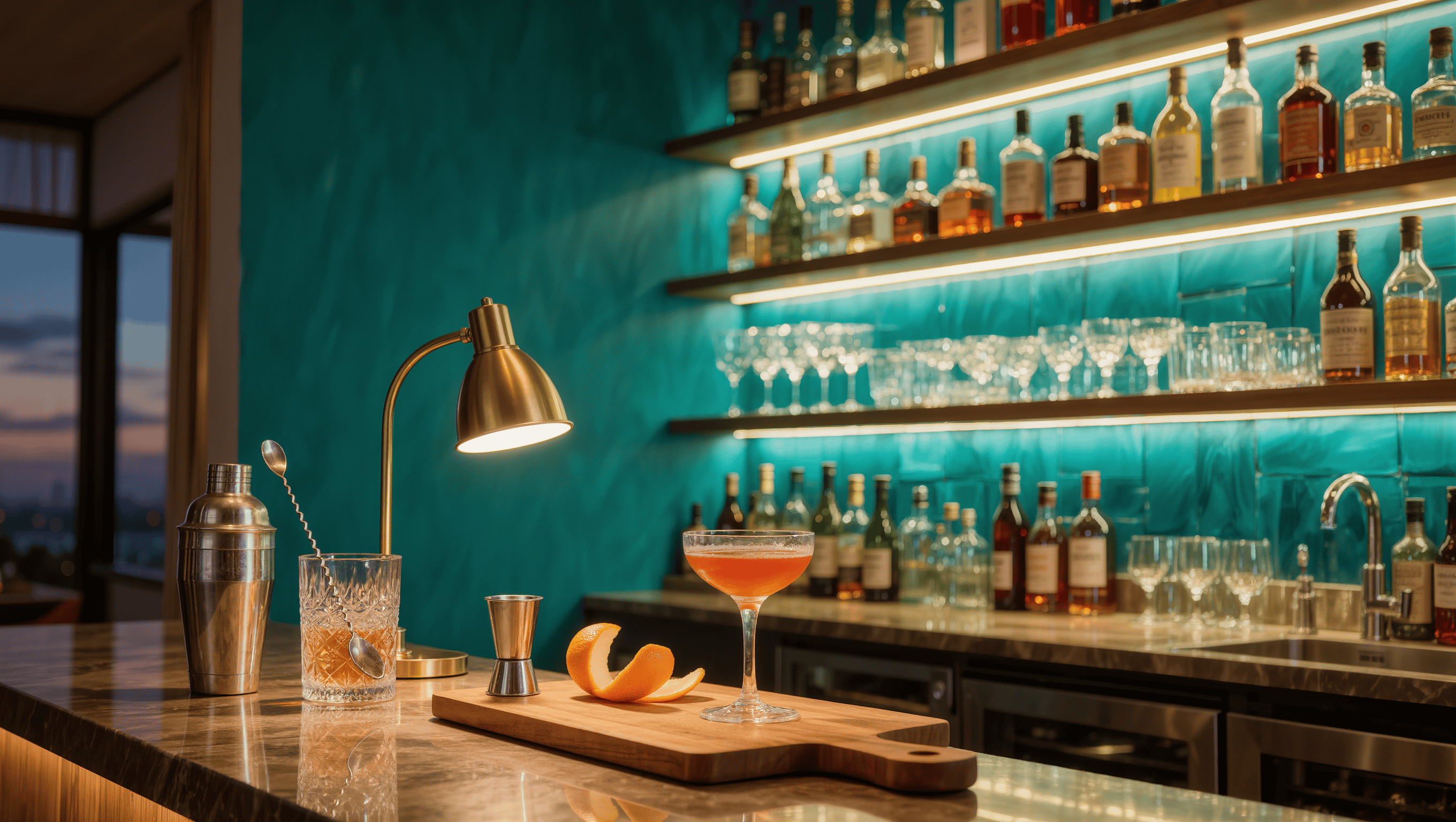
Home bars are unusually good at getting one kind of lighting right and the other kind completely wrong.
The bottles glow. The mirror looks dramatic. The brass catches a warm line of light. Then someone tries to read a label, slice a lime, or find the bottle opener and discovers the work surface is in shadow.
A bar needs atmosphere and task visibility. They are separate jobs.
Light the counter from the front or above
Backlighting shelves does not automatically illuminate the mixing surface. Add concealed under-shelf light, a small directional ceiling source, a sconce, or integrated cabinet lighting that reaches the hands and tools without creating glare.
Stand where the drink-maker stands. If your own body blocks the light, move the source.
Use shelf lighting to reveal depth

Light can make glassware, bottles, stone, tile, or metal feel layered instead of flat. Sources concealed at the front edge can wash the back panel; sources at the rear can silhouette bottles. Test both before committing because transparent glass and reflective surfaces behave differently in every finish combination.
Mirrors multiply good light and bad light
A mirrored back can make a compact bar feel deeper and brighter. It can also double visible bulbs, cables, fingerprints, and clutter. Use diffused sources and check the reflection from normal standing and seated positions.
Do not make the bar the brightest thing in the room
The bar should attract attention without overpowering the lounge or dining area around it. Coordinate its intensity with nearby lamps and ceiling lights. A jewel-box glow is effective because the rest of the room has hierarchy.
If the bar looks like a retail display after everyone sits down, dim it.
Give the glassware contrast
Clear glasses can disappear against a bright mirror or white shelf. A darker back panel, warm timber, textured stone, or controlled shadow can make glassware easier to see and visually richer.
Think about bottle labels as information
Decorative amber light may flatter the room but distort color and make labels harder to read. Keep enough neutral task illumination at the working level that someone can distinguish bottles and measurements without changing the mood of the entire room.
Hide the source when the fixture is not the point
LED tape and small puck lights are useful when they disappear into the architecture. Exposed dots reflected in glass can make expensive millwork look improvised. Use channels, diffusers, and proper recesses where the design calls for concealed light.
Plan controls for service, not just arrival
The person making drinks should be able to raise task light without crossing the room. The host should be able to dim display light when the evening shifts from service to conversation. Separate circuits or controllable zones make that possible.
Check the bar when it is messy
Lighting that beautifully reveals every bottle also beautifully reveals every water spot and sticky ring. If the bar is frequently used, choose a lighting angle and material combination that tolerates normal evidence of service.
A home bar should glow enough to invite people over and illuminate enough to let someone make the drink properly. Sparkle is not a substitute for visibility.


