Function and Flow
The Bar Stool Is a Clearance Problem Before It Is a Style Choice
Bar stools have to fit the counter height, knee space, traffic lane, foot support, and actual body before they fit the room's style. Measure the operating zone before buying the statement stool.
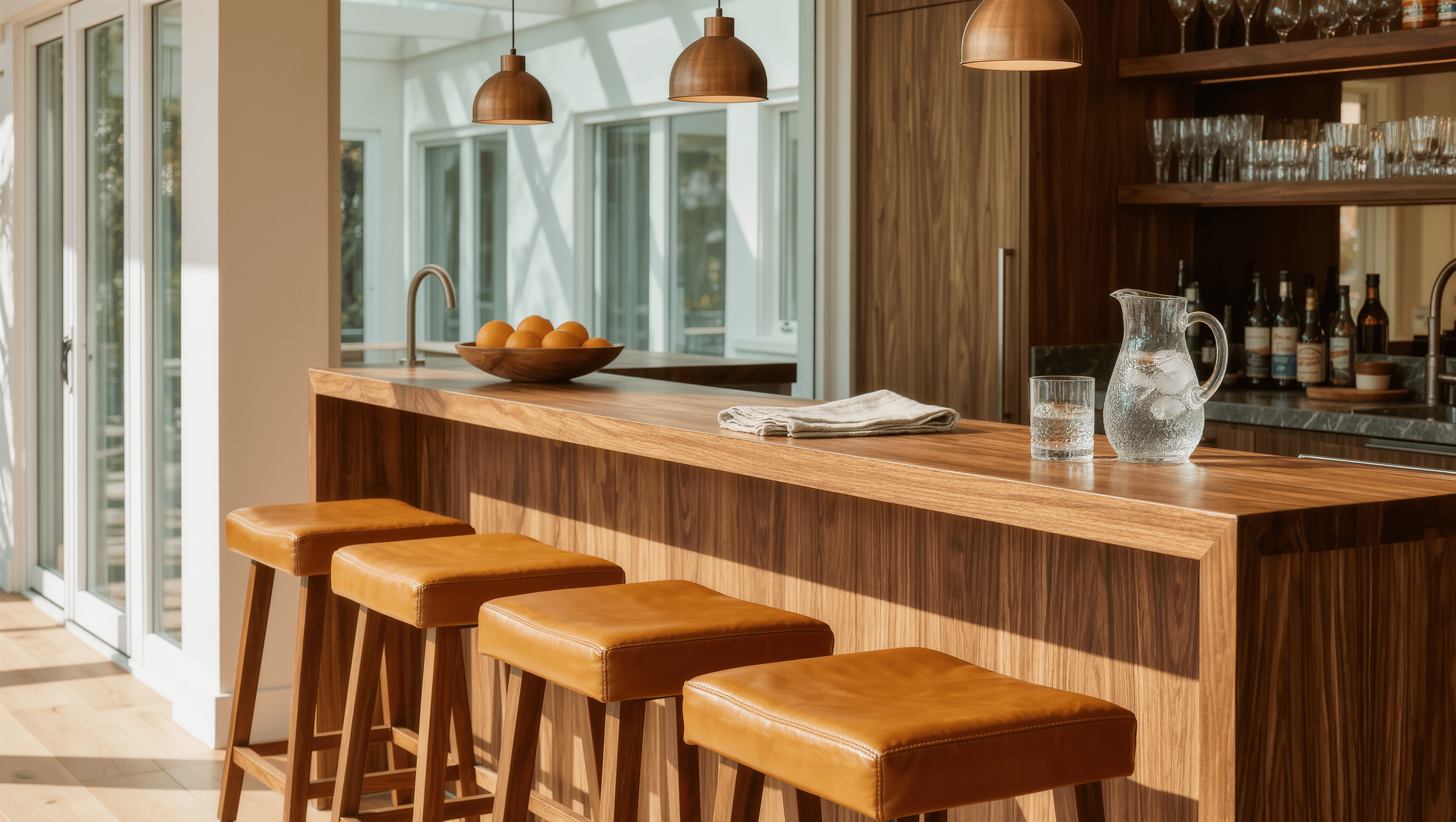
Bar stools are often chosen like jewelry and used like machinery.
The room sees shape, leather, wood, metal, and color. The body discovers seat height, foot support, back angle, swivel radius, knee clearance, and whether anyone can walk behind the person sitting there.
Measure the operating zone before falling in love with the stool.
Match seat height to the actual counter
Do not shop from labels alone. Measure from finished floor to the underside and top of the counter. Then compare that with the stool’s seat height and the amount of vertical space left for thighs and knees.
Thick counters, aprons, drawer rails, and decorative fronts can reduce usable knee space even when the nominal counter height seems standard.
Decide whether people are meant to linger

A backless stool is visually light and can tuck away neatly. It is less convincing if guests are expected to sit through a long conversation. A supportive back and footrest matter more as sitting time increases.
Design for the actual duration, not the cleanest elevation drawing.
Protect the path behind the sitter
Pull the stool out to a comfortable position and imagine a person seated. Then measure what remains behind them. If that strip is a major route to the kitchen, patio, or lounge, the stool cannot consume all of it.
A bar that works only when nobody is sitting at it is decorative millwork.
Swivel changes the footprint
Swivel stools can improve access, especially at deep counters, but arms, backs, and legs may project into neighboring space as the seat turns. Check collisions with cabinet fronts, adjacent stools, walls, and people passing behind.
Space stools for shoulders, not only seat width
The physical stool may fit three times across the counter. Three adults may not. Allow enough lateral room that elbows, bags, and bodies do not turn the bar into an airline row.
Two comfortable stools often look more generous than three compressed ones.
Footrests need to meet the foot
A decorative crossbar is not useful if it sits too high, too low, or too far under the seat. Sit in the stool before buying when possible. Long legs and short legs experience the same geometry differently.
Watch upholstery near a working bar
Light fabrics, delicate textures, and deep seams may be beautiful and unforgiving around citrus, red wine, syrup, and shoes. Choose materials that match the amount of use and cleaning the stool will receive.
Use visual weight intentionally
If the bar itself is heavy stone or dark millwork, a lighter-legged stool can keep the composition from becoming dense. If the bar is visually minimal, a more sculptural stool may provide the character.
The strongest choice responds to the architecture rather than competing with it.
Test getting on and off
Pull the stool out, sit down, stand up, turn, and walk away. Repeat with a bag or drink in hand. If the movement feels awkward in an empty showroom, it will not improve when two other people are seated beside you.
The bar stool is not an accessory once a person sits on it. It becomes part of the circulation system. Choose the one that lets the room keep working while it looks good.


