Function and Flow
The Living Room Needs an Arrival View, Not a Furniture Pileup
The first view into a living room should explain the room before it reveals every piece of furniture. Design the entry sightline around one strong composition, clear circulation, and controlled visual weight.
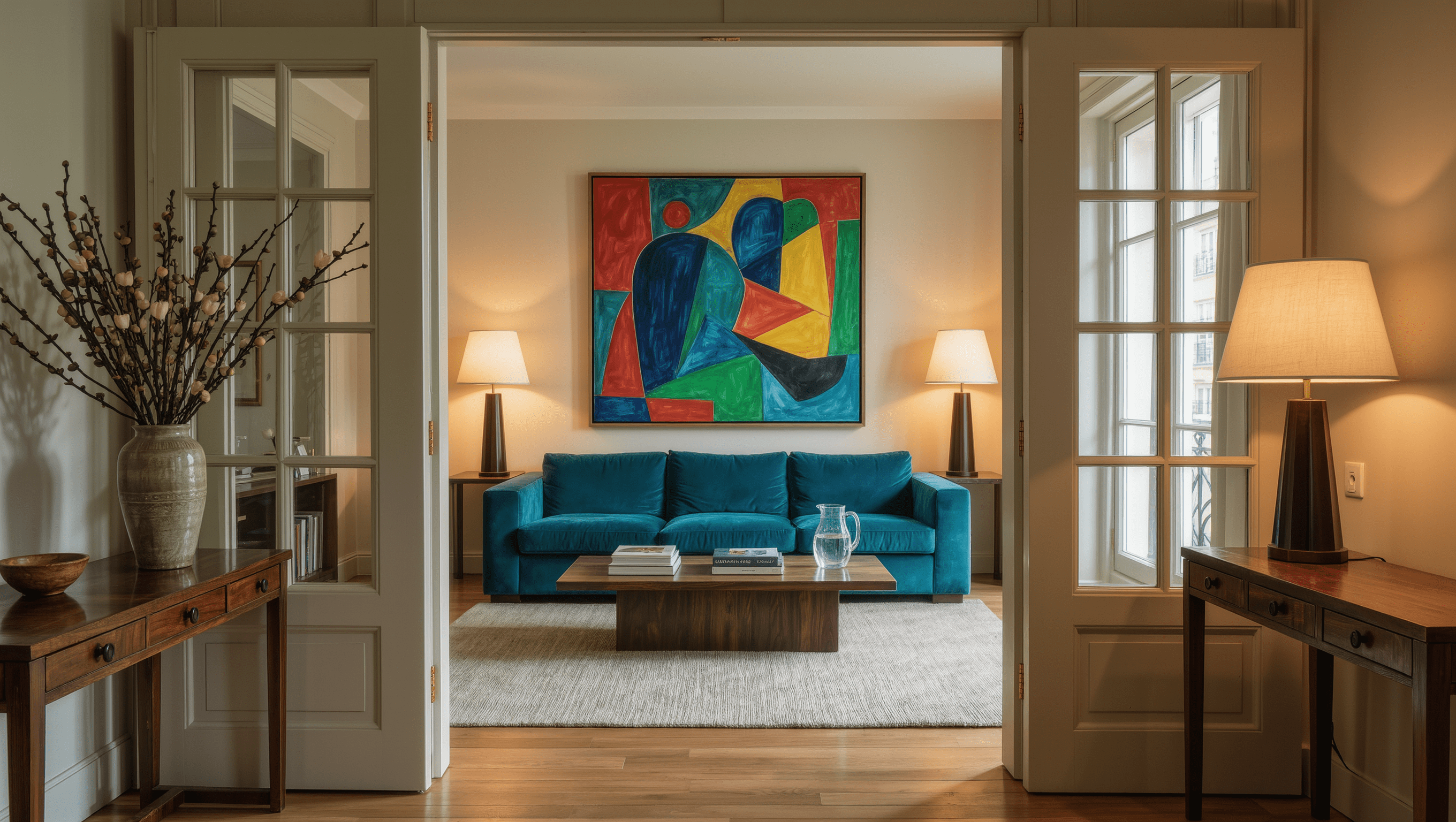
You can have a good sofa, a good rug, good art, and still walk into the living room facing the back of three chairs and the corner of a media cabinet.
The first view matters because it tells the body whether the room is inviting, blocked, calm, formal, chaotic, or unfinished before anyone has registered the individual pieces.
Designing the arrival view is not staging for photography. It is organizing the room around how people actually enter it.
Stand in the doorway before moving anything
Look straight ahead, then slightly left and right. What occupies the first third of the view? A furniture back? A doorway beyond? A window? A fireplace? A blank wall? The strongest arrival usually gives the eye one clear place to land while leaving the route into the room obvious.
If the first impression is five unrelated objects at different heights, the problem may be composition rather than furniture quality.
Choose one element to carry the view

That could be artwork over a console, a well-scaled sofa with a strong wall behind it, a fireplace composition, a view through glass, or a sculptural light. The point is not to make everything symmetrical. It is to give the room one visual sentence before the smaller details begin.
Furniture backs need design too
In open plans and floating layouts, the back of a sofa or chair may be the first thing seen. Treat it as part of the composition. A clean-lined sofa back can stand alone. A console can add lamps or objects if there is enough circulation depth. A low cabinet can give weight and storage.
What rarely works is hiding a bad furniture back with three increasingly smaller objects.
Keep the entry lane legible
A beautiful view loses its authority when the person entering has to decide which side of a chair to squeeze past. Let the route into the room read immediately. Furniture can frame the path without pinching it.
If the room has several entrances, prioritize the one used most often and make sure the others do not create collisions around the same piece.
Use height to control the first impression
Too many tall objects near the entry can make the room feel barricaded. Too many low objects can make it feel visually flat. Put the strongest vertical element farther into the room or on the focal wall so the eye travels toward it rather than stopping at the threshold.
A tall lamp, artwork, bookcase, curtain panel, or plant can create a visual destination without becoming a gatekeeper.
Let one surface stay quiet
Arrival views often fail because every visible surface is styled. Console top, coffee table, shelves, mantel, side table, and window sill are all asking to be noticed at once.
Pick one or two places for detail and let another plane remain calm. Negative space is what allows the deliberate objects to register.
Use color to pull the eye inward
A darker or more saturated wall at the far side can create depth. Repeating one accent from the entry deeper into the room can guide the eye. A contrasting rug border or artwork can establish a destination.
Do not scatter the strongest color equally everywhere. The entry view benefits from hierarchy.
Check the view when the room is in use
Open the laptop on the coffee table. Put a throw on the sofa. Turn on the television. Add the objects that appear during a normal evening. A composition that only works when every surface is empty may be too fragile.
Good arrival design should survive ordinary evidence of life.
Photograph from standing eye level
Do not crouch for the flattering interior photograph. Take the image from where someone actually enters. The camera will flatten depth and make visual collisions obvious: lamp growing from chair, artwork disappearing behind a plant, side table merging into sofa arm.
Fix the collisions before buying anything new.
The living room does not need to reveal its entire personality at the doorway. It needs one confident first view and a clear invitation to enter. The rest of the room can unfold after that.


