Materials, Color & Finish
The Shrubs Are Doing More Work Than the Siding
I cannot afford to replace the siding I dislike. Planting changed how much of the front of the house it gets to dominate — and that is real design work, not a workaround.
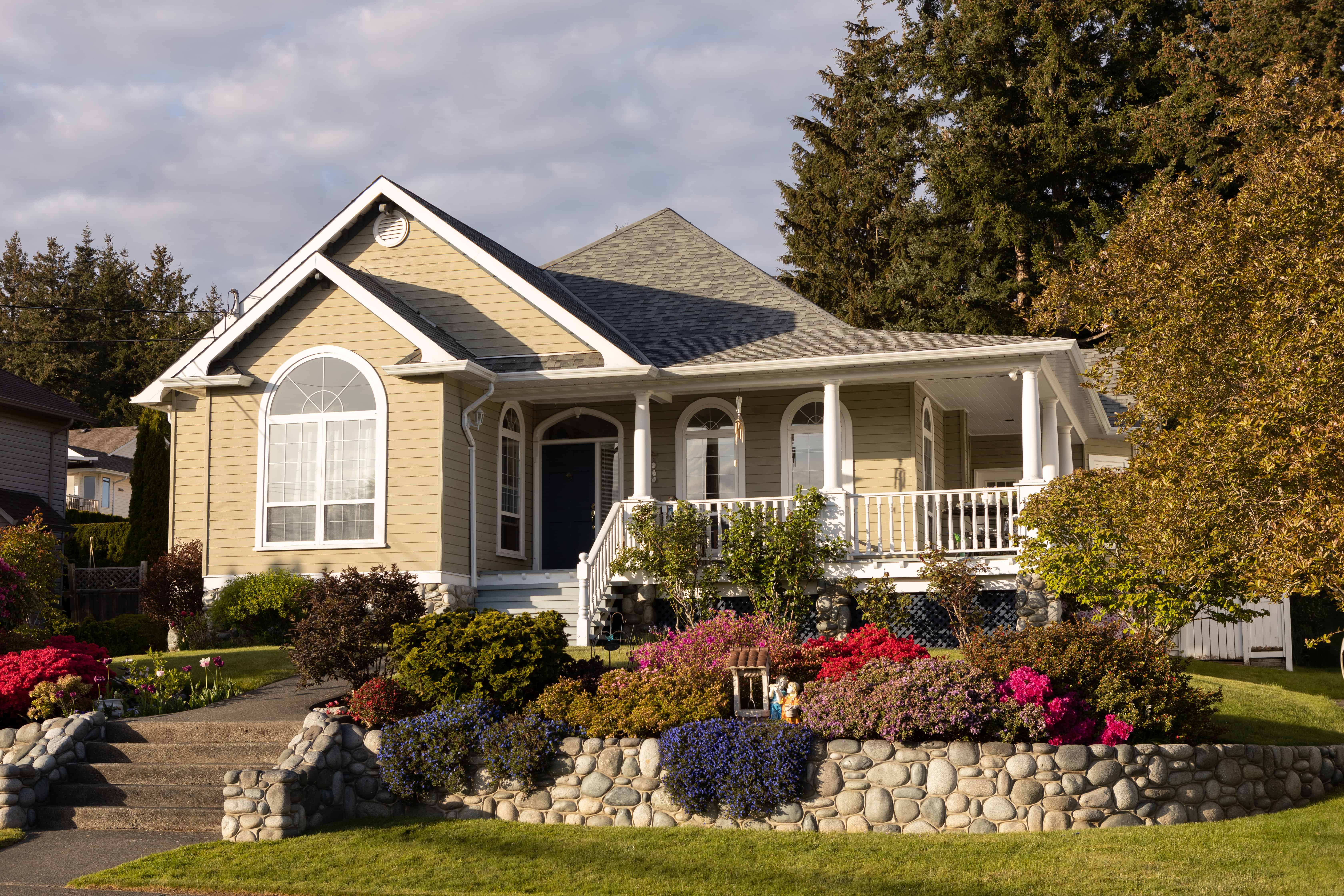
There is one thing about the outside of my house that I have never managed to make peace with: the siding.
In my head, it looks cheap. Maybe somebody else would drive by and think absolutely nothing about it. I notice it every single time. If money were unlimited, I would change it. Money is not unlimited, which is usually where actual houses become much more interesting than design boards.
I am the breadwinner, there is only so much money to go around, and houses are remarkably talented at finding things that matter more than the thing you hate looking at. The roof needs attention. The basement floods. The water heater decides it has completed its life’s work. One of the other 975 things that has absolutely nothing to do with making the house prettier shows up with an invoice.
So the siding stays.
You do not always have to fix the thing you dislike directly
This is one of the most useful things I have learned about houses. Sometimes the answer is not replacing the expensive surface. Sometimes it is changing what the eye sees around it.
Along the front of my house, I planted cotoneaster shrubs. They did not magically turn vinyl siding into some beautiful architectural material. What they did was break up a long, flat facade, add depth, soften the transition between the house and the ground, and give your eye something else to read besides one uninterrupted wall of siding.
For me, that changed the entire front of the house. The siding is still there. I still know exactly how I feel about it. It simply stopped being the only thing I could see.
Shrubs solve a scale problem

A lot of houses have this problem even when the siding is perfectly nice. You have a large vertical plane, then lawn. House. Ground. Done.
That can make the building feel bigger, flatter, and more exposed than it really is. Planting gives you an intermediate scale. The house is tall. The shrubs sit in the middle. Lower flowers, grasses, edging, or groundcover can sit below them. Suddenly the facade has layers instead of one hard stop.
That is why foundation planting can make such a difference even when nothing about the actual structure changes. You are adjusting proportion. You are creating depth. You are letting the landscape participate in the architecture instead of behaving like a green rug rolled out around it.
And yes, curb appeal matters
I would not promise that planting a row of shrubs automatically adds a specific dollar amount to your sale price. Houses do not work that neatly, and neither do buyers. But the exterior is the first read of the property. A house that feels cared for, softened, proportioned, and intentional is making a very different first impression from the same house sitting starkly in the middle of the lot.
Landscaping can support curb appeal and perceived value because it changes how the entire property is read. It can make an inexpensive finish feel less dominant. It can make a plain elevation feel established. It can make a newer house feel less dropped onto the land and an older house feel more cared for.
That matters whether you are selling next year or you are not going anywhere.
Do not plant a hedge just because somebody said curb appeal
The point is not to march identical shrubs across the front of every house. Think about what the facade actually needs.
If the wall feels too long, break the length. If the foundation feels exposed, soften it. If the entry disappears, use planting to help lead the eye toward it. If a window is one of the best features on the front of the house, do not grow a shrub directly in front of it until the window becomes theoretical.
And please look at mature size before planting. The cute little shrub in the nursery pot is not signing a contract to remain cute and little forever. Leave room for the plant you are actually buying, not the plant you are carrying to the car.
This is where spending less can still look intentional
There are home projects where the cheaper workaround looks exactly like a cheaper workaround. This does not have to be one of them.
Plants are not pretending the siding is different. They are doing another job entirely: adding scale, texture, movement, color, softness, and context. That is real design work.
My shrubs did not solve the siding problem. They solved how much the siding dominated the front of my house. That distinction matters.
You are allowed to fix the view before you fix the material
Most of us have at least one thing about our houses we would replace tomorrow if the budget were not also responsible for keeping water outside, heat inside, and plumbing where plumbing belongs.
You do not have to wait for the major renovation to make the house feel better. Sometimes you plant the shrubs. You add the flowers. You build another visual layer. You make the thing you cannot afford to replace stop shouting quite so loudly.
That is not hiding a flaw. It is working with the house you actually have.


