Function and Flow
Store Up High, Live Down Low: The Two-Level Storage Rule
Vertical storage works best when the room has two systems: an easy-reach daily zone and a higher archive zone for things that do not deserve prime real estate.
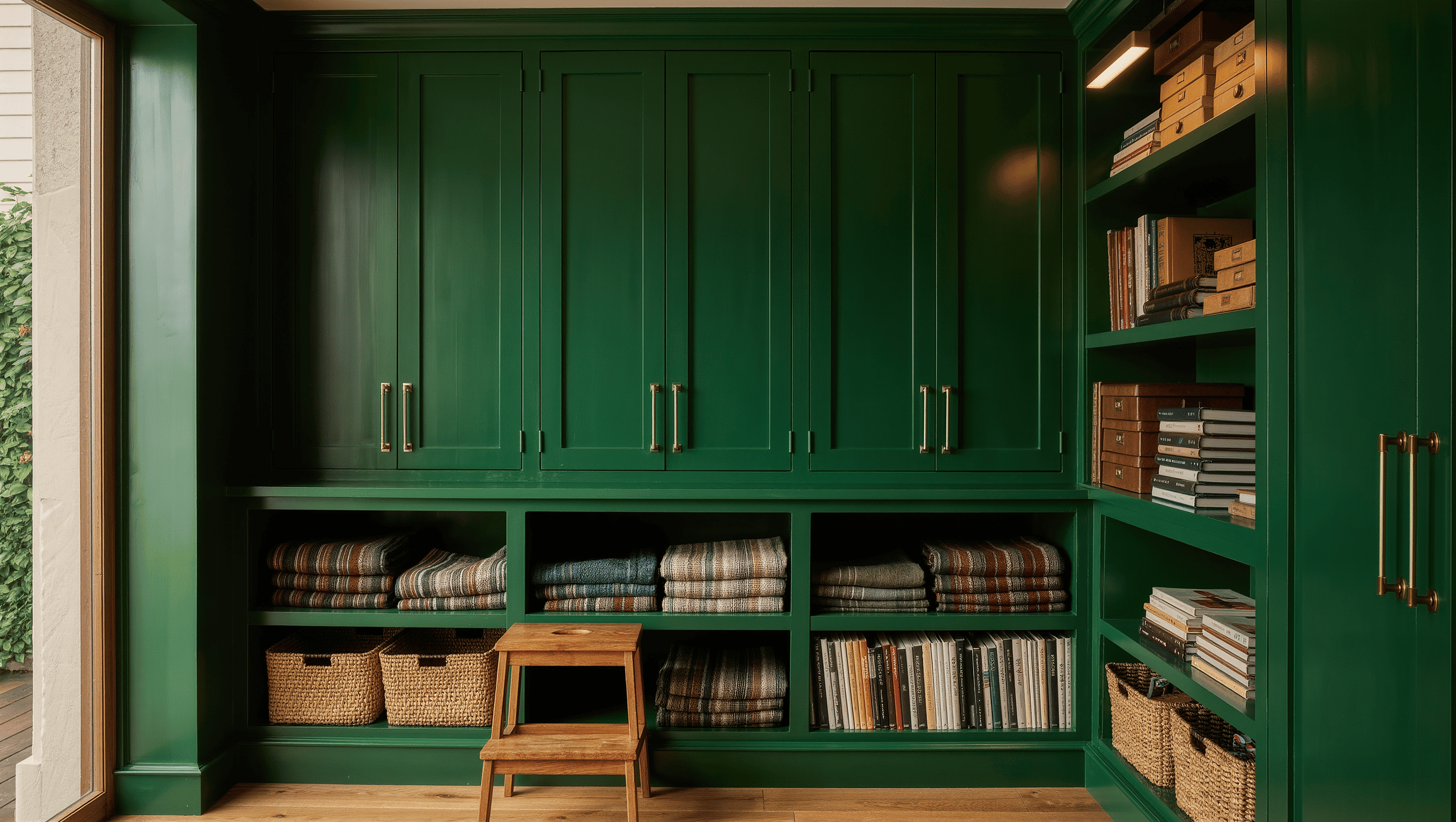
“Use vertical space” is good advice until the cereal, printer paper, dog leash, everyday towels, and phone charger all end up above your head. A small home does need to use height. It does not need to make every ordinary task depend on a step stool.
The cleaner system is to separate storage by frequency. Daily life belongs in the easy zone. Backup, seasonal, sentimental, and occasional items belong in the archive zone above it.
Prime reach is expensive real estate
The shelves and drawers you can reach comfortably without bending, stretching, or climbing should hold the things that keep the day moving. Plates. Glasses. Medication stored appropriately. Daily clothes. Frequently used tools. Cleaning supplies that need secure but practical access. The exact placement depends on the user, but the principle is universal: the easiest space should contain the most frequent action.
Compact homes often get this exactly backward: the visually tidy cabinet above the refrigerator holds paper towels while the everyday pantry spills onto the counter. The architecture is winning an argument the household never agreed to have.
The archive zone is where height finally pays off

Upper cabinets, top shelves, over-door storage, and the space above wardrobes are better for items with low retrieval frequency: holiday dishes, luggage, off-season textiles, spare bedding, bulk supplies, archival files, or equipment used a few times a year. Containers should be light enough to handle safely and labeled clearly enough that you do not have to open six identical boxes while standing on a ladder.
IKEA’s small-home research repeatedly points to vertical storage as a way to make more of limited cubic space. The important addition is access discipline. Capacity is not the same as usability.
Do not fill the ceiling line just because it exists
Floor-to-ceiling cabinetry can make a compact room feel coherent when it reads as one architectural volume. It can also make the room feel as if the walls are slowly closing in. Concentrate tall storage on one strong wall or in a visually quiet zone rather than ringing the entire room with high cabinets.
Keep windows and major sightlines from being pinched by deep upper storage. Consider cabinet fronts that reduce visual chatter if the volume is large. Then leave some wall alone. Negative space is not wasted storage capacity; it is how the storage you built stops looking like a warehouse.
Clutter is also a decision backlog
UCLA’s research on household clutter is useful here because it shows that sheer possession volume and overflowing storage can affect how people experience the home. A taller cabinet does not solve an inventory problem if the house is already keeping everything by default. Before building to the ceiling, decide whether the upper zone is storing genuinely needed occasional items or merely postponing decisions at eight feet high.
Protect the reachable shelf
Use height aggressively for low-frequency objects and protect comfortable reach for the daily ones. Concentrate tall storage instead of sprinkling it everywhere. Label the archive. Keep the ladder out of ordinary routines. A small home should use its cubic volume, yes. It should not require mountaineering to make coffee.
Research note: This article draws on IKEA’s small-space storage research and UCLA’s Center on Everyday Lives of Families work on household possessions and clutter. Storage systems that require climbing should be planned with safe access, stable equipment, and appropriate load limits.


