Awkward Spaces
The Space Behind the Furniture Is Not a Dust Reserve
The gap behind a sofa can carry lighting, shallow storage, a console, plants, or circulation—but only if the room actually benefits from a second layer. Measure the route before filling it.
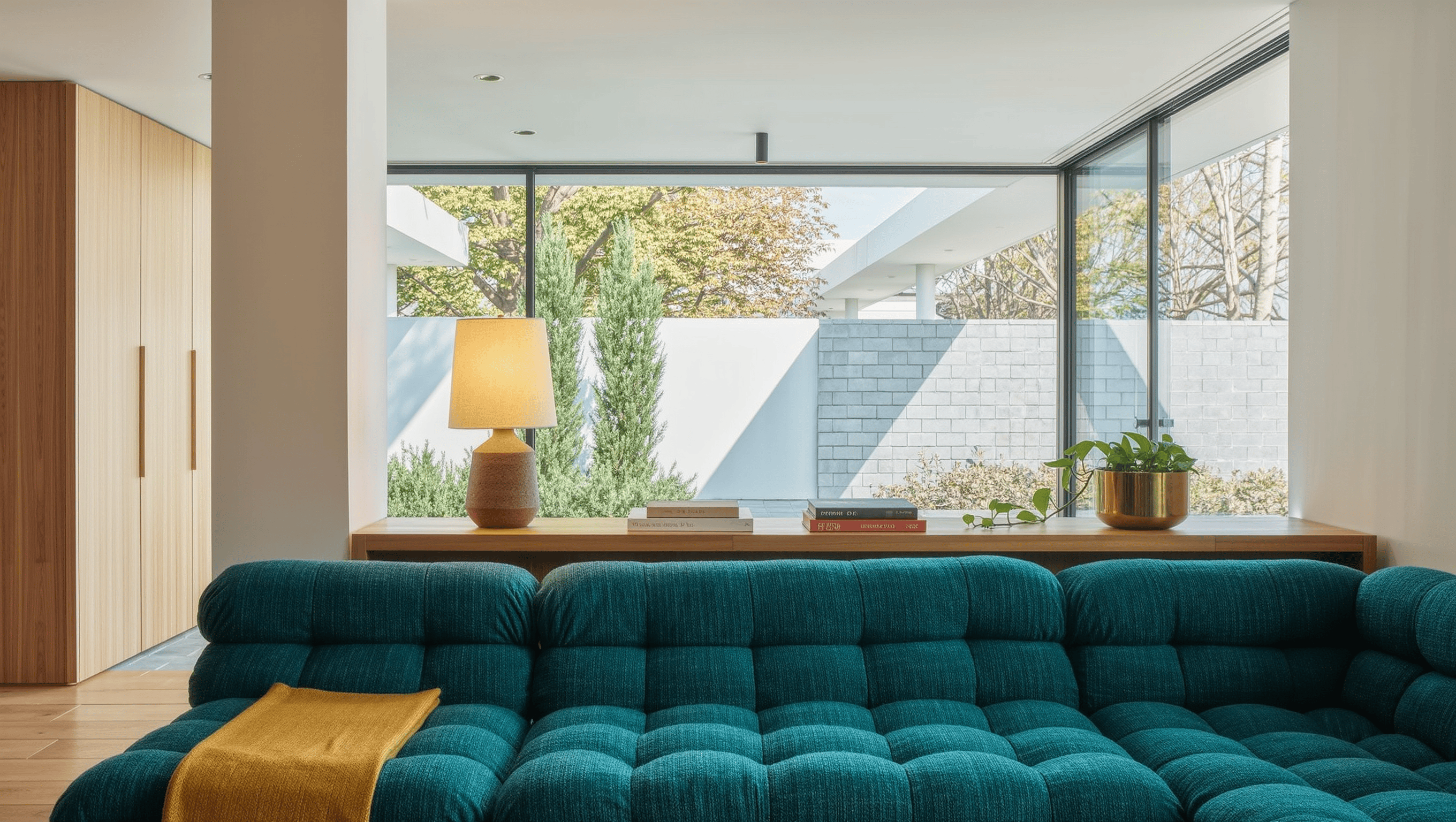
The space behind a sofa, dining table, or other major furniture piece often becomes the room’s least intentional territory: too narrow to be a room, too visible to ignore, and just useful enough to attract a console, shelf, basket, plant, or decorative object whether any of them belong there.
Residual space needs a job before it gets furniture. Sometimes that job is circulation. Sometimes it is storage, light, art, or a serving surface. Sometimes it should remain open.
Do not turn every strip behind furniture into a second furniture plan.
Start with the route
If people walk behind the sofa or dining chairs, protect that path first. Include occupied chairs, bags, children, pets, and the objects commonly carried through the space.
A console that narrows a useful passage is not improving the back of the sofa. It is decorating a circulation problem.
The sofa back can already be an edge

A floating sofa defines a room boundary by itself. You do not automatically need a console to prove the edge exists.
Look from the adjoining zone. If the sofa back is visually calm and the route is clear, leave it alone.
Add a console only when it supplies a real function: lamp, landing surface, closed storage, or a stronger visual boundary.
Check console depth in operation
A console may fit behind the sofa and leave no comfortable route behind it. Include drawer or door operation, cord access, and the space required to stand at the surface.
Shallow furniture can still create a meaningful pinch point in a narrow passage.
Use light without adding furniture where possible
A floor lamp, wall light, or architectural source can give the sofa edge presence without a table.
This is useful when the room needs height or evening atmosphere but cannot afford more depth.
Fixed wall lighting requires appropriate installation.
The wall behind a dining table has a different job
A dining wall may support art, a sideboard, serving, glassware storage, or simply act as a calm background to the table.
Check chair pull-out and serving circulation before adding a cabinet. A beautiful sideboard is not useful when diners cannot sit comfortably in front of it.
Give dining storage enough distance
Doors and drawers need to open while the room is used. If accessing the sideboard requires moving occupied chairs, the storage may be too deep or in the wrong location.
Use the wall for art or shallow display if the operating footprint cannot support furniture.
Use art to carry the wall without using floor area
A large artwork, textile, mirror, or disciplined grouping can make the space behind furniture feel complete without adding another object to circulation.
Scale the art to the furniture and wall. Several small pieces may make a long wall feel more fragmented when the room needs one stronger field.
Keep storage tied to the nearby activity
A sofa console can store remotes, games, or blankets if those categories belong there. A dining sideboard can hold serving pieces or table linens.
Do not use residual furniture as generic household overflow. The new storage should shorten a route, not create another category to maintain.
Use the strip for charging carefully
A console behind the sofa can become a convenient charging zone when power is safely available and cords are controlled.
Do not run extension cords across walking paths or trap plugs where furniture crushes them. Permanent electrical changes require qualified help.
Let plants soften without blocking
A tall plant behind furniture can add height and soften the edge when light and care conditions are appropriate.
Plan for mature growth and watering access. The plant should not turn the passage into a leaf tunnel or require moving the sofa every week.
Use open space as a maintenance advantage
A clear strip behind furniture can make cleaning, window access, curtains, vents, and occasional furniture movement easier.
Do not give up that flexibility without a specific reason.
Photograph the reverse view
Rooms are often designed from the primary seating view and neglect what adjacent spaces see. Photograph the sofa back, dining wall, or residual zone from the entry and neighboring room.
If the area looks unresolved, decide whether the missing element is vertical, functional, or simply scale—not automatically another piece of furniture.
Give the strip a job or close it up
The space behind furniture is valuable because it can create circulation, boundary, storage, light, and visual relief.
Use it for one of those jobs intentionally. If the strip only exists because furniture floated into the room, it does not owe you a console.


