Awkward Spaces
The Wall Above the Toilet Is Not a Floating-Shelf Requirement
The vertical space above a toilet can hold closed storage, art, lighting, or nothing at all. Plan around reach, cleaning, moisture, visual weight, and the room's actual storage shortage.
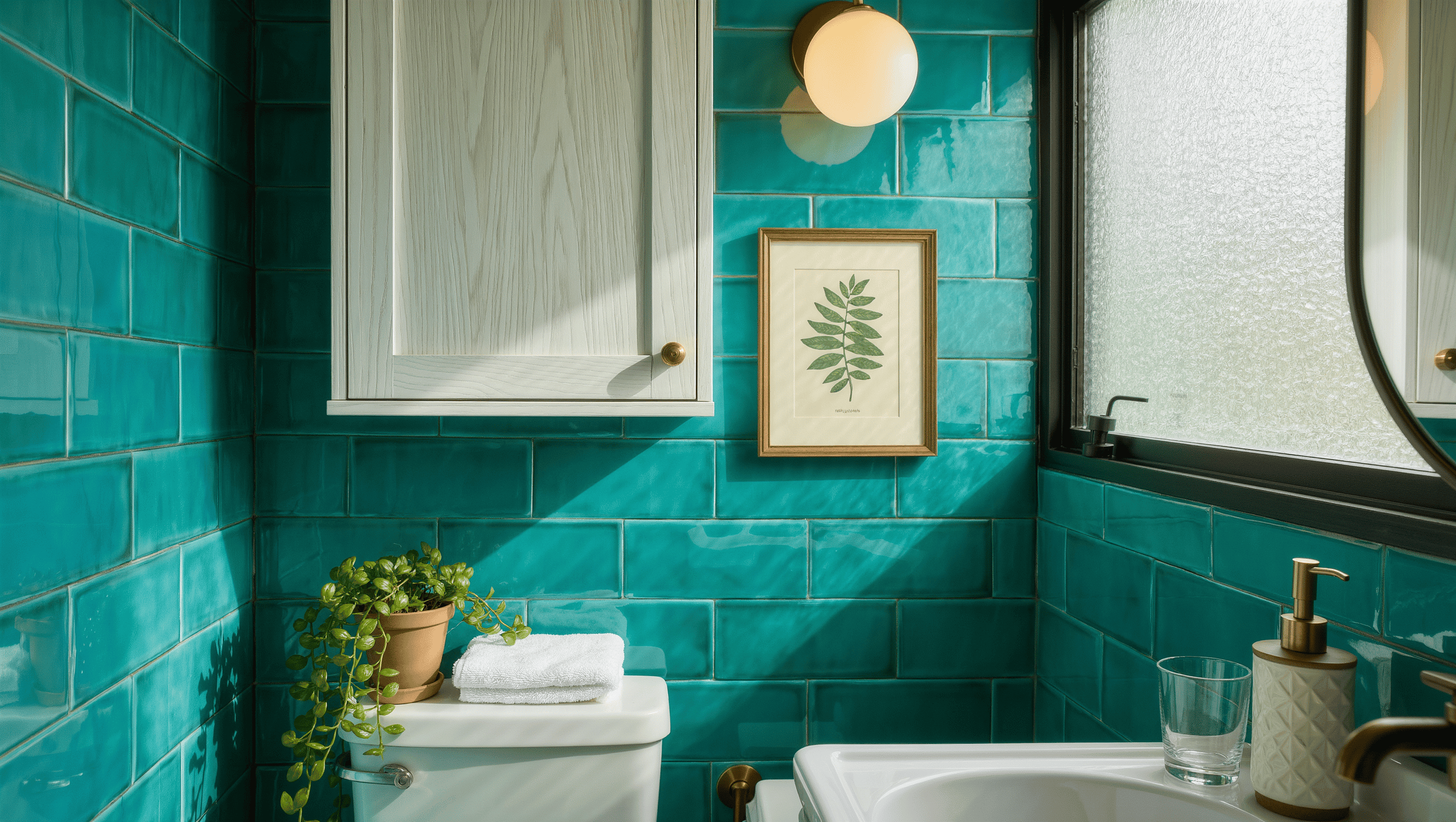
The wall above the toilet is not a compulsory floating-shelf program.
It is a vertical surface in a small, moisture-prone room, usually above an object people need to use and clean around. That wall can hold art, shallow storage, a cabinet, color, a mirror, or absolutely nothing.
The best choice starts with what the bathroom lacks—not with the existence of an empty rectangle.
Decide whether the problem is storage or visual balance
If towels, paper, toiletries, or cleaning supplies genuinely need a home, storage may be useful. If the bathroom already has adequate capacity and the wall simply looks blank, solve the visual problem with art, color, tile, or one strong object instead of building maintenance into the wall.
A blank wall is not evidence of insufficient shelves.
Keep storage shallow

Deep cabinets or shelves can make a small bathroom feel more compressed and may project into the standing or cleaning zone.
Mock the depth with cardboard and stand in front of the toilet. Check sightline, head clearance, cleaning access, and whether the room begins to feel top-heavy.
Closed storage often earns the moisture better
Open shelves expose paper, towels, and small toiletries to dust and humidity and create a styling burden.
A closed cabinet may keep practical supplies quieter, but the materials, ventilation, and installation still need to suit the bathroom environment.
Do not store items in a damp zone if moisture will damage them.
Art can be the cleaner answer
One appropriately sized artwork or framed piece can give the wall visual authority without creating another surface to dust.
Choose materials and framing that can tolerate the room’s humidity conditions. Valuable or moisture-sensitive work may belong elsewhere.
Use one shelf only when the shelf has a job
A single shallow ledge can hold a small number of useful or meaningful objects while leaving the wall legible.
Do not install three shelves because the wall is tall. More shelves usually produce more small objects and a stronger maintenance contract.
Keep the flush and service access obvious
Do not place objects where they interfere with toilet operation, tank access, plumbing, controls, or maintenance.
Where concealed systems, in-wall tanks, vents, or other building components are involved, preserve required access.
Do not put heavy objects where falling matters
Secure wall-mounted storage appropriately for the wall construction and load. Avoid precarious stacks, heavy unsecured decor, or glass objects that could fall into the occupied zone.
Bathroom storage is not the place for optimistic mounting.
Use paint or tile to make the wall intentional
A deeper color, repeated tile, paneling suitable to the room, or another wall treatment can make the vertical plane feel finished without adding projections.
This is especially effective in a small bathroom where floor and circulation are already tight.
Check the room from the doorway
The toilet wall may be the first thing visible on entry, or it may barely register from the main approach.
Spend design effort according to the sightline. A wall seen only from inside the bathroom may not need to carry the room’s main decorative event.
Do not store backups at the most visible point by default
Extra paper or supplies can be useful nearby without becoming the composition.
A basket on a shelf can quickly become a visual cue that the wall exists mainly for bulk inventory.
Keep immediate backups close; store excess elsewhere when the room allows.
Ventilation matters
Persistent damp, condensation, mold, or poor ventilation needs diagnosis. Shelves, cabinets, and decor should not cover evidence or impede airflow.
Building-performance problems require appropriate professional attention before decorative solutions.
Empty is not a storage cue
The wall above the toilet should solve a real bathroom need or stay visually useful through color, art, or quiet.
Do not turn empty vertical space into storage automatically. Small bathrooms improve when every projection earns its depth.


