Outdoor Rooms
Native Landscaping Without the Wild-Mess Excuse
Design a native landscape around structure, mature size, bloom sequence, water needs, habitat value, maintenance, and the way the yard is actually used.
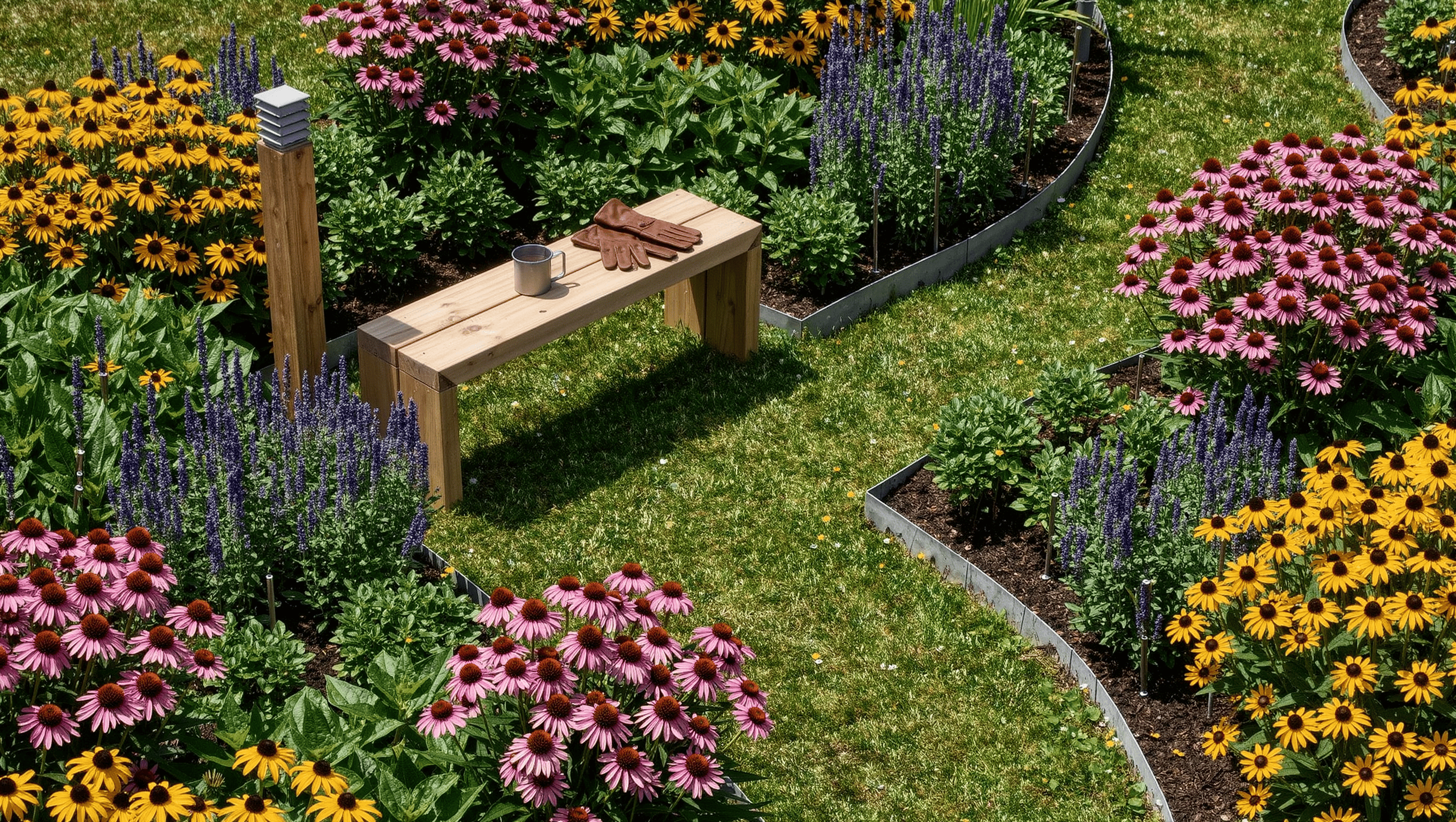
Native planting does not require the yard to look accidental.
Native landscapes can bring lower-input planting, stronger regional fit, habitat value, and gardens that make more sense in local weather. The design opportunity is to use those plants with enough structure that ecological usefulness and everyday beauty reinforce each other.
Define what native means for your site
Native status is regional, not decorative. A plant native to another part of the country may not behave like a native in your climate, soil, elevation, or moisture pattern.
Use reputable regional resources, extension services, native-plant organizations, or qualified local professionals to confirm suitability before buying by label alone.
Start with structure before flowers

Trees, shrubs, grasses, evergreen forms, and durable perennials establish the bones of the landscape. Flowers can then move through that structure seasonally.
A garden built only around bloom can look empty or chaotic outside its peak weeks.
Repeat plants in readable groups
Native landscapes become easier to read when plants recur. Use drifts, repeated clusters, or repeated forms instead of one specimen of every species available.
Repetition also makes maintenance and plant identification easier.
Design for mature size
Check mature height and spread before planting near paths, windows, utilities, fences, or seating. Plants should be allowed to grow into their form without requiring constant pruning to fit a space that was too small from the beginning.
Leave circulation and maintenance access visible in the plan.
Match plants to actual water conditions
Native does not automatically mean drought-proof. Some native plants want wet soil, shade, seasonal moisture, or specific drainage conditions.
Group plants with similar water needs and use irrigation strategically during establishment and where long-term conditions require it.
Plan a bloom and habitat sequence
Use plants that provide interest across spring, summer, fall, and winter. If pollinator or wildlife support is part of the goal, think about overlapping bloom times, seed, shelter, and host-plant value rather than buying only for one colorful month.
Keep habitat goals compatible with household use, pets, children, visibility, and local requirements.
Use edges to signal intention
A clean path, mown edge, low wall, gravel band, curb, or repeated border can help a loose planting scheme feel deliberate. The contrast between a clear edge and more naturalistic planting is useful.
Do not edge every bed into submission; one strong boundary system is usually enough.
Leave room for seasonal change
Native gardens often look different through the year. Seed heads, dried grasses, branching, and winter structure may be part of the design rather than debris waiting for removal.
Decide what stays through winter and what gets cut back, and make that maintenance rhythm explicit.
Control weeds early
New native plantings can be vulnerable while they establish. Prepare the site properly, understand existing weed pressure, mulch or use ground-cover strategies where appropriate, and monitor young beds.
A low-maintenance landscape becomes low-maintenance after establishment; it is not necessarily low-work on day one.
Use fewer lawn assumptions
Native planting can replace some lawn where turf serves no useful purpose, but keep durable open ground where play, circulation, pets, snow storage, or flexible use actually needs it.
The goal is not ideological lawn removal. It is allocating space to the surfaces and plants that best support the household and site.
Plan maintenance as design
List the recurring tasks: watering during establishment, cutting back, dividing, pruning, weed control, leaf management, and path cleanup. Choose a planting density and species mix the household can realistically maintain.
If the landscape requires expert plant identification every weekend, it may be ecologically interesting but operationally wrong for the owner.
The native-landscape audit
- Are the plants truly appropriate to the region and site?
- Is there year-round structural planting?
- Are key species repeated?
- Do mature sizes fit paths, windows, and utilities?
- Are water needs grouped sensibly?
- Is there a clear maintenance and weed-control plan?
- Does the landscape support how people actually use the yard?
See Outside and The Reference Room for related guidance on outdoor structure and seasonal direction.
A native landscape can be ecologically useful, visually strong, and easier to maintain. It still needs composition. Regional fit is the material; structure is the design.


