Outdoor Rooms
The Night Garden Is Where the Plot Thickens
Design a night garden through legible routes, silhouette, pale and reflective material, controlled fragrance, warm gathering points, and darkness preserved where it adds depth.
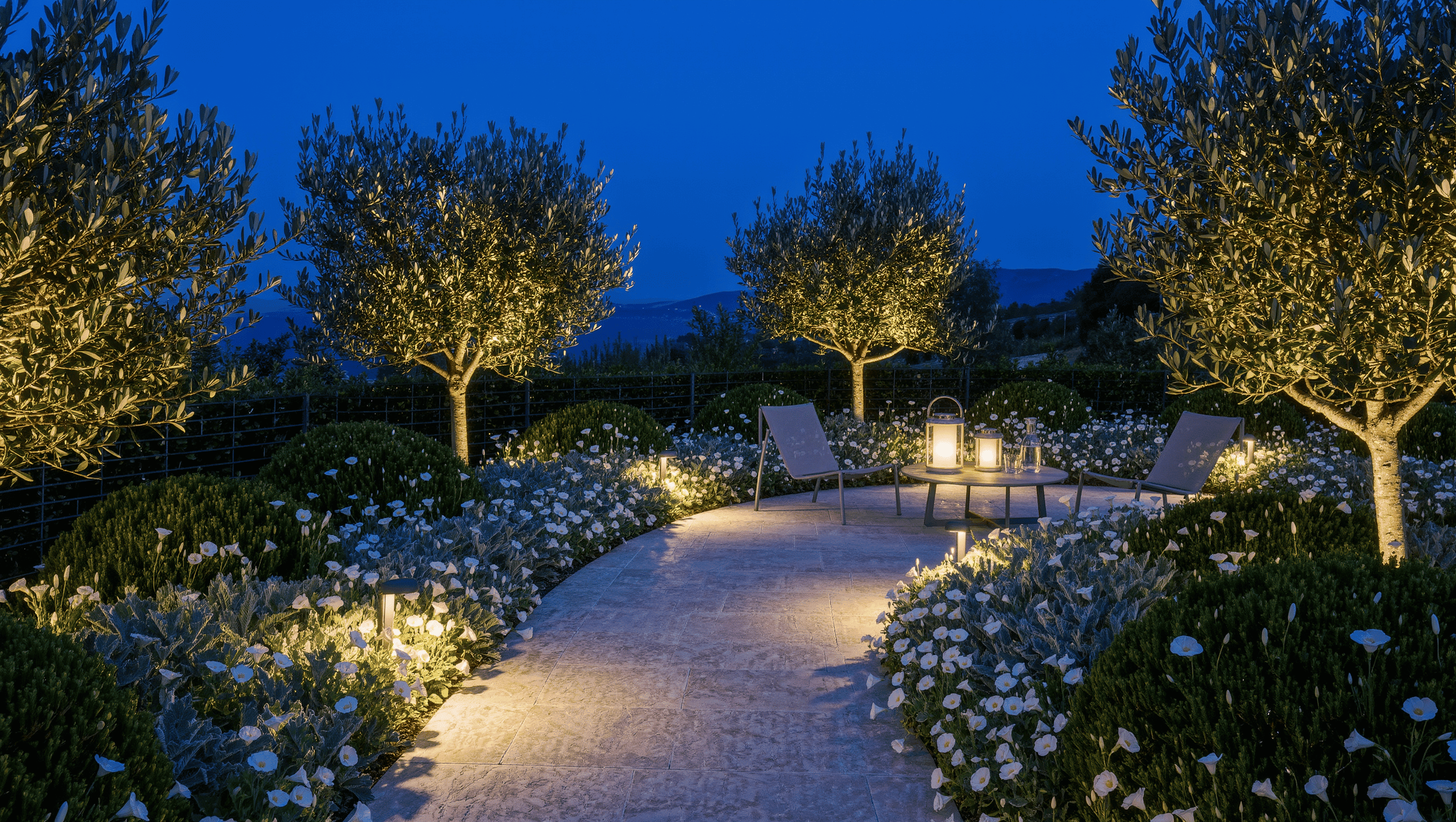
The garden changes character after dark. Foliage becomes silhouette. White flowers become brighter. Paths disappear. Glass and water catch small points of light. The shed suddenly looks either charming or suspicious.
A night garden is not daytime landscaping plus more fixtures. It is a separate reading of the same space, built from routes, shadow, scent, pale planting, reflection, and restraint.
The goal is to make the garden usable and atmospheric without flattening the night into outdoor daytime.
Start with the routes that must remain legible
Identify doors, steps, gates, level changes, dining routes, paths to bins or sheds, and any area used after dark.
Safety lighting belongs before decorative lighting. The route should be visible enough to navigate without glare.
Light the destination, not every leaf

A table, bench, tree, wall, water feature, or planted mass can become a night focal point.
Choose a small number of destinations and let darkness remain between them. If every shrub receives a spotlight, the garden loses depth and becomes a showroom for fixtures.
Use shadow deliberately
Leaves projected onto a wall, branches silhouetted against a pale surface, or a dark hedge framing a lit table can create more atmosphere than direct light on every object.
Test fixture position temporarily before permanent installation. A small change in angle can transform a shadow pattern—or shine directly into someone’s eyes.
Use pale planting as a night signal
White, cream, silver, and pale flowers or foliage can remain visible in low light and reflect small amounts of illumination.
Do not build an entire garden around nighttime visibility if the daytime composition then becomes weak. Use pale plants as repeated accents or destinations within a broader palette.
Scent becomes more noticeable at night
Some fragrant plants are particularly noticeable in evening conditions. Choose species suited to the site and local climate, and keep scent restrained around seating if strong fragrance is not universally welcome.
Atmosphere should invite people to stay, not force them to move because the planting became perfume infrastructure.
Use water and reflective surfaces carefully
Water, glazed pots, metal, glass, and pale stone can catch small light sources and create depth.
Keep water features safe, maintained, and appropriate to the site. Do not rely on reflection where glare or slippery conditions could create problems.
Let the house participate
Interior light seen through windows can become part of the garden’s nighttime composition. A warm dining room or hallway can act as a luminous backdrop.
Before adding more outdoor fixtures, step outside and look back at the house. The building may already be providing a significant light layer.
Control glare at eye level
Outdoor lighting is easy to overdo because the background is so dark. Shield sources where possible and aim light at surfaces rather than eyes.
Check views from seated positions, neighboring windows, and indoor rooms.
Respect neighbors and wildlife
Excessive nighttime light can create nuisance and ecological impacts. Use the lowest useful level, direct light only where needed, and consider timers or controls that turn lights off when the space is not in use.
Local dark-sky guidance or regulations may apply.
Use warm pools for gathering
Dining and conversation areas often feel more intimate under lower, warmer light than under broad floodlighting.
Outdoor-rated lamps, pendants under appropriate covered structures, wall lights, or carefully placed portable sources can create the social center.
Fixed electrical work requires qualified installation and equipment appropriate to exposure.
Make storage part of the night routine
Lanterns, cushions, candles, portable lights, and blankets may need to come in or be stored after use.
Keep the reset short enough that the garden remains enjoyable rather than becoming an evening equipment deployment.
Check the garden in every season
Leaf-out, bare branches, snow, rain, flower cycles, and changing sunset times alter the night composition.
Lighting aimed at summer foliage may shine into a window after leaves drop. Review fixed lighting seasonally and adjust where possible.
Avoid theatrical hazards
Open flames, poorly secured string lights, extension cords across paths, and fixtures not rated for outdoor use do not become safer because the atmosphere is excellent.
Follow product guidance and local requirements. Keep combustible materials, plants, textiles, and structures appropriately separated from heat or flame.
Let some of it stay dark
The night garden is strongest when darkness is still allowed to exist. Light the route, choose a few destinations, use pale planting and reflection selectively, and let shadow do some of the design work.
The plot thickens because the garden reveals less—not because every object has been illuminated for questioning.


