Awkward Spaces
Pet-Friendly Design Starts With a Better Landing Zone
Pet-friendly design should follow the animal's real routine: sleep, food, cleanup, storage, durable materials, and an easy route in and out.
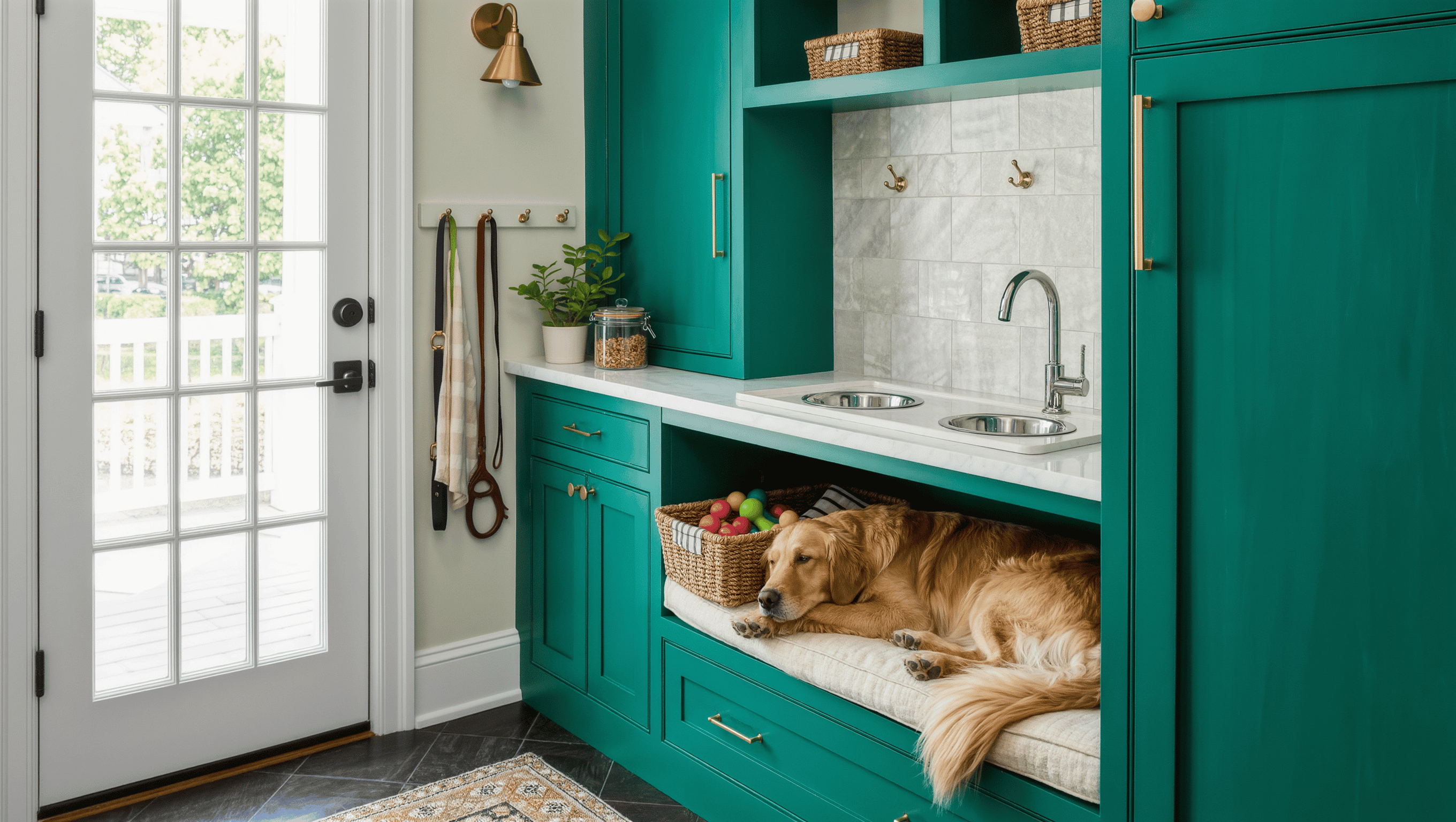
Pet-led design has officially escaped the basket in the corner.
Current home coverage is full of built-in feeding stations, dog-wash areas, hidden litter solutions and pet nooks tucked into cabinetry or under stairs. The Guardian has looked at the rise of dedicated pet spaces in the UK, and The Washington Post has reported on pets influencing everything from flooring to full room layouts.
Some of it is useful. Some of it looks like a tiny boutique hotel built for a creature who is currently asleep upside down beside the laundry hamper.
I am interested in the useful part. I am not opposed to the tiny chandelier. I just need the leash to stop living on the doorknob first.
Design for the animal you actually live with
Where does the pet already choose to sleep? Where do food, water, leashes, treats, towels, brushes, toys and medications live now? Where do muddy paws enter the house? Does the animal like enclosure, or does it want to keep one suspicious eye on everybody in the room?
That routine is the design brief. Not the adorable rendering. Not the miniature archway. Not the cabinet color.
A pet space works when it makes the animal more comfortable and the household easier to run. If miniature wallpaper also makes you happy, excellent. We are allowed to be extra. I simply want the extra to be sitting on top of something functional instead of covering for the fact that the water bowl is still in the middle of the walkway.
Under the stairs works because the scale finally makes sense

Low stair space can be miserable for an adult desk and completely reasonable for a dog bed or open cubby. The geometry may also make room for leash storage, towels, food bins or toys nearby. That is a better use of the low zone than forcing a human function into a triangle where nobody can stand up without learning a lesson.
The space still needs safe access, ventilation and enough room for the animal to turn, settle and leave freely. Do not build a sealed decorative box because it looked charming online. Check for wiring, HVAC, plumbing or structural conditions before altering a stair enclosure. The broader under-stair space guide still applies; the resident is just shorter and considerably hairier.
Put the messy jobs where the mess enters
If the dog comes through one door after walks, that is where the towel hook, leash drawer, wipeable mat and basket should live. A beautiful pet station across the house is decorative storage. The mud remains committed to the original entrance.
Food and water need the same reality check. Pick a location that is easy to clean and not directly in the main traffic line. Built-in bowls can look tidy, but they also make that feeding spot permanent. A removable tray or furniture piece may be smarter if the routine is still changing.
Choose finishes for paws, claws, hair and the day nobody wiped anything down
Washable bedding. Durable finishes. Surfaces that tolerate regular cleaning. Rounded or protected edges where the animal moves. No loose decorative nonsense at chewing height.
This is one place where I have zero interest in designing for aspirational behavior. If the pet scratches, sheds, chews or comes inside damp, build for that pet. Aspirational behavior is not a finish material.
Make the pet zone belong to the room without turning the pet into decor
The best version borrows the room’s materials, proportions and mood. A bench can hide pet supplies. A cabinet base can open into a bed bay. A low niche can take the wall color and better bedding. It can look polished without screaming “custom dog feature” from across the house.
And give the animal some choice. The dog may use the beautiful nook. The dog may still sleep on the sofa because apparently we all report to the dog now.
That does not make the design a failure. The pet zone can still contain the gear, speed up the walk routine, protect the route and give the animal another good place to settle. A house is allowed to offer options. We do it for humans constantly.
So yes, build the pet nook if it solves something. Paint it beautifully. Make it part of the room. Add the tiny chandelier if you absolutely must.
Just make sure the towels are within reach when the dog finds mud.
Research note: trend context from The Guardian’s 2026 reporting on pet nooks and The Washington Post’s reporting on pet-driven home design.


