Small Interiors
The Tiny Room That Decided to Be Electric
A small room does not need to whisper. This full-length guide shows how saturated color, deliberate pattern, plants, reflective surfaces, and concentrated light can give a compact space real presence without turning it into visual static.
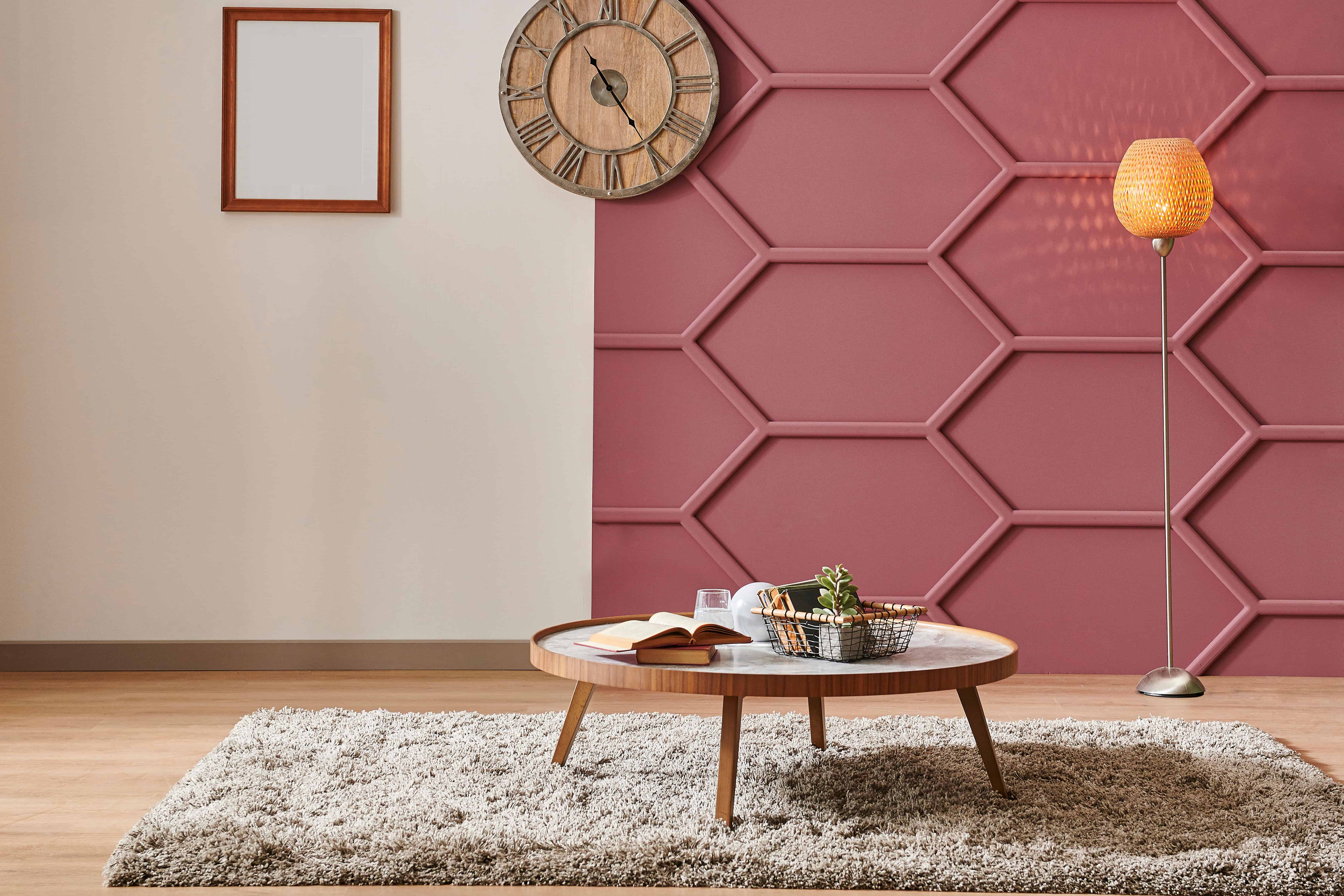
A small room is often treated like an apology. Pale walls, undersized furniture, one timid print, perhaps a basket placed in the corner to prove that storage has been considered. The result is technically sensible and emotionally unavailable.
Compact rooms do not need less personality. They need personality with sharper editing. The room cannot afford ten weak ideas, but it can absolutely carry three strong ones.
01
Commit to one color
Repeat it on a second plane so intensity reads as structure, not a sample card.
02
One dominant pattern
Let it behave like architecture; smaller motifs answer it rather than compete.
03
Give it a skyline
Lift the composition upward instead of crowding chair height.
04
Light in pockets
Contrast, not uniform brightness, is what gives a small room atmosphere.
Small is not the mood. It is only the measurement.
01 Color and pattern
Begin with a color that can hold the room
Choose one saturated family and let it establish the emotional temperature. Cobalt, oxblood, marigold, acidic green, aubergine, and petrol blue all have enough force to make a small space feel intentional rather than incidental. The important decision is not whether the color is dark or bright. It is whether the room has enough commitment to make the color believable.
A single vivid wall surrounded by hesitant neutrals can feel like a sample card that escaped. Carry the chosen color onto at least one additional plane or object: the ceiling, the trim, a cabinet, a curtain, a painted shelf, or a large textile. Repetition turns intensity into structure.
Pattern needs hierarchy, not permission
Pattern is often removed from a small room in the name of calm. This confuses visual quiet with visual clarity. One dominant pattern can make the room easier to read because it gives the eye a clear event.
Use the largest pattern where it can behave like architecture: a curtain wall, upholstered headboard, floor-spanning rug, papered ceiling, or one continuous run of cabinetry. Smaller motifs can appear in two or three supporting places, but they should answer the main pattern rather than compete for independent careers.
02 Height and reflection
Give the room a vertical life

Small rooms are often crowded at chair height and empty above it. Lift the composition. Hang lighting rather than filling another surface. Let one plant rise toward the ceiling instead of arranging six tiny pots along a sill. Use a tall narrow artwork, a climbing plant, a stacked display, or a shelf line that reaches higher than expected.
Vertical movement makes the room feel inhabited in three dimensions. It also creates a better skyline. A room in which every object stops at the same height can feel compressed even when the floor is clear.
Reflect light without turning the room into a showroom
Gloss, glass, metal, and mirrors are useful in compact spaces because they keep light moving. They are not required to perform the usual trick of making the room appear larger. Their more interesting job is to make color and shadow feel mobile.
A lacquered tray, smoked mirror, glazed tile, chrome lamp, or high-sheen painted door can catch a lamp glow and repeat it elsewhere. Choose one or two reflective materials. Too many and the room begins behaving like a cosmetics counter under interrogation.
03 Light and editing
Pockets of light, edited by impact
A small room does not need to be uniformly bright. It needs enough light to support its real uses and enough shadow to preserve depth. One downward pool near a chair, one warm glow near a wall, and one low source near the floor can make a compact room feel layered far beyond its footprint. Let the brightest point support the primary activity. The rest of the room can recede—that contrast is what gives the room atmosphere after dark.
Small rooms do not automatically require small furniture and tiny art. In fact, too many undersized pieces often make the room feel busier because every object asks for separate attention. A generous chair, one large artwork, a full curtain, or a substantial lamp can create calm through scale. The better question is whether each object strengthens the room’s point of view. If it merely fills a gap, it is probably using space the room cannot spare.
04 The sequence
A practical order of operations
- Choose the room’s dominant color family.
- Identify the single largest patterned or textured move.
- Decide where the composition rises vertically.
- Add two or three lighting levels.
- Remove anything that repeats an idea without improving it.
This sequence prevents the familiar small-room collapse in which every interesting object arrives separately and no one has been asked to direct traffic.
The verdict
The room does not need to look bigger
Making a small room appear larger is not the only respectable ambition. A room can feel intimate, saturated, private, enveloping, bright, strange, lush, or intensely personal. Those are not failures of scale. They are possible lives.
The room becomes successful when its size feels deliberate rather than regrettable. Give it enough color to be remembered, enough light to change after dark, and enough editing that every object earns its place.


