Practice
A Substitute Reopens the Decision
A substitution is not a naming change. Compare it against the performance, dimensions, material, clearance, maintenance, interfaces and design reason that made the original specification work.
On this page
9
“Similar” is a visual word. A substitution needs a harder test.
The original item is delayed. The finish is gone. The vendor proposes another model. The contractor has a preferred product. The fabric is discontinued. The hardware line changed. The stone lot cannot be matched. The project is now looking at something that may be close enough in one important way and completely different in another.
A substitution is the moment a specification proves whether it documented a design decision or merely named a product.
Start with what made the original acceptable
Before comparing the substitute, retrieve the original design reason.
Maybe the chair was selected because six could fit around the table while preserving an operating route. Maybe the fixture was selected because its optics kept the source out of a seated sightline. Maybe the fabric was chosen because the usable width, cleaning method and performance suited a particular application. Maybe the hardware projection avoided a conflict with the adjacent wall.
Those conditions are the comparison criteria.
If the record contains only manufacturer, product and finish, the substitution review starts at a disadvantage. If the record also contains performance, material, dimensions, quantity, clearance, maintenance, substitution rule and design reason, the new item has something real to answer to.
Compare properties before appearance
Appearance matters. It is rarely the first thing that can make a substitute fail.
Check the dimensions that govern fit and operation. Check the material if its behavior matters. Check mounting and interfaces. Check service access. Check control compatibility. Check cleaning and maintenance. Check lead time and return conditions when timing is the reason for the substitution. Check any published performance requirement that the room or project actually depends on.
Then compare finish, color, texture and visual expression in the actual context.
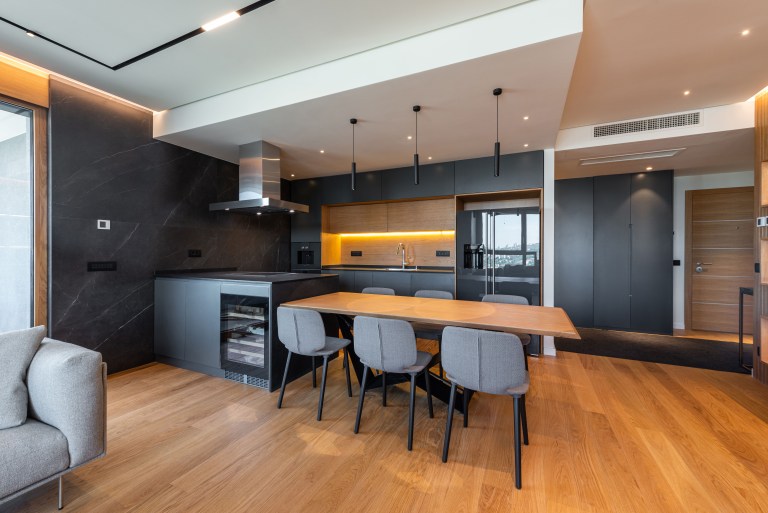
The order matters because resemblance is persuasive. A dining chair that matches the original from across the room and runs an inch wider on each side will look perfect in the photograph and meet a hip at every dinner.
Do not inherit approval automatically
An approved original does not make every proposed alternate approved by ancestry.
The replacement may preserve every governing condition. If so, the new approval can be straightforward. It may alter one condition that does not matter enough to reopen the whole design. That trade-off should still be stated. Or it may change the exact reason the original was selected, which means the decision is open again whether the schedule wants it to be or not.
The approval history should record what was proposed, which alternatives were considered, what changed from the approved condition, what was accepted, who accepted it, when and what remains conditional.
“Alternate approved” is too thin when the project later needs to understand what the approval covered.
Substitution rules should be written before the substitution arrives
A good substitution rule is a pre-commitment to the properties that matter.
Maintain the operating clearance. Preserve glare control from the named viewpoints. Match the approved substrate and edge condition. Do not reduce service access. Maintain the published cleaning requirement. Keep the mounting geometry within the verified field condition. Recheck the adjacent finish in the actual room.
The rule does not have to be long. It has to protect the design from the predictable pressure to treat a procurement problem as a cosmetic swap.
A timing fix can create a room problem
Substitutions often appear because the schedule is under pressure.
A locally available piece can solve a lead-time problem and create a circulation problem. A faster fabric can change seam placement or maintenance. A readily available light can alter beam, color appearance or dimming. A replacement tile can be in stock and produce a poor transition at the threshold.
The urgency is real. It should be documented rather than allowed to lower the comparison standard invisibly.
Practice keeps procurement state, lead-time evidence and decision deadlines beside the specification so the reason for considering the substitute is visible. That helps distinguish “this is a better design choice” from “this is the choice that protects the installation date.” Both can be legitimate. They are different rationales.
Material substitutions need behavior evidence
Two materials can look similar in a sample and age very differently.
Compare exposure, cleaning, stain behavior, expected variation, repairability, thickness, edge conditions and substrate requirements where those matter. A substitute that changes finish build-up may also change transitions. A new fabric width can change yardage and seam logic. A different stone can change maintenance and the appearance of a full run far beyond what one chip suggests.
When the answer is uncertain, the substitution can remain conditional pending a sample, mockup, published data or field verification.
Technical substitutions need the proper technical owner
Some proposed substitutions cross from design judgment into regulated or specialized technical work.
Structural support, electrical compatibility, plumbing, fire or life-safety requirements, waterproofing, code compliance, accessibility compliance and other regulated determinations belong to the applicable qualified professional or authority. The Practice record should identify the condition and route the question. It should not manufacture technical approval because the project wants to keep moving.
This boundary is especially important when a substitution changes a material assembly, load, driver, mounting method, rough-in or another interface with technical consequences.
Keep the rejected substitute too
A rejected alternate can become useful evidence later.
If the first substitute failed because it reduced clearance, record that. If another option was rejected because its cleaning requirements were incompatible with the room’s use, keep that reason. If the approved replacement won because it was the only option that preserved the critical property and the schedule, state that clearly.
Rejected alternatives make the final decision easier to defend. They also reduce the chance that the same unsuitable option returns two weeks later through a different email thread.
The substitution is a decision event
Procurement systems often want substitutions to resolve quickly. The Room Record has a different job: preserve enough reasoning that the faster decision does not become an undocumented one.
Compare the substitute with the governing specification. Record the changed facts. Identify any new verification. Route technical questions correctly. Record the approval as a new decision instead of writing over the old one. Keep the sourcing event attached to the same specification.
Then the product can change without forcing the project to forget why the room worked.
Use the Room Record in Practice mode to connect specification, sourcing event and approval history. Read The Specification Should Outlive the SKU for the specification side and Keep the Rejected Option for the value of preserving alternatives.
Same problem, elsewhere in the house
Room notes
Keep the room on the record.
One useful note at a time: what to test, what to ignore, and what changed when the room got another vote.