Room for Drama
Storage and Working Zones
Make storage support activity, frequency, visibility, and reset effort.

On this page
11
Space Intelligence · Storage is a behavior system
Storage fails when it is treated as a container problem. The real question is behavioral: where does the object appear, who uses it, how often, what happens immediately before and after, and how many steps does the household have to perform to put it away?
The right cabinet in the wrong place is still the wrong system.
Inventory by activity first
Traditional organizing often groups like objects together. That can be useful, but rooms function through activities. The charger belongs where charging happens. The scissors used for opening deliveries may belong near the entry rather than with craft supplies across the house.
Start with the activity and list the tools it requires. Then decide which tools need immediate reach, which can be nearby, and which can live elsewhere.
Use is a stronger organizing principle than category when speed matters.
Frequency determines position
Daily-use items deserve the easiest access. Weekly items can tolerate a second layer. Seasonal or rare-use objects can live higher, deeper, or farther away if retrieval remains safe.
This sounds elementary, yet homes frequently give prime storage to low-frequency objects because they fit nicely there while daily objects accumulate on surfaces. Open the drawer at hip height in most kitchens and there is a good chance you will meet the fondue set, lying in state, while the scissors everyone needs twice a day live under a pile of mail.
Storage should spend its best real estate on the household’s actual habits, not on whatever happened to fit on moving day.
Visibility should follow the behavior
Open storage is useful when seeing the item helps people use and return it. Closed storage is useful when visual calm, dust control, or privacy matters. Neither is morally superior.
The decision should depend on the object and behavior. A visible basket may make daily blankets easier to reset. A closed cabinet may prevent a collection of cables from becoming the room’s main decorative story.
Hide what benefits from hiding. Display what benefits from visibility. Do not confuse concealment with organization.
Reach is part of the system
If an object is hard to reach, people create a secondary storage location closer to use. That is how the intended cabinet stays tidy while the countertop becomes reality.
Test the reach for the actual user. Consider height, bending, lifting, doors, nearby furniture, and whether two hands are required.
The return action should be physically easy enough to repeat when someone is tired, carrying something else, or in a hurry.
Put storage near the work zone
A working zone is the cluster of activity, surface, tools, light, and storage that allows a task to happen without unnecessary travel.
For a desk, that may mean charger, notebook, files, and task light. For a coffee station, mugs, beans, filters, and waste. For an entry, keys, bags, shoes, dog equipment, and incoming paper.
When the support is scattered, the activity leaves a trail. Good storage shortens the trail.
Design the return path
Ask what happens when the activity ends. Where does each object go? Does the return require opening multiple doors, walking to another room, sorting into tiny categories, or moving something else first?
Every extra step makes the return a little less likely to happen. A system that asks a tired person to open a lidded box, inside a closed cabinet, behind a chair, will look immaculate for exactly as long as nobody uses it. After that the chair becomes the storage, and honestly the chair has a point.
The best reset is usually the shortest one that still keeps the room usable.
Set a capacity limit
Storage expands until the container is full unless the system includes a boundary. Decide what the zone is allowed to hold.
A basket may hold the blankets currently in rotation, not every blanket the household owns. Entry hooks may support the daily bags, not become long-term bag storage. A work drawer may hold active supplies while archive material lives elsewhere.
Capacity is a design decision. Without it, storage becomes delayed editing.
Do not add storage before removing false inventory
Before buying another cabinet, identify objects that are duplicated, obsolete, stored in the wrong room, or maintained from habit rather than use.
Nobody is asking for minimalist purity here. Keep the gloriously impractical cake stand if it makes you happy. The point is to avoid building expensive infrastructure for inventory the household does not actually value.
A larger container can preserve a bad decision for years.
Maintenance burden belongs in the brief
Open shelves need dusting. Deep drawers become mixed layers. Fabric bins can collapse. Beautiful baskets may catch on shelves. High storage may require a step stool. Glossy fronts show fingerprints.
Choose systems the household will maintain at the frequency required.
Storage should reduce labor, not transfer it into a different form.
Use temporary containers to test the logic
Before ordering built-ins, test the zones with boxes, existing bins, tape labels, or temporary shelves. Observe whether objects naturally return to the proposed location.
If the temporary system fails because the route is wrong, permanent millwork will make the failure more expensive and more attractive.
Prove the behavior before upgrading the container.
The storage-zone audit
- Activity: What task is this storage supporting?
- Frequency: Which items need prime access and which can move deeper?
- Visibility: What benefits from being seen or concealed?
- Reach: Can the actual user retrieve and return it comfortably?
- Return path: How many steps and decisions does reset require?
- Capacity: What is the maximum inventory this zone is allowed to hold?
- Maintenance: What cleaning, sorting, or physical effort does the system demand?
Do not organize the photograph. Organize the behavior.
Return to Room Function for the governing brief, or use Layout and Flow to make sure the storage system does not create new circulation problems.
Storage, in rooms
A hundred and five pieces about where things actually go.
Activity zones are the theory. Depth, frontage and the pile by the door are the practice.
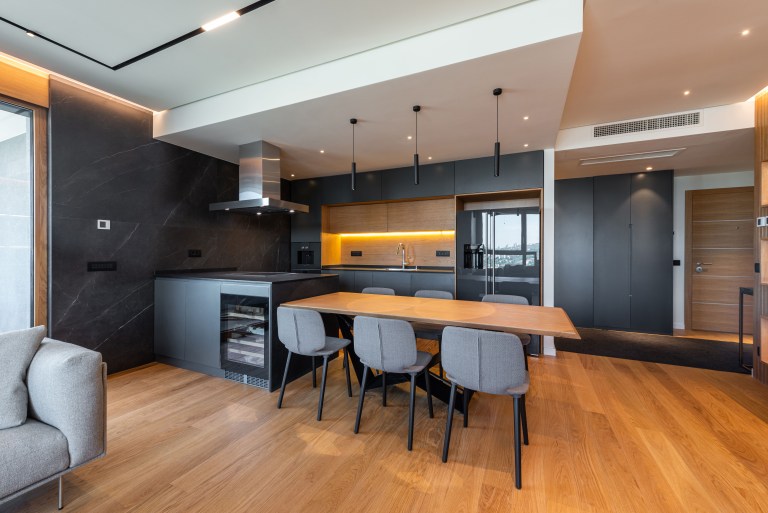 Awkward SpacesYour Old Floor Is Allowed to Be Crooked
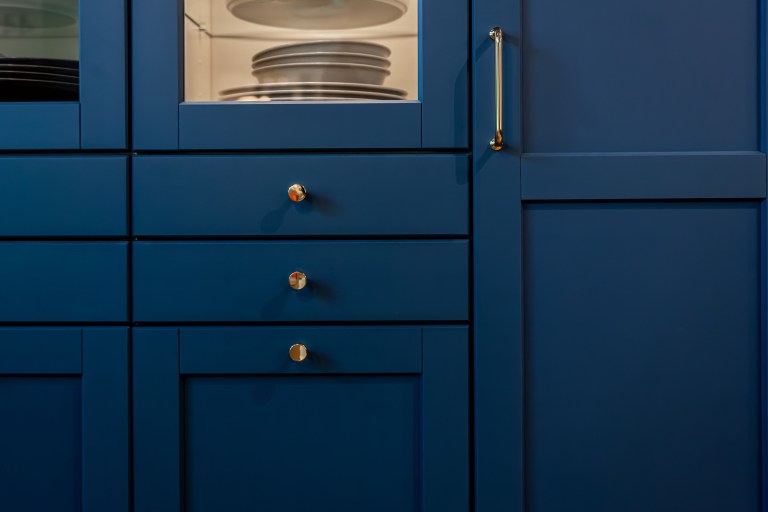 Function and FlowDecide Where the Phones Sleep Before the Cords Decide for You
 Furniture and ScaleBedside Tables Do Not Have to Be Twins
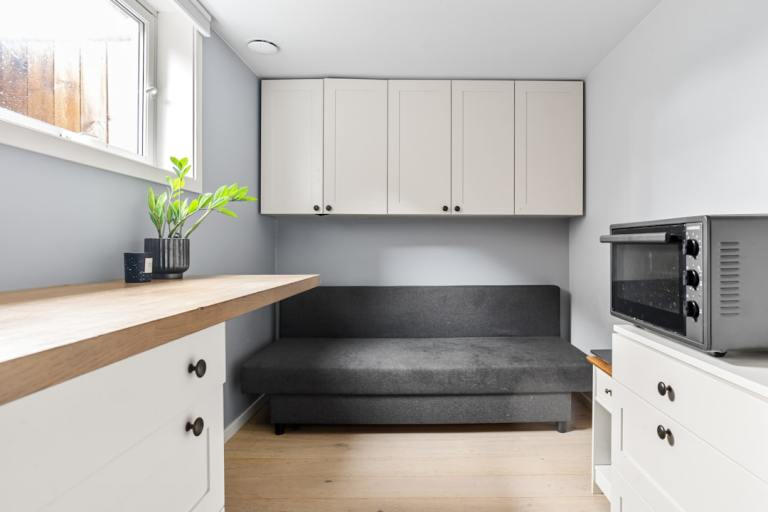 Awkward SpacesThe Space Under the Stairs Wants a Secret Life
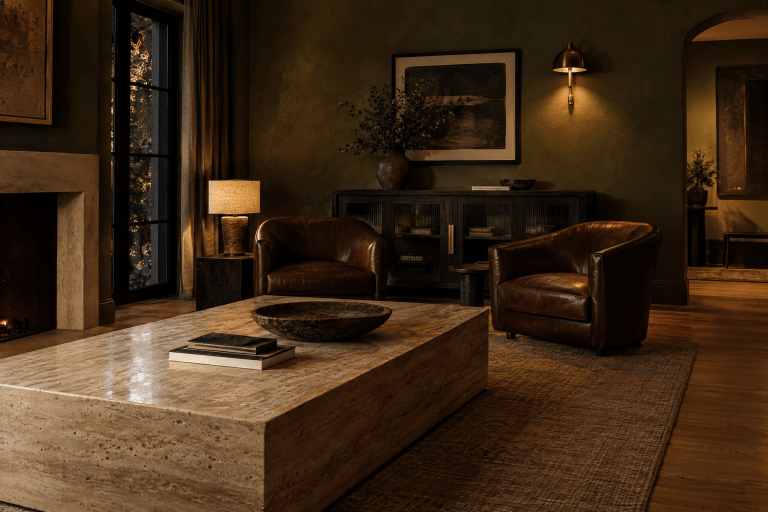 Function and FlowThe Room Is Clean. Why Does It Still Look Busy?
 Furniture and ScaleThe Guest Room Has Most of the Year Off. Give It a Second Job.
 Awkward SpacesThe Ledge Above the Cabinets Is Collecting Grease, Not Ideas
 Function and FlowToy Storage Is a Return Trip, Not a Basket
 Function and FlowThe Nursery That Has to Become an Office in Five Years