Room for Drama
Seasonal Layers
On this page
8
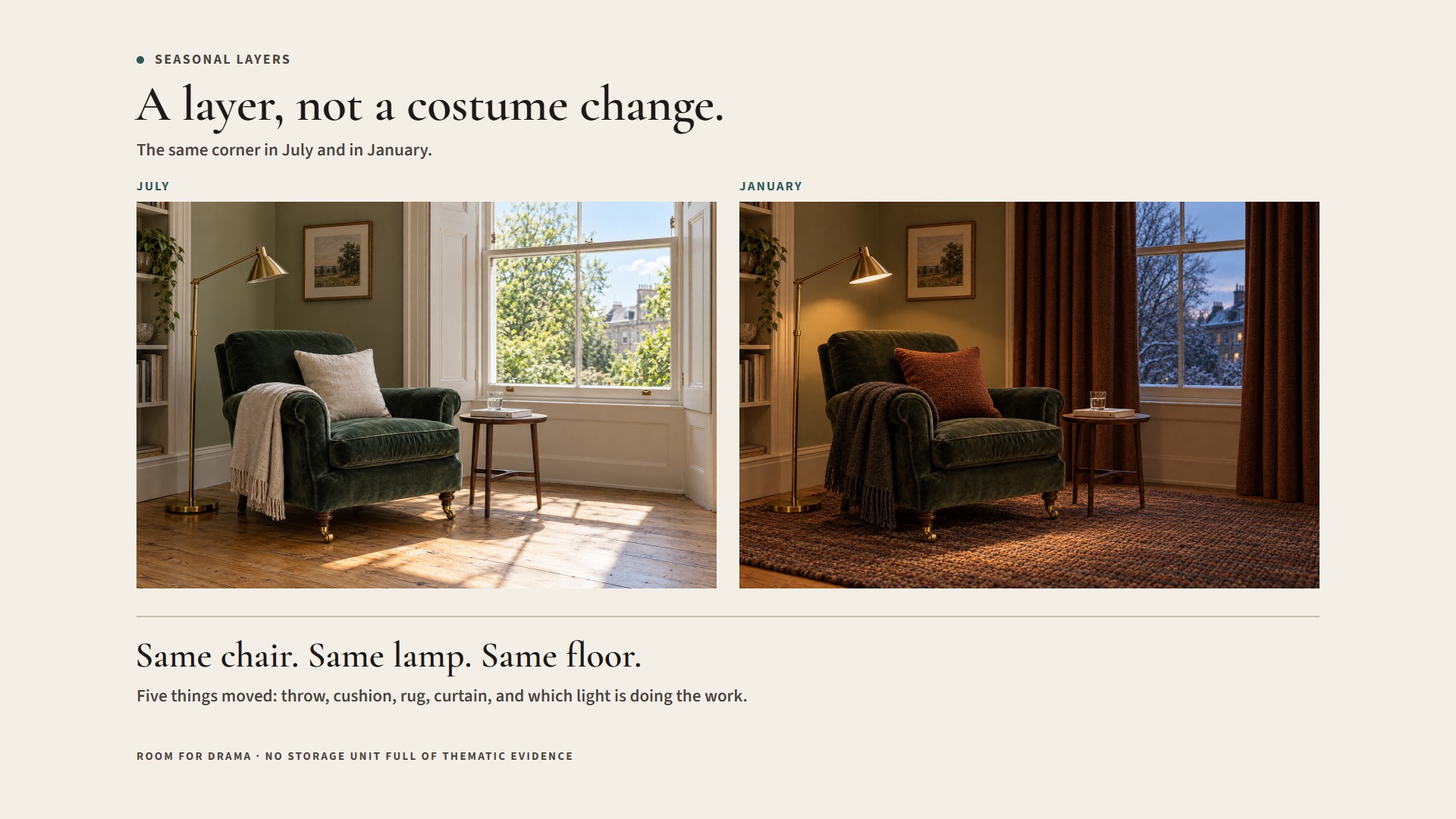
A room can change with the season without requiring a storage unit full of thematic evidence.
Seasonal layers work best when they respond to what actually changed: daylight, temperature, how the room is used, what comes through the door, and what your body wants from the space. Nobody needs to redecorate four times a year. Adjust the room just enough that it keeps making sense, and let the pumpkin army stand down.
Change what touches the body first
Start with the things that affect comfort directly: throw weight, bedding, cushions, rugs, curtains, and the chair people migrate toward when the temperature shifts. A heavier textile in winter or a lighter layer in summer earns its keep because the room feels different to use, not because the calendar issued a decorating order.
If a seasonal textile only moves from storage to sofa and back without changing comfort, color balance, or use, it may be seasonal inventory rather than seasonal design.
Let daylight rewrite the lighting plan
The same room can need a different evening strategy in January than in July. Watch when natural light drops, where tasks move after dark, and which corners become visually heavy. Portable lamps, dimmable fixtures already designed for dimming, and changes in shade direction can often do more than another decorative object.
New wiring, fixture installation, or electrical changes belong with a qualified electrician. The seasonal decision here is about light behavior, not amateur electrical work.
Use color as a layer, not a costume change
You do not need a spring room, a summer room, a fall room, and a winter room all fighting for closet space. Keep the room’s core palette and shift one supporting family through flowers, branches, textiles, art, table linens, or a small group of objects.
Skip “What color belongs to this season?” The calendar has opinions, and most of them are orange. Ask what color would make the existing room feel warmer, cooler, brighter, quieter, or more alive right now.
Rotate objects instead of accumulating them
A seasonal edit can be subtraction. Put away the objects that feel heavy in summer. Bring back books, lamps, ceramics, or textiles that make the room feel held in colder months. Move art within the house. Change what sits on the table instead of buying a new table’s worth of things.
Rotation keeps the room familiar without leaving every object on duty all year.
Pay attention to the threshold
Seasonal life usually enters through the door before it reaches the sofa. Wet shoes, coats, garden tools, hats, sunscreen, dog towels, umbrellas, boots, sports gear, and packages all create different pressure on an entry or mudroom through the year.
Adjust hooks, mats, baskets, trays, and landing surfaces around what is actually arriving. A seasonal room that photographs beautifully while the entry collapses under November is solving the wrong problem.
Let outdoor rooms have an off-season plan
Porches, patios, balconies, and yards need a transition strategy too. Decide what stays outside, what must be protected, where cushions and tools go, how snow or heavy rain changes circulation, and which seating or lighting still earns use in shoulder seasons.
A good outdoor plan includes the retreat. If everything has to be moved in a panic the first bad-weather weekend, the storage and maintenance layer was never designed.
Give seasonal storage a hard limit
Decide how much space seasonal material is allowed to occupy. One cabinet, one shelf, a labeled bin category, or another specific boundary forces the collection to edit itself.
When something new enters, ask what it replaces. “Seasonal” is not diplomatic immunity from clutter.
Keep the room’s identity intact
The strongest seasonal shift still looks like the same house. The architecture, major furniture, art, habits, and point of view remain recognizable. You are changing emphasis, not auditioning four unrelated personalities.
Use Atmosphere for the full light-and-material system, or The Reference Room when you need palette and material direction.
Atmosphere, seasonally
Sixty-six pieces on mood that survives being lived in.
Seasonal is not diplomatic immunity from clutter — and atmosphere is not a candle.
 Light and AtmosphereYour Overhead Light Is Doing Too Much
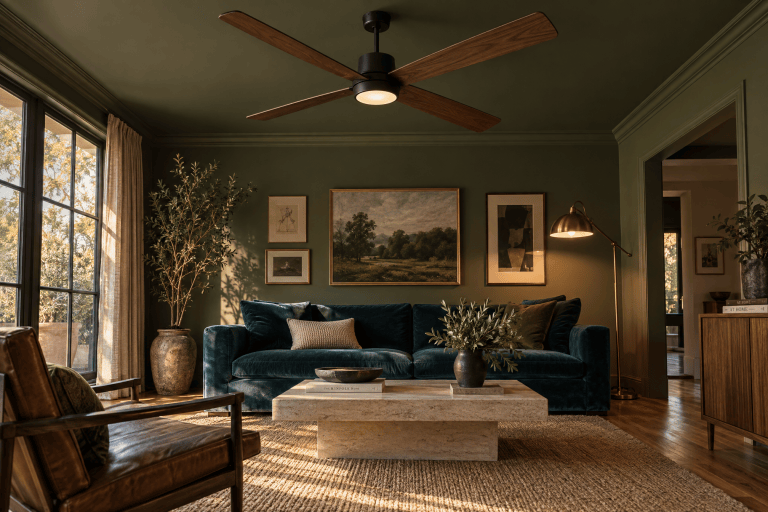 Function and FlowThe Ceiling Fan Can Stay
 Function and FlowThe Dining Table Fits. Dinner Still Doesn’t.
 Light and AtmosphereSpecify the Light Before the Fixture
 Function and FlowThe Driveway Is the Biggest Room You Refuse to Use
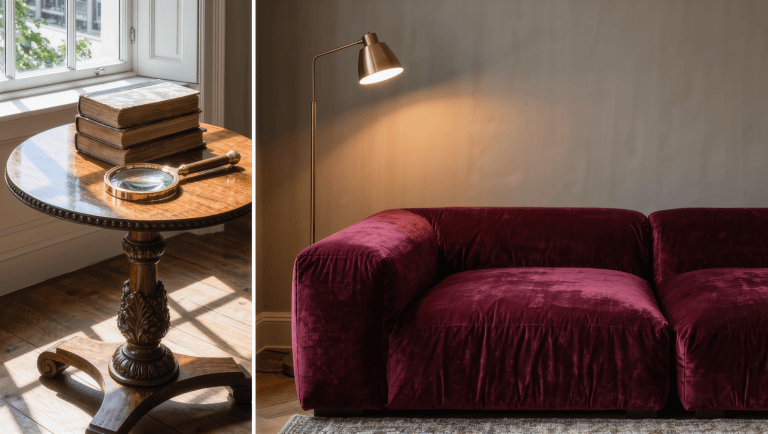 Light and AtmosphereOne House Can Have More Than One Mood
 Light and AtmosphereThe Day You Realize You’re Probably a Maximalist
 Light and AtmosphereLet the House Change Color Temperature With the Day
 Light and AtmosphereSculptural Lighting Should Still Know How to Light the Room