Awkward Spaces
The Door-Swing Dead Zone Can Still Earn Its Keep
The floor behind an opening door is not useless, but it cannot behave like normal furniture territory. Use shallow wall storage, hooks, lighting, or protected negative space without interfering with the door.
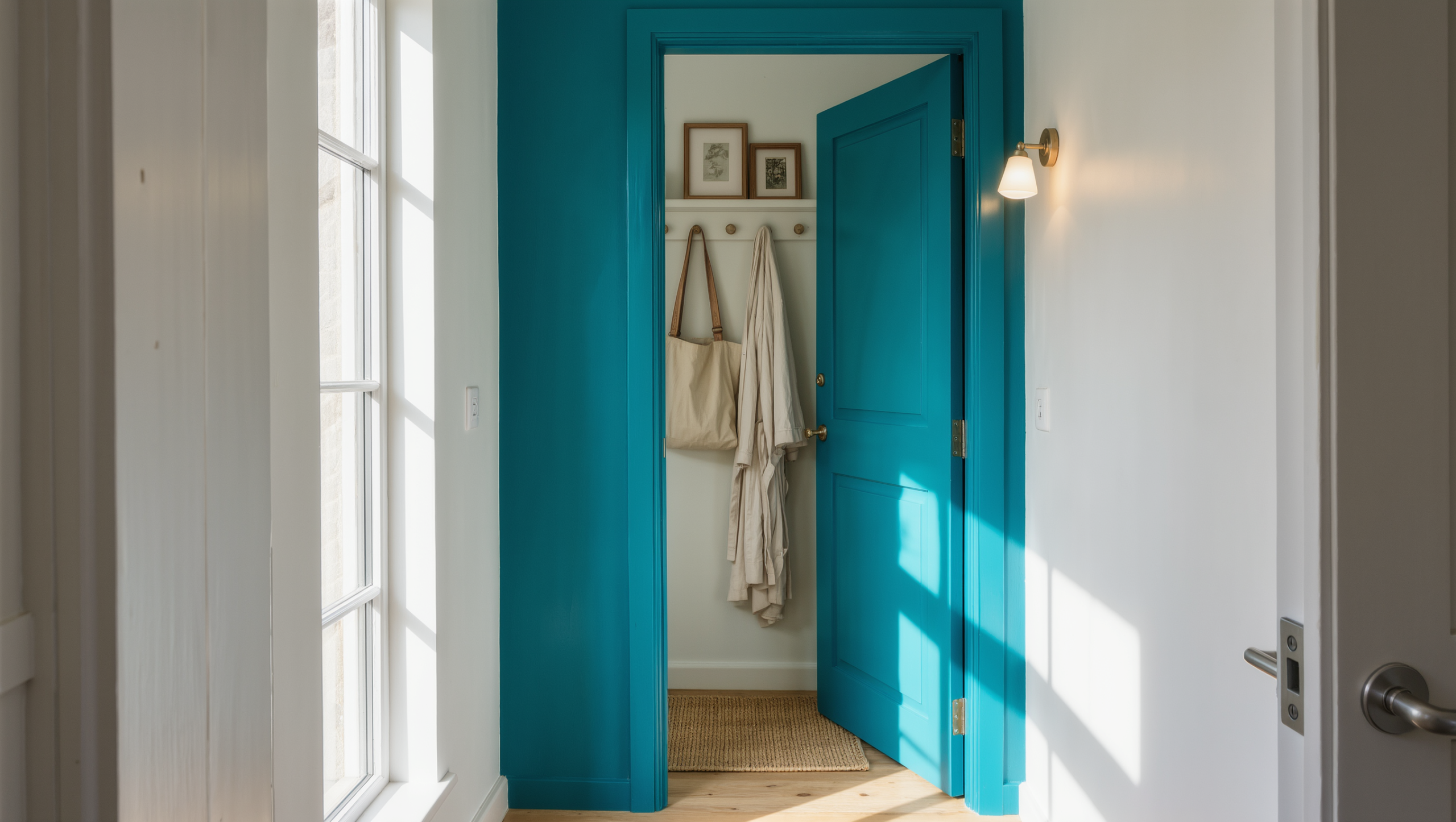
Every hinged door creates a quarter-circle of floor that looks available when the door is closed and immediately files a complaint when you put furniture there.
That does not make the zone useless. It makes it a different kind of space: one that can hold wall-based functions, very shallow elements, or nothing that needs to survive a door arriving at speed.
This is a small-room problem almost by definition: a contested entry, a bedroom where every square foot is already spoken for, a bathroom, a rented flat where rehanging the door is not on the table. And the friction is always movement first. Either the door is blocked, or the door is fine and the strip of wall beside it is doing nothing at all.
Draw the swing before shopping
Mark the full arc on the floor with painter’s tape and include the handle projection. Open the door quickly. Open it while carrying a bag. Notice where fingers, furniture corners, rugs, and wall hooks would meet.
A plan that works only when the door is opened with ceremonial care is not a working plan.
Use the wall more than the floor

Shallow hooks, a narrow rail, wall-mounted baskets, a mirror, artwork, or a slim shelf can add function without occupying the swing path. In an entry, the wall behind the door may handle umbrellas, dog leads, or one coat per person. In a bedroom, it may hold a mirror or tomorrow’s outfit.
Whatever goes up, measure from the wall to its thickest point rather than its average one. A shallow object can still catch the door handle or stop the door an inch short, and an inch is enough to teach everyone in the house to open that door carefully for the rest of their lives. Bumpers where appropriate, so the hardware stops eating the paint.
Do not create hidden clutter
Behind-door storage disappears when the door is open, which makes it tempting to overfill. A forest of hooks may be technically compact and visually chaotic every time the door closes.
Limit the category. One job is usually enough: hanging, mirror, cleaning tools, ironing equipment, or a narrow organizer. The space does not need to become a vertical junk drawer.
Consider whether the door itself is the problem
If the swing destroys the only useful furniture wall or creates constant conflict, investigate whether the door can be rehung, reversed, replaced with a pocket or sliding solution, or removed where privacy and code allow. That is a renovation decision, not a decorating trick, and it should be checked for structure, electrical conflicts, accessibility, and local requirements.
Sometimes maximizing the dead zone means changing the geometry that created it.
Lighting can use the zone without occupying it
A wall sconce, picture light, or reflected light source behind the door can make an entry or corner feel finished. Keep switches reachable and make sure the fixture remains clear of the door edge.
A clear swing is still a function
There is a point at which leaving the zone empty is the best use. Doors are circulation equipment. They need room to operate without scraping baskets, knocking art, or trapping someone between furniture and hardware.
The cheapest way to find out is subtraction. Clear the floor arc completely, add exactly one shallow wall-mounted thing — hooks for a named category, a mirror, one slim rail — and then use the door the way you normally use it, at speed, with your hands full. What you are watching for is unglamorous. The door opens all the way without touching anything. The wall function gets used more than a couple of times a week. Nothing has accumulated on the floor underneath it.
If the addition creates a new collision, or just visual noise every time the door shuts, take it down and leave the arc empty.
Empty space behind a door is not wasted when it makes the room easier to enter. Add function only if the door can continue doing its job without negotiating for permission.
Same problem, elsewhere in the house
Room notes
Keep the room on the record.
One useful note at a time: what to test, what to ignore, and what changed when the room got another vote.