Outdoor Rooms
Firewise Landscaping Is a Spatial Strategy, Not a Plant List
Reduce landscape wildfire vulnerability by managing fuels, spacing vegetation, maintaining access, choosing site-appropriate plants, and following local defensible-space requirements without stripping the yard bare.
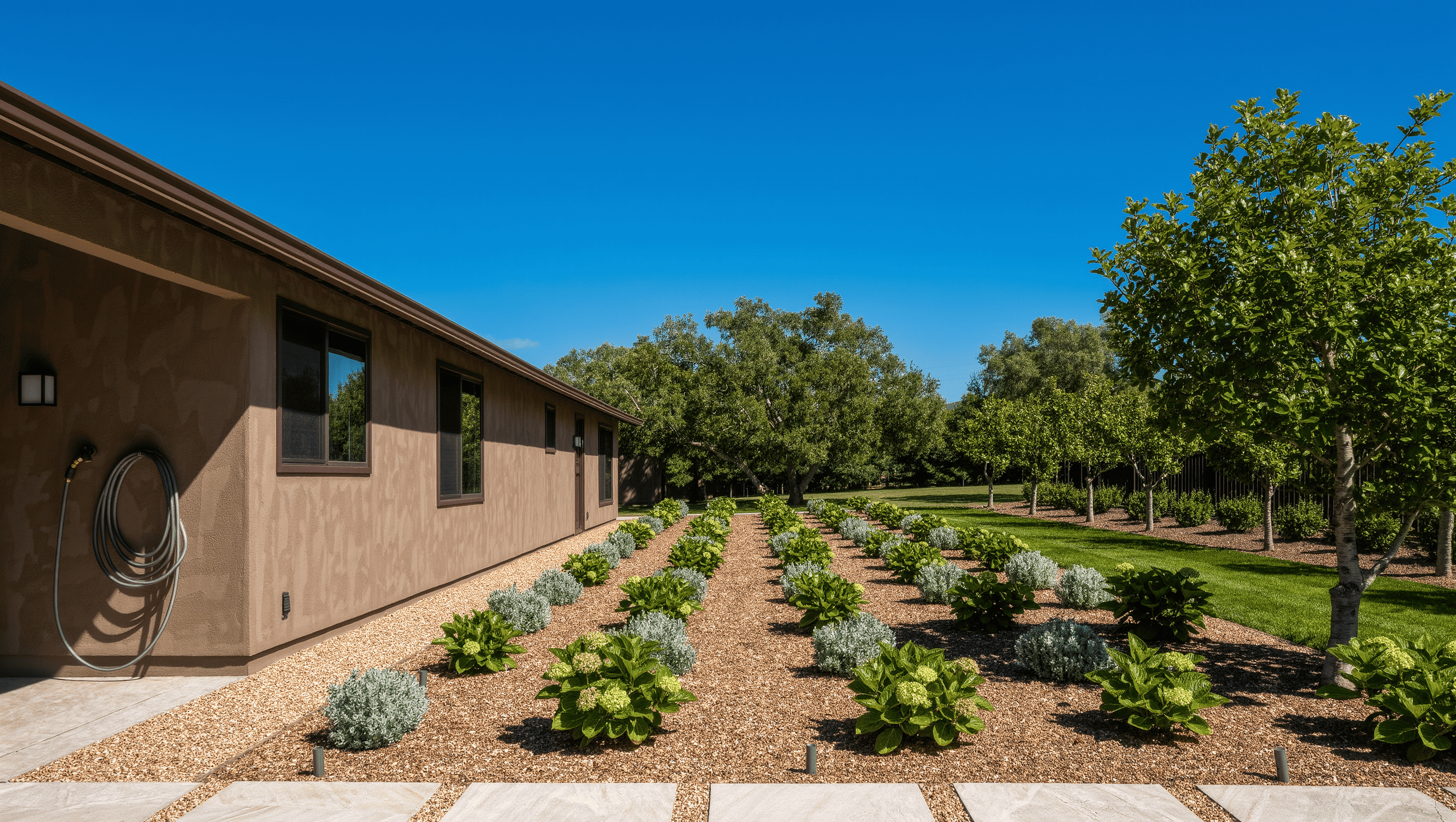
Firewise landscaping is not a shopping list of supposedly fireproof plants.
No plant is immune to burning under every condition. The design work is reducing the continuity and intensity of combustible material around structures while keeping the landscape healthy, maintainable, erosion-conscious, and appropriate to local wildfire risk.
Start with local requirements
Defensible-space rules, vegetation-management zones, required clearances, approved materials, and enforcement vary by state, municipality, fire district, HOA, slope, vegetation type, and wildfire hazard.
Use current local fire-authority guidance as the governing standard. A generic national diagram should not override requirements for the actual property.
Think in fuel pathways

Fire can move through connected grasses, shrubs, mulch, fences, decks, tree limbs, stored materials, and other combustible elements. Walk from the outer property toward the house and look for continuous routes.
The goal is to interrupt those routes through spacing, maintenance, noncombustible surfaces where appropriate, and reduced accumulation of dead material.
Protect the area immediately around structures
The zone closest to a building deserves the most disciplined approach because embers and direct flame can interact with siding, vents, decks, stairs, fences, and stored objects.
Follow local guidance on combustible mulch, plants, firewood, furniture, fencing, and other materials near the structure. Home hardening and landscape design should be considered together rather than as separate projects.
Break up vegetation mass
Large uninterrupted masses of dry or dense vegetation can create continuous fuel. Use spacing and separation appropriate to plant type, slope, mature size, and local fire guidance.
Do not create an isolated collection of tiny plants floating in rock simply to achieve separation. A fire-conscious landscape can still have rhythm, shade, habitat, and visual structure.
Manage vertical fuel connections
Low vegetation, shrubs, and tree branches can form a ladder that allows fire to move upward. Pruning and spacing strategies should reduce those connections while preserving plant health.
Tree work at height, near structures, or near utilities should be handled by qualified professionals.
Choose plants by behavior and maintenance
Plant moisture, resin or oil content, dead material retention, growth habit, leaf litter, and maintenance can affect fire behavior, but labels such as “fire resistant” should be used carefully.
Select plants using regionally credible firewise guidance and maintain them according to that guidance. A neglected “fire-resistant” shrub full of dead interior growth is not performing the way the label suggests.
Use mulch deliberately
Mulch choice near structures may be regulated or addressed specifically in local wildfire guidance. Organic mulch can support soil and plants but is combustible; mineral materials may be preferred in particular high-risk zones.
Do not apply one material across the property without considering fire risk, soil, heat, drainage, weeds, and plant health.
Keep access visible and usable
Driveways, gates, addresses, hydrants, emergency access, propane tanks, utility shutoffs, and other critical features should remain identifiable and reachable.
Do not allow decorative planting to narrow required access or hide infrastructure emergency responders or occupants may need.
Balance fire strategy with erosion and heat
Stripping a slope to bare mineral soil can create erosion, dust, heat, and long-term maintenance problems. Firewise work should reduce hazardous fuels without creating a second site failure.
Steep slopes, retaining conditions, unstable soil, and significant vegetation removal may require landscape, arboricultural, civil, or geotechnical expertise.
Maintain the plan every year
Plants grow, leaves collect, grasses cure, branches die, fences weather, and stored objects migrate. Defensible space is a maintenance condition, not a one-time installation.
Schedule seasonal checks tied to local fire season and vegetation cycles. Remove dead material, correct overgrowth, and revisit spacing as plants mature.
Do not let aesthetics hide risk
Dense ornamental grasses beside a deck, a beautiful woodpile under an eave, or a vine covering a combustible fence may look integrated while creating unwanted fuel continuity.
Photograph the property from the house outward and ask where fire could travel continuously through material, not where the planting looks prettiest.
A firewise landscape audit
- What local defensible-space rules apply?
- Where are continuous fuel paths toward structures?
- Is the immediate building perimeter treated appropriately?
- Are horizontal and vertical plant connections managed?
- Are plant choices supported by regional firewise guidance?
- Are access, utilities, and addresses clear?
- Could vegetation removal create erosion or heat problems?
- What maintenance must happen before each fire season?
See Read the Weather Before You Buy the Furniture and Outside.
The effective firewise landscape is not empty. It is edited: less connected fuel, clearer access, healthier plants, better maintenance, and fewer places for risk to hide inside the composition.


