Function and Flow
Read the Weather Before You Buy the Furniture
Observe sun, wind, noise, access, privacy, and reset effort before making permanent outdoor-room decisions.

On this page
53
Outdoor furniture is often asked to solve a problem the site has not yet admitted.
The chair is blamed for discomfort when the afternoon sun is the actual issue. The dining table is replaced when the route from the kitchen is the burden. More planting arrives when the real problem is exposure from one specific window. A heater is purchased for a room that people leave because the lighting is poor and the return path feels uncertain.
The useful work begins earlier. It separates what can be observed from what is being inferred, then turns the strongest explanation into one reversible test.
The usual order of events
Most outdoor problems get diagnosed correctly on the second look and solved incorrectly on the first purchase. The distance between those two events is where the budget goes, and it is a distance made entirely of impatience.
Start with the friction, not the aesthetic
Start with the repeated outdoor friction
Do not begin with the desired aesthetic. Begin with the moment the space stops working.
- No one uses the table after 4:00 p.m.
- Guests stand near the back door instead of entering the patio.
- One seat is always moved into the same strip of shade.
- The balcony looks complete but is rarely occupied.
- Conversation moves indoors as soon as daylight fades.
- Cushions remain stored because setting up the room feels disproportionate.
- The side yard becomes a route and never a destination.
These are observations. “The furniture is wrong,” “we need more privacy,” and “the space is too small” are explanations. They may be correct, but they still need to be tested.
Collect evidence at the hour that matters
Outdoor conditions change too quickly for a single midday inspection. Observe the room at the hour when the intended activity should occur.
Sun and heat
Mark direct sun, reflected glare, surface temperature, and where shade moves during the activity.
Wind and weather
Record direction, gusts, falling debris, rain exposure, and which objects or doors are affected.
Routes and access
Walk the path with food, tools, children, pets, mobility equipment, cushions, or whatever the room requires.
Privacy and sound
Notice the exact sightline or noise source rather than treating the entire perimeter as the problem.
Light after dark
Identify missing information, glare, black voids, and whether faces, food, steps, and doors are readable.
Reset effort
Record what must be carried, covered, dried, cleaned, stored, or moved before and after use.
Photographs, short notes, and simple measurements will do. They are enough to stop the room being redesigned around a vague feeling, and a technical report would be overdoing it.
Use a seven-day outdoor field log
A single visit captures a mood. A short field log captures behavior. Observe at the hours that matter and record only information that could change a decision.
Day 01
Map ordinary movement
Walk every route connected to the room. Carry the real objects that travel through it. Record gates, doors, steps, pinch points, and where people already stop without being asked.
Day 02
Track sun and shade
Mark the occupied area at several relevant times. Note direct sun, reflected glare, hot surfaces, and the exact point when a comfortable seat becomes unusable.
Day 03
Read wind, sound, and exposure
Record direction and intensity rather than describing the whole site as windy or noisy. Sit in each proposed position and identify the source.
Day 04
Use the room after dark
Walk the route, sit in every position, and notice where information disappears, glare appears, or the house overwhelms the exterior.
Day 05
Measure setup and reset
Time the retrieval, arrangement, covering, cleaning, and storage required for one ordinary use. Record which step makes the room feel like work.
Day 06
Invite another body
Ask someone with different height, habits, mobility, sensory needs, or expectations to use the space. Notice what your own familiarity has stopped revealing.
Day 07
Write the governing friction
Reduce the evidence to one repeated friction, one likely cause, and one testable next move. Do not create a shopping list.
Turn what you saw into a hypothesis
Separate symptom, condition, and cause
Outdoor-room decisions become expensive when these three are collapsed into one statement.
Symptom
No one sits outside after lunch.
Observed condition
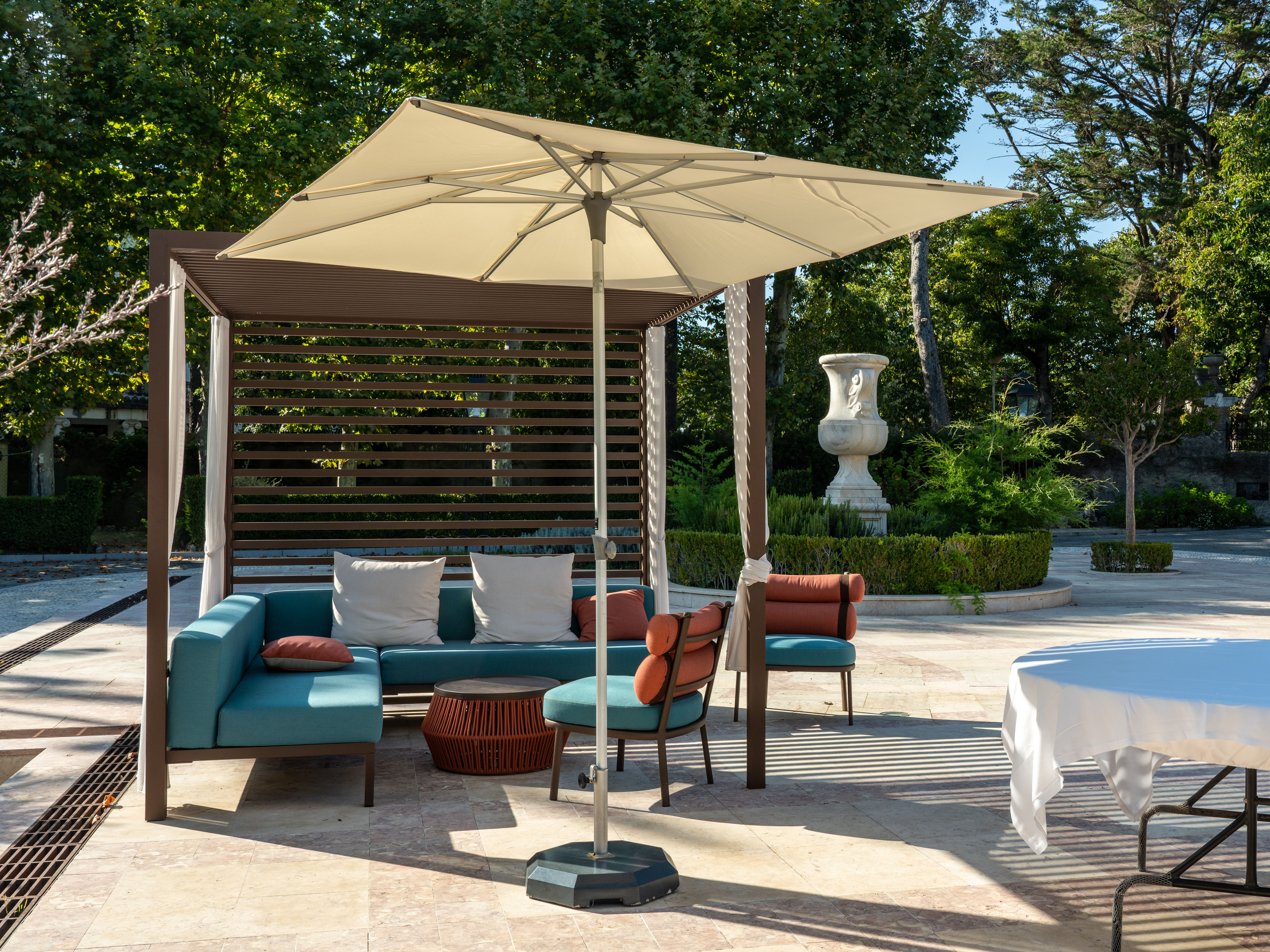
Direct western sun reaches the primary seats and table from late afternoon through early evening.
Possible cause
The occupied position becomes physically uncomfortable and visually glaring during the intended use.
Premature cure
Replace the seating with a more expensive outdoor set.
The symptom tells you where to look. The condition gives evidence. The cause remains a hypothesis until a reversible test changes the outcome.
Write one governing hypothesis
A useful hypothesis connects the repeated friction to a condition that can be changed.
The patio is abandoned after 4:00 p.m. because direct western sun reaches the primary seats, not because the seats are uncomfortable.
Guests cluster at the door because the outdoor room has no visible arrival point, not because the patio is too far from the house.
The balcony feels exposed because one neighboring sightline reaches the seated position, not because every edge requires screening.
Keep the hypothesis narrow. “The whole yard is wrong” cannot be tested. “The seated position needs a protected western edge” can.
Keep competing hypotheses alive long enough to learn something
The first explanation is often plausible and incomplete. Write two or three possibilities before choosing the test.
Example friction
The family rarely eats on the patio even though the table is large enough.
Hypothesis A
The route from the kitchen is too long and includes a difficult door.
Hypothesis B
The table sits in glare during the usual dinner hour.
Hypothesis C
The setup and cleanup burden is too high for ordinary meals.
A useful first test may address the route with a nearby landing surface and a simplified place setting. If use does not improve, move to shade or orientation. Testing one variable at a time prevents every change from claiming credit.
Design a test that could prove you wrong
Choose the smallest test that could disprove you
A good test is temporary, proportionate, and capable of showing that the hypothesis was wrong.
01
Test shade before buying permanent cover
Use a borrowed umbrella, temporary sail, or repositioned canopy at the difficult hour. Record whether the room remains occupied longer.
02
Test privacy at the exact sightline
Use fabric, a folding screen, or tall temporary planting only where exposure is observed. Sit in the room and check whether the intervention solves the experience without enclosing everything.
03
Test arrival with light and a landing surface
Add one visible destination near the threshold. Notice whether guests move into the room without instruction.
04
Test the reset before expanding the room
Reduce setup to the essential pieces, give cushions and tools a nearby return path, and see whether the room is used more often.
Match the test to the scale of the claim
A small observation should not trigger a large intervention. The test should be strong enough to change the relevant condition and limited enough to reverse without regret.
Claim: the room needs more privacy
Test the exact sightline with one temporary panel before screening the entire perimeter.
Claim: the table is too large
Mark a smaller footprint or remove two chairs before replacing the table.
Claim: the room needs a roof
Test movable shade or a temporary overhead field at the difficult hour before building permanent cover.
Claim: the room is too far away
Add a nearby support station and improve the route before abandoning the destination.
Define success before running the test
Without a success condition, every test can be declared promising and every purchase can continue its campaign.
Use observable criteria:
- the room remains occupied through the previously difficult hour
- the primary route stays clear during full use
- guests enter without needing repeated direction
- the host makes fewer service trips
- the light supports faces and movement without visible glare
- the reset takes less than a defined amount of time
- the intervention solves the problem without creating a stronger one
Also define a stop rule. If the temporary shade blocks the route, traps heat, or still leaves the seats unused, the hypothesis needs revision rather than a more expensive version of the same answer.
Test the room in more than one weather state
A successful test under ideal conditions may only prove that the room works when nothing challenges it. Repeat the strongest test during a second meaningful condition.
Calm and windy
A screen may create welcome protection in still air and turbulence when wind arrives from another direction.
Dry and after rain
A furniture position may work until drainage, damp ground, dripping canopy, or stored cushions alter the route.
Daylight and darkness
A layout may feel open and connected during the day and exposed or disorienting after sunset.
Ordinary use and guests
A room may support two people beautifully and fail when arrival, food, coats, and extra chairs enter the system.
The purpose is to understand the conditions under which the room changes behavior.
Keep the reasoning honest
Keep fact, inference, preference, and constraint in separate chairs
Observed fact
The western seats receive direct sun from 4:10 to 6:20 p.m.
Inference
The sun may be the primary reason the room empties during that period.
Preference
A permanent canopy is visually preferred to a movable umbrella.
Constraint
The main route and required access cannot be blocked by supports or furniture.
Preference belongs in design. It simply should not disguise itself as evidence. Constraints deserve respect, but they should also be described precisely enough that they do not become vague vetoes.
Translate a successful test into design options
A test proves a location, relationship, or condition. It does not automatically select the final product or architectural form.
If temporary shade succeeds, several permanent or movable options may remain. Compare them through the room’s full criteria:
- performance at the difficult hour
- impact on routes and views
- adjustability across seasons
- maintenance and storage
- material relationship to the house and garden
- cost relative to frequency of use
- whether the intervention creates new glare, heat, wind, drainage, or access problems
The evidence narrows the field. Design judgment chooses among the solutions that actually solve the problem.
Record the decision so the room does not restart the argument
Outdoor rooms change, and memory edits the reasons behind previous decisions. Keep a brief room record.
This record prevents a successful temporary test from being forgotten and a failed idea from returning under a more attractive product name.
Three compact case patterns
The unused balcony
Observation: The balcony is rarely occupied despite having two chairs. Evidence: The chairs face a neighboring window and the nearest surface is behind the door swing. Test: Rotate one chair toward the open view, add a small reachable table, and screen only the direct sightline. Success: The balcony is used for one ordinary morning and one evening without moving furniture.
The patio abandoned after dinner
Observation: Guests move indoors shortly after sunset. Evidence: Faces become shadowed, the path back to the house is unclear, and the only bright source creates glare. Test: Turn off the overhead source, add one low face light and one route light. Success: Conversation continues outdoors and guests leave without using phone flashlights.
The distant garden room
Observation: The destination looks attractive but is rarely used. Evidence: Every visit requires carrying cushions, drinks, and a lamp from the house. Test: Add a weather-appropriate nearby storage point, a stable surface, and a dedicated portable light. Success: Setup falls below a defined time and spontaneous use increases.
Limits, and the usual traps
Know when observation has reached its limit
Observation clarifies use, behavior, and spatial evidence. It does not replace qualified assessment for structural, electrical, drainage, fire, retaining, accessibility, property-line, or permit questions.
The value of the method is that professional input begins with a better brief: the activity, repeated friction, observed conditions, successful tests, failed tests, and constraints are already visible. The expert is not being asked to solve a vague dislike with a permanent object.
Common traps when reading a room
- The room is observed only during ideal weather.
- A preference is recorded as a fact.
- Several variables are changed at once and no one knows what worked.
- The test is too weak to affect the suspected cause.
- The test is so large that it becomes a purchase in disguise.
- Success is defined after the result is known.
- A failed test is upgraded rather than reconsidered.
- The household records aesthetics but not setup, reset, access, or maintenance burden.
Continue the reading
Move from a hunch to a better first move
The weather has already reviewed the room. The trick is to read its notes before you buy the furniture.
Same problem, elsewhere in the house
Room notes
Keep the room on the record.
One useful note at a time: what to test, what to ignore, and what changed when the room got another vote.