Outdoor Rooms
Hide the Hose, Keep the Magic
Make garden water infrastructure disappear into the plan through well-placed taps, complete hose storage, protected routes, sensible irrigation, drainage, and visible maintenance access.
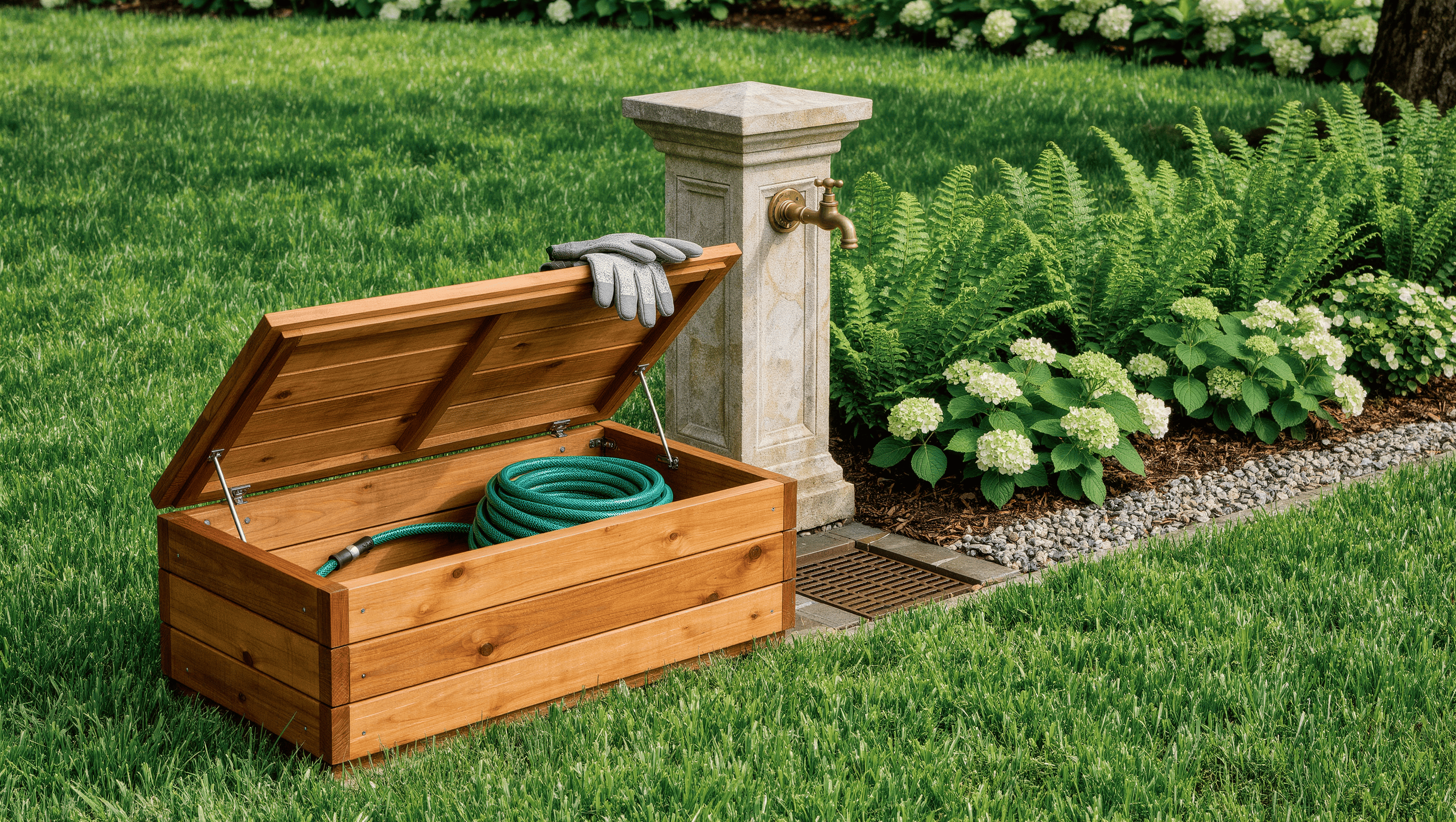
The hose is not ruining the garden. The fact that the hose has no home is ruining the garden.
Watering is ordinary infrastructure, which is exactly why it should be designed instead of tolerated. A beautiful outdoor room loses some of its magic when thirty feet of hose crosses the path, catches on a chair leg, and spends the rest of the afternoon collapsed beside the door like it gave up.
I am not interested in pretending the work disappears. I want the work to have a route, a storage place, and as little opportunity as possible to become the focal point.
Walk the watering route before buying another reel
Start at the tap and physically walk to the farthest place that needs regular water. Containers, edible beds, new planting, hanging baskets, lawn edges, flower work, and cleaning areas may all use the same source very differently.
Notice every doorway, step, tight turn, furniture leg, and patch of planting the hose crosses. Those are not minor annoyances. They are the actual plan telling you where the current system fails.
If the hose must travel through a primary seating area every day, storage alone will not solve the problem. The route is wrong.
The best hose home is the one people will actually use
A reel can be handsome and still be miserable if the handle is awkward, the hose kinks, or the whole thing is hidden behind a planter that has to move first. A cabinet can look better and become a damp knot of fittings if it is too small. A decorative pot works only if the hose can go back into it without a wrestling match.
Size the storage for the actual hose, not the photograph of the product. Leave room for fittings. Keep shutoffs and connections reachable. If the reset takes three minutes every time, eventually the hose will live on the ground because Tuesday always wins.
Separate hand watering from the work that should be automatic
Some plants benefit from being seen up close. Hand watering can catch wilt, pests, broken stems, or the container that is drying faster than everything around it. Other areas may be better served by properly designed irrigation because dragging a hose across the same route every day is not adding useful observation; it is adding friction.
The point is not automation for its own sake. It is matching the method to the garden. Permanent irrigation should not quietly water paving, the fence, and one extremely hydrated chair because nobody revisited the layout after the furniture arrived.
Water creates a second problem: where it goes next
Taps, rinsing, buckets, flower cutting, and cleaning all create runoff. Keep that water away from doors, foundations, slippery paths, and places where guests stand. A service point that looks discreet but leaves a puddle across the route is not discreet in any useful sense.
Drainage and access also matter when controls are screened. Hiding a valve behind dense planting is charming right up until somebody needs it quickly.
Before people arrive, make the infrastructure disappear again
Water early enough that the path can dry. Rewind the hose. Empty standing water from saucers that do not need it. Put tools back where they belong. If there is an event or larger gathering, keep any active water point outside the main guest route.
The garden should look effortless when people arrive because the effort had somewhere sensible to go.
For a broader look at outdoor utility, see The Shed, Hose, and Storage Problem. For irrigation as a landscape system rather than a visible gadget, continue to Irrigation Should Disappear Into the Garden.


