Outdoor Rooms
One Ridiculous Flower Move Can Save the Entire Yard
Save a yard with one deliberate floral act by choosing the highest-value view, matching scale to architecture, concentrating budget and color, engineering the installation, and clearing competing gestures.
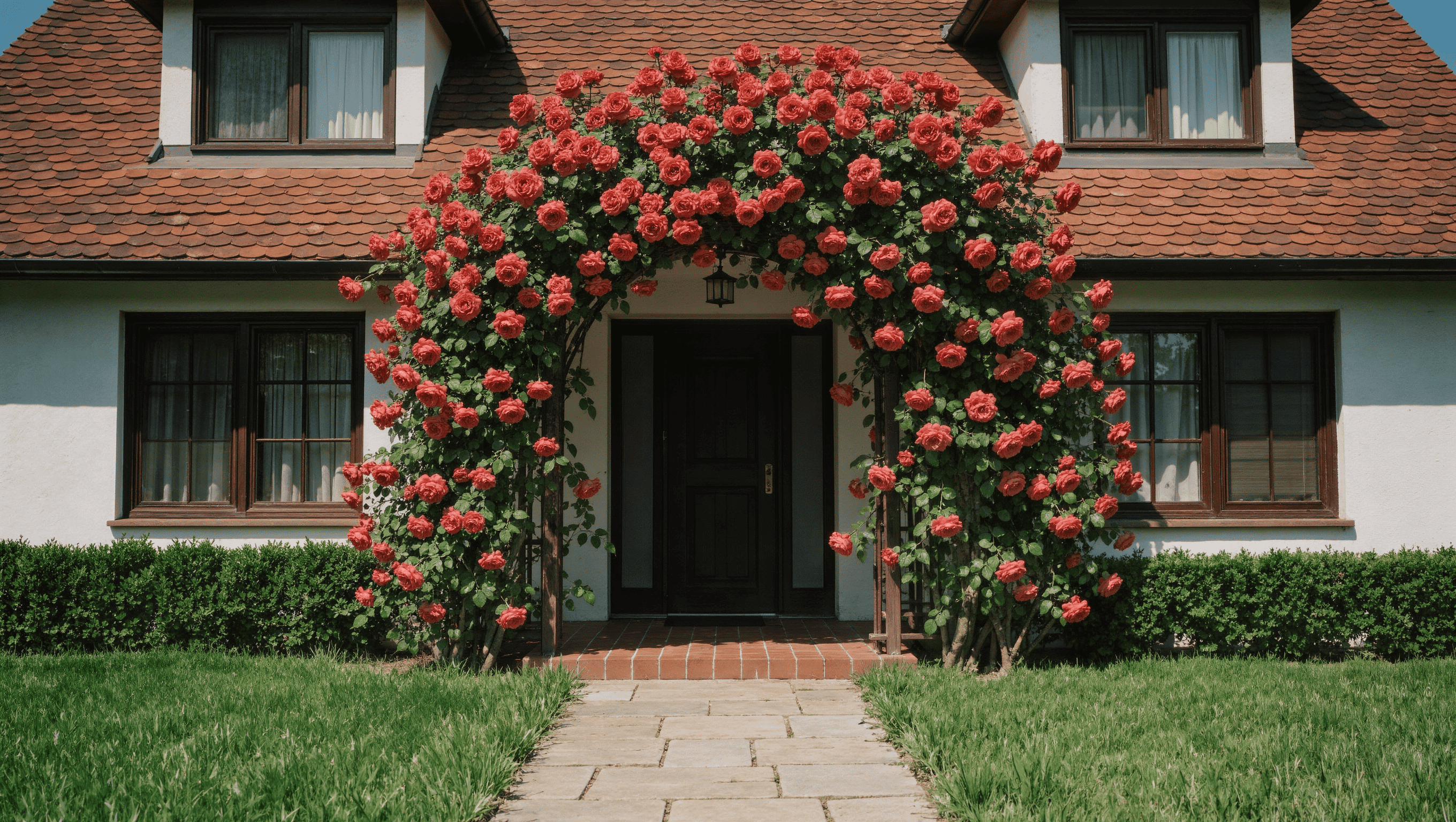
Some yards do not need twelve more nice ideas. They need one thing with enough nerve to change the view.
I mean that literally. A huge pot of one flower at the end of a path. A ridiculous sweep of the same color against a dark fence. A temporary wall of blooms outside the window you look through every morning. The move works when it gives the yard a center of gravity, not when it adds one more decorative moment to a property already full of small ones.
This is not an argument for spending recklessly on flowers. It is an argument for concentrating the money, color, and maintenance you were already going to scatter around.
Pick the view that keeps disappointing you
Stand inside first. Look through the kitchen window, the living-room glass, the door you use every day. Then walk the front approach and the route to the terrace. One of those views usually has more value than the others because you see it constantly.
That is where the big floral move belongs. Not in the forgotten back corner because there is technically room for it. Put it where it can alter the experience of the house.
If the sightline is long, the gesture has to be large enough to read from a distance. Three little pots may be lovely at arm’s length and visually disappear from thirty feet away. Scale is not extravagance; sometimes it is simply visibility.
Quantity is more persuasive than variety
A little of everything can make the yard feel busy without making it memorable. One color family repeated in real quantity is often stronger. So is one flower form used with confidence, or one oversized container that can carry a mass instead of a dozen undersized pots doing committee work.
The rest of the yard gets quieter by comparison, which is useful. The lawn can be lawn. The shrubs can do their structural job. The fence does not need three additional ornaments because the main view already has a reason to look alive.
This is especially useful if you like the idea of seasonal drama but do not want to redesign the entire garden every spring. The permanent landscape holds the room; the flowers get to arrive like a guest star.
The outrageous part still has to survive Tuesday
Outdoor flowers have boring physical needs, and ignoring them is how a glamorous idea becomes a collapsing mess. Think about wind, irrigation, heat reflected off paving, the weight of wet soil, how somebody will deadhead or cut spent stems, and whether a container can actually be moved when the season ends.
If the installation is temporary, decide where the temporary parts go afterwards. If it is planted in the ground, know what the area looks like once the peak is over. The best seasonal spectacle has an exit plan before the first flower opens.
And if a dramatic planter sits beside a door or path, make sure the scale does not steal circulation. A flower arrangement is allowed to be excessive. The trip hazard does not get the same artistic license.
Editing is what makes the big move look expensive
The fastest way to weaken one strong floral gesture is to surround it with seven unrelated small ones. Tired hanging baskets, half-empty planters, random solar lights, and the pot you meant to move last October all start competing for attention.
Clear the sightline. Let one thing lead. You can still have other flowers elsewhere, but they do not all need to audition for the same scene.
If you want the short-run version of this idea, build a seasonal flower explosion. If the goal is to make the planting feel connected to the house rather than dropped around it, start with the flowers outside as part of the room.


