Outdoor Rooms
Seasonal Flower Explosions for People Who Refuse a Permanent Commitment
Create seasonal flower explosions without permanent garden obligations by concentrating bulbs, annuals, containers, or temporary climbers in one high-impact zone with a planned peak and exit.
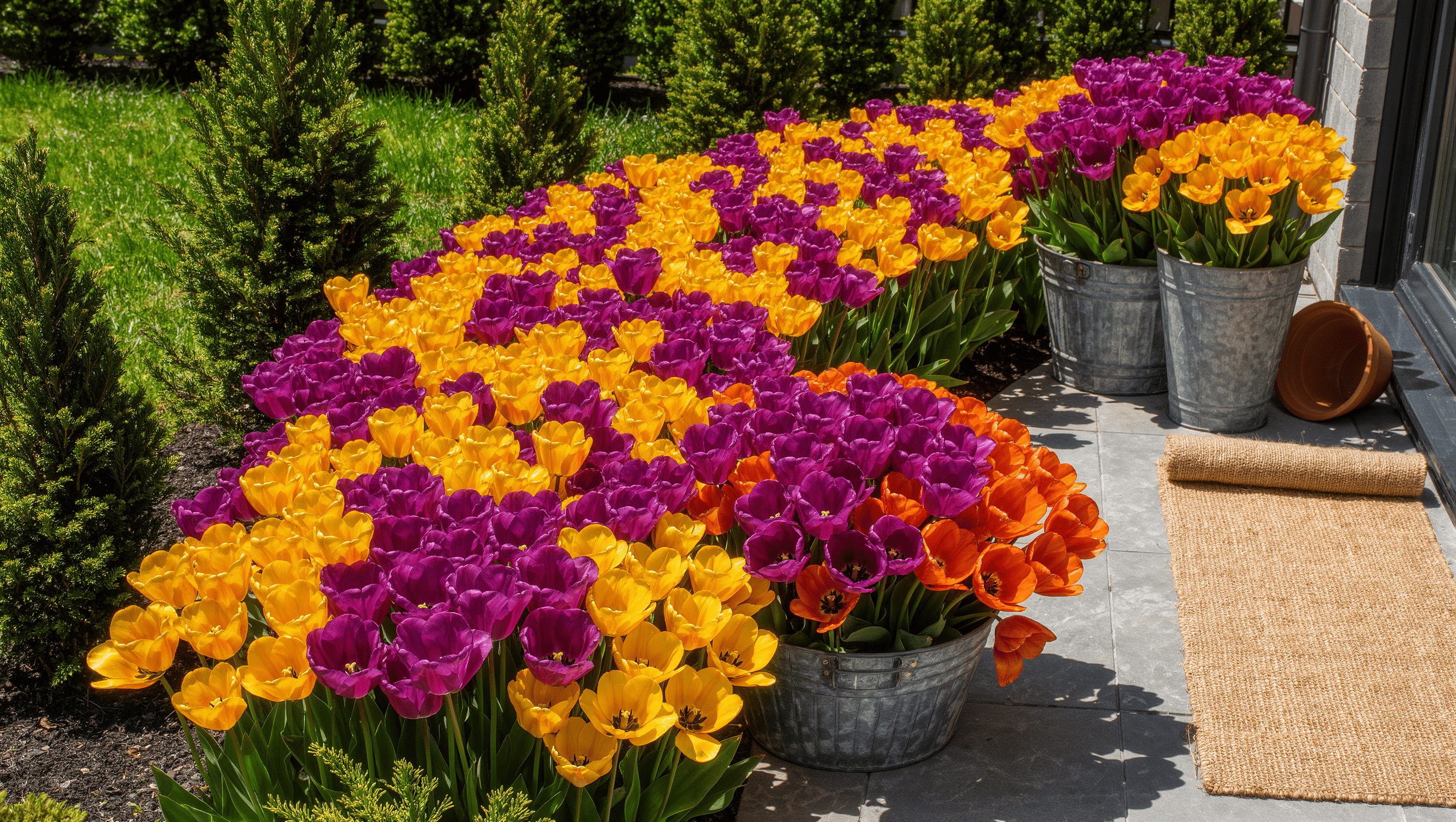
Some gardens are better when they are allowed to be briefly unreasonable.
Not every flower decision needs to become a permanent planting scheme with a ten-year maintenance relationship. A six-week surge of color can be enough, especially when the rest of the yard already has decent structure. The mistake is treating seasonal abundance like miscellaneous annuals sprinkled wherever there is a hole.
If the display is temporary, make the temporary part count.
Give the season a stage
Pick one place where the burst will actually be experienced: the front walk, a terrace edge, the fence behind the dining table, the view from the kitchen sink, or the turn in the path where the garden usually loses interest.
That choice matters more than the exact plant list. A concentrated run of flowers in one high-value view will usually feel more deliberate than the same budget divided among eight small beds.
The permanent background should still work without the show. Hedges, grasses, shrubs, walls, paths, and containers are the scenery. They keep the garden from looking abandoned when the seasonal material leaves.
Choose the window before the flowers
Decide when you want the garden to peak and why. Maybe it is the first stretch of spring when you are desperate for color. Maybe it is high summer because the terrace is used every night. Maybe the whole point is an August party or six glowing weeks of autumn.
Then work backward from the period, not from a photograph of a flower you like. Weather changes bloom timing, so a fixed event date needs redundancy rather than one plant expected to perform on command. Containers can help because they are movable and easier to swap than a full bed.
Mass makes the temporary moment feel intentional
More colors are not automatically more festive. A restricted palette used in quantity often creates a bigger effect with less visual noise. One hot pink repeated in several substantial containers can feel more dramatic than twelve unrelated colors competing across the yard.
Height can do the same work. A repeated tall flower or climber gives the display a visible silhouette. Low color at the path edge can make the route feel richer without swallowing it.
This is where restraint becomes useful rather than polite: fewer kinds, more conviction.
Plan the maintenance before the peak
Dense seasonal planting can ask a lot from water, staking, deadheading, cleanup, and replacement after bad weather. If nobody has time for that, design a smaller moment that can actually stay good.
Containers are not maintenance-free just because they are temporary. They can dry quickly, get top-heavy, or become difficult to move once filled. Beds can become a removal project if the exit was never considered. The glamorous part is the peak; the intelligent part is knowing who is keeping it alive.
The exit is part of the design
Decide what happens when the flowers are finished. Bulbs may be lifted or left to return. Annuals may be composted. Containers may go back to quieter planting. A climber may need support removed. Seeded areas may need cutting and a clear edge so they look intentional rather than forgotten.
The yard should not spend another six weeks looking apologetic because nobody wanted to admit the show was over.
For an even more concentrated version, see one ridiculous flower move. For the larger relationship between planting and the house, treat the flowers outside as part of the room.


