Outdoor Rooms
Raised Beds Should Organize the Landscape, Not Just Hold Soil
Use raised garden beds as part of the landscape plan by solving placement, access, irrigation, soil depth, pathways, materials, harvest, and off-season structure before filling them.
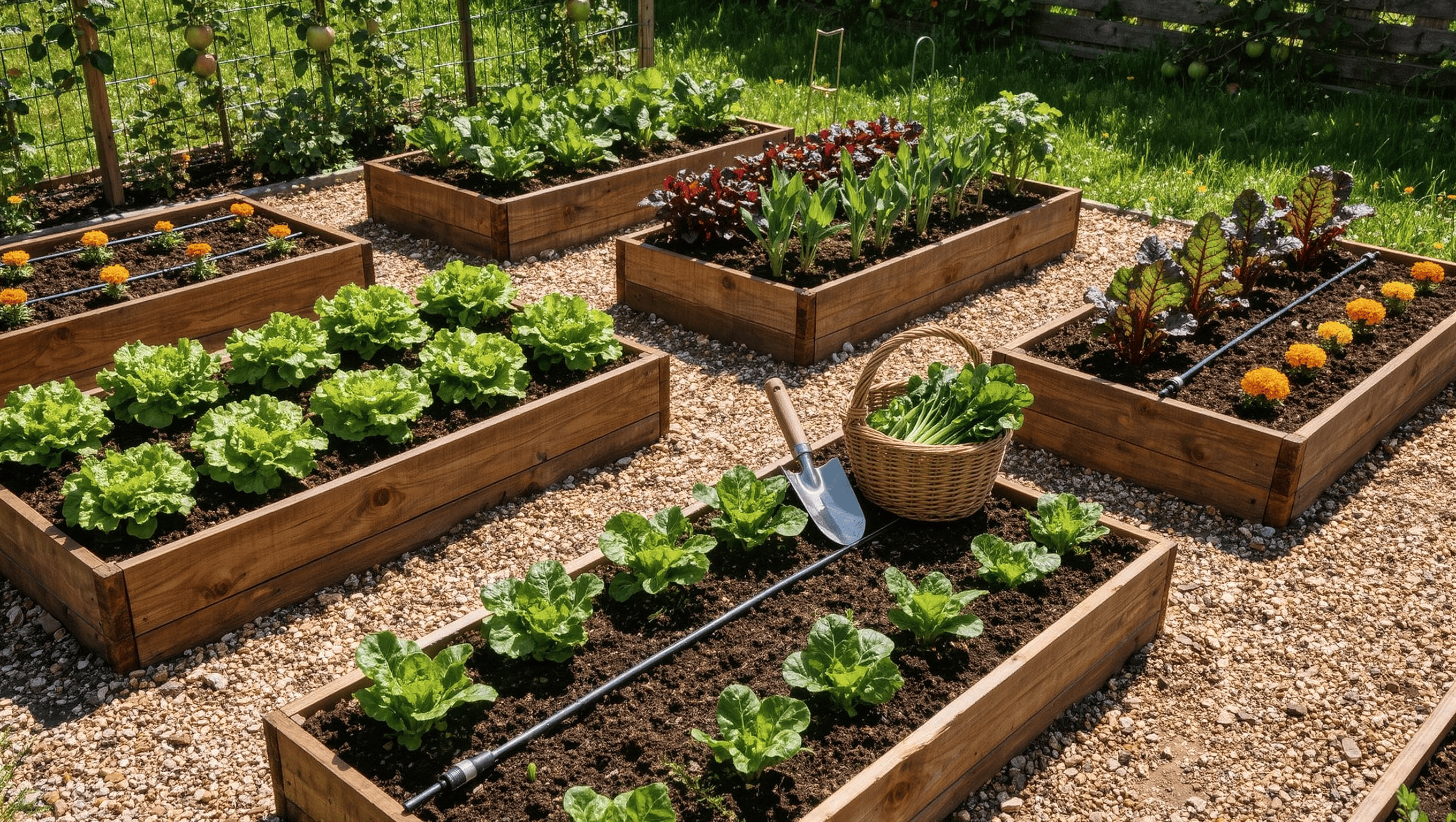
Raised beds are useful because they concentrate soil, crops, access, and maintenance. They become landscaping when they also organize space.
A row of boxes dropped into the sunniest patch may grow vegetables perfectly well and still make the yard feel like a temporary work site. The stronger move is to treat bed shape, paths, water, storage, edges, and seasonal appearance as one system.
Start with sun and access together
Food crops often need substantial sun, but the perfect solar location is not useful if it sits behind three gates and a muddy route.
Map the best growing conditions, then check how often you will walk there from the kitchen, hose connection, compost area, shed, and main outdoor route.
Choose the bed shape from the body

Bed width should allow the intended gardener to reach the center without compacting soil or balancing awkwardly on the edge. Height should respond to mobility, crop type, soil volume, and the desired working posture.
Do not copy a standard dimension without considering who will use the bed. Accessibility, bending tolerance, wheelchair approach, and reach vary.
Give paths enough authority
The space between beds must carry people, watering equipment, harvest baskets, carts, soil amendments, and occasionally another person moving in the opposite direction.
A beautiful bed layout becomes irritating if paths are too narrow for the actual maintenance routine. Test the route with the largest object that regularly needs to move through it.
Plan irrigation before filling the beds
Hand watering can work at small scale, but multiple beds become easier to manage when water delivery is deliberate. Place hose connections, shutoffs, timers, or low-volume irrigation where they can be accessed without dragging equipment across crops.
Use systems as rated and follow local requirements. More complex irrigation, plumbing connections, or backflow conditions may require qualified installation.
Choose materials for weather and food-growing conditions
Wood, metal, masonry, composite products, and other materials weather differently. Consider heat, frost, corrosion, rot, sharp edges, soil contact, maintenance, and whether the material is appropriate around edible crops.
Do not use salvaged material of unknown treatment or contamination history for food-growing beds without appropriate assessment.
Make the empty-season view credible
Annual vegetable beds may look sparse between crops. Permanent edging, clean paths, trellises, clipped herbs, evergreen structure nearby, or a repeated material language can keep the garden composed when the beds are mostly soil.
The landscape should not depend on peak tomato season to look intentional.
Use vertical structure where it saves ground
Trellises and supports can turn beans, peas, cucumbers, vines, and some fruiting plants upward, leaving more bed area available below.
Place tall structures where they will not shade crops that need sun or block key views. A trellis is a wall when the leaves arrive; design it like one.
Protect the edges from maintenance damage
Grass immediately against raised beds can create trimming and mowing friction. Gravel, mulch, pavers, planted groundcover, or other intentional path surfaces can reduce the awkward strip around the box.
Choose surfaces that drain appropriately and remain stable for the people using them.
Integrate compost and staging
Garden work needs somewhere for tools, harvest, soil amendments, empty pots, and temporary debris. A small bench, shelf, potting surface, or nearby storage point can prevent every task from spreading across the patio.
Compost should be close enough to use but located and managed in a way that fits local rules, pests, odor, drainage, and neighbor relationships.
Use raised beds beyond vegetables
Raised beds can hold herbs, berries, cut flowers, pollinator planting, small shrubs, or mixed productive and ornamental planting where conditions suit them.
The bed is infrastructure. What grows in it can change over time without rebuilding the entire landscape.
Do not assume raised means easier
Raised beds can improve access and soil control, but they may dry faster, heat differently, require more imported soil, and need eventual material repair.
Choose them because they solve a real problem—access, poor native soil, drainage, spatial organization—not because they are currently the default picture of a productive garden.
A raised-bed planning checklist
- Does the location have appropriate sun and convenient access?
- Can the intended gardener reach the whole bed comfortably?
- Are paths wide and stable enough for maintenance?
- How will water reach each bed?
- Are materials appropriate for weather and intended crops?
- What gives the area structure when crops are absent?
- Where do tools, harvest, and compost move?
- Can the system change as gardening needs change?
See Edible Landscaping Should Still Look Like Landscaping and Outside.
A raised bed is successful when it improves both the growing and the yard around it. The soil box should not be the only part of the plan that received a drawing.


