Function and Flow
Storage That Knows How to Disappear
Create quieter storage with integrated cabinetry, furniture that performs two jobs, concealed charging, disciplined open display, and materials that belong to the room.

On this page
15
Storage does not need to arrive wearing a label maker and announcing that organization has begun.
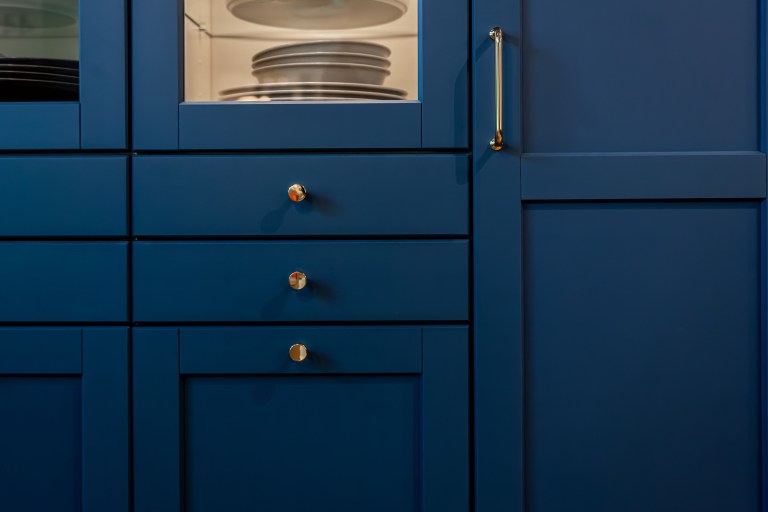
The calmest storage often looks like architecture or furniture first: a wall of cabinetry, a bench with drawers, a sideboard, a bed base, a window seat, or one handsome cabinet that quietly absorbs the category everyone was tired of seeing.
The goal is to keep storage from becoming the room’s loudest visual system.
Start with the category, not the container
Name the thing that keeps ending up on the counter. Toys, cables, paperwork, shoes, linens, media, cleaning supplies, craft materials, work equipment. Then measure how much of it there actually is and how often somebody reaches for it. Do that before you buy the cabinet, not after.
A beautiful cabinet with the wrong compartments is worse than an open shelf, because now the thing is hard to find and hidden. Storage has to fit the objects and the way a hand goes in after them.
Match storage to the room’s material language
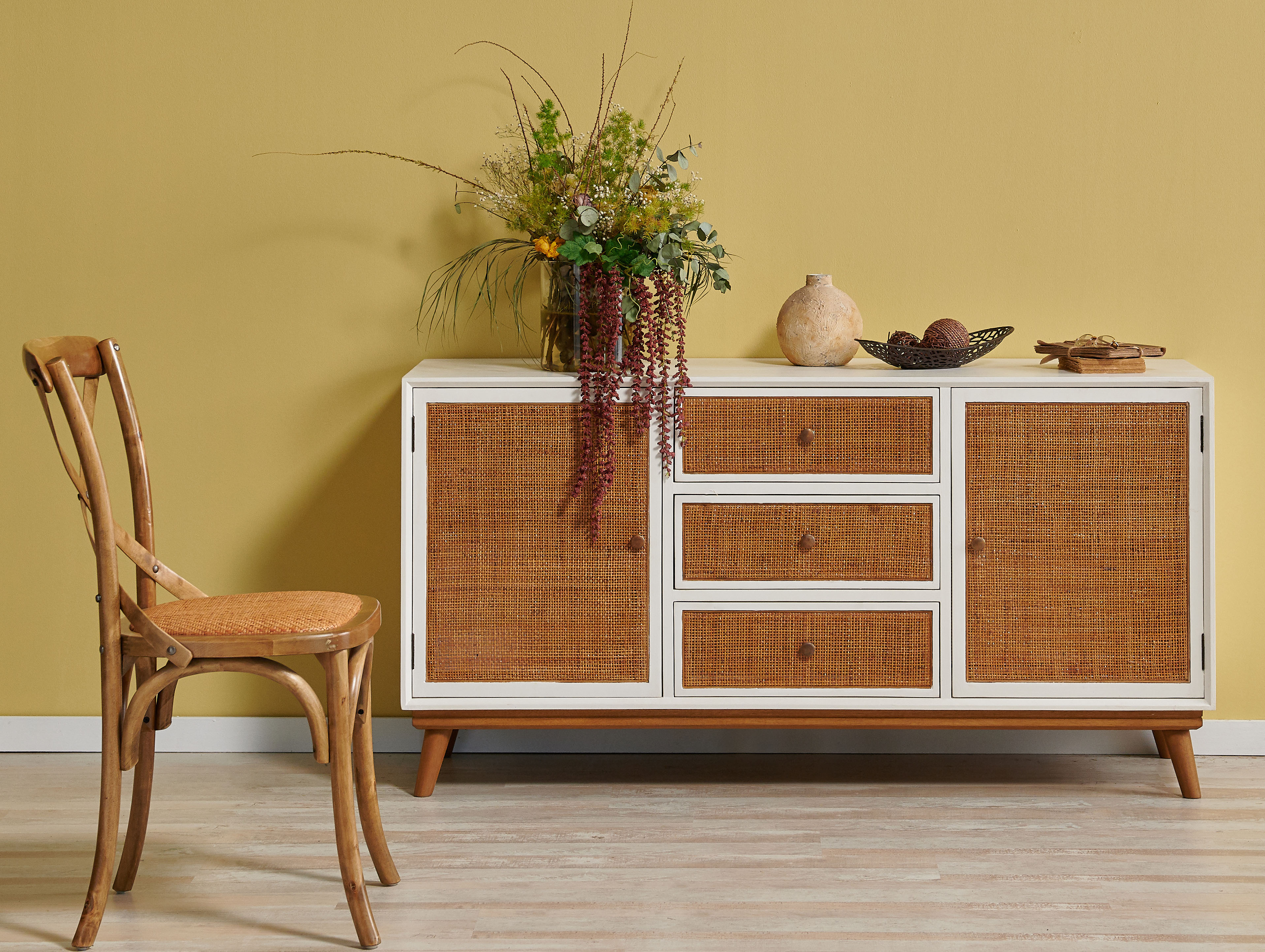
Borrow something the room already has: the paint, the wood, the hardware, the proportion of an existing door. That is what makes a storage piece read as part of the room. A generic organizer can reduce the clutter and still add noise, because now there is a piece of office furniture in your living room.
Built-in-looking does not mean built in. A freestanding cabinet painted to agree with the wall behind it, or three units lined up with real care about the gaps, gets most of the way there for a fraction of the money.
Hide the visually loud categories
Cables, packaging, cleaning supplies, toys with eighty pieces, paperwork, the backup of the backup, the drawer of assorted tools. All of these want a door.
Keep open storage for books, plants, art, attractive equipment, and objects that improve by being visible. Visibility should be a deliberate privilege, not the default condition of everything the house owns.
Put the doors where they can actually open
Closed storage is only calm when it opens. Check the door swing, the full drawer extension, and the position a body has to get into to reach the back. Then check what furniture is standing where that swing wants to go.
A cabinet tucked neatly behind a chair looks integrated and is functionally dead. The standard is simple: putting a thing away has to be easier than the floor, the table, or the chair where it currently lands. Lose that race and the cabinet stays empty while the chair fills up.
Build charging into the routine
Give devices one place with air around them and a real outlet nearby. Keep the cords tidy but reachable, because every one of them gets replaced eventually.
Do not bury a charger in a sealed drawer full of fabric. Heat has to go somewhere. Follow the device, furniture and electrical guidance, and leave permanent outlet work to somebody qualified.
Use furniture footprints twice
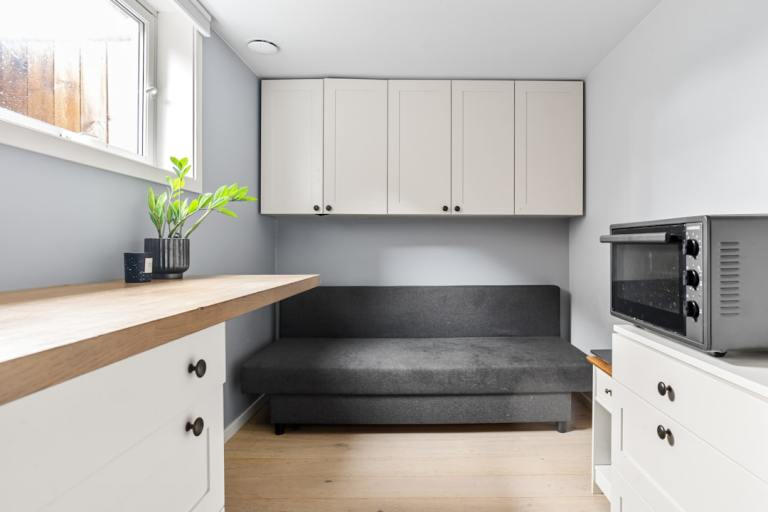
Benches, beds, ottomans, sideboards, window seats. Every one of them can hold something while doing its actual job. Double duty only counts when both duties stay easy.
A storage ottoman you have to clear a tray off every time you open it will be opened twice. A bed drawer blocked by the nightstand is theoretical storage. It appears on the floor plan and nowhere in your life.
Keep storage near the action
Games near the table. Blankets near the sofa. Shoes near the door people actually come in. Linens near the rooms that use them. Work supplies within arm’s reach of the desk.
A short return trip beats a clever category system every time. The handsomest cabinet in the house, standing two rooms away, will never organize the things that get used right here.
Use Storage and Working Zones when the return path is the real problem.
Make the outside quieter than the inside
A cabinet can be chaos inside and one calm plane outside. That is most of the argument for closed storage.
So do not publish the filing system on the front. Labels, matching baskets and decorative sub-containers on the outside undo the thing you just bought, unless somebody in the house genuinely needs them to find anything.
Leave capacity
Storage that is full on the day it is installed has no capacity for the week that follows. Empty space is not waste. It is the part of the system that absorbs a normal Tuesday.
Leave room for laundry in transit, for things you have not bought yet, for the seasonal swap, and for the reset nobody does perfectly. Storage is supposed to make a house forgiving, not turn it into a system that demands you be precise every day.
Use open display as contrast
One open bay in a long wall of doors lightens the whole thing. But that bay has to be edited hard enough to read as a composition. The moment it starts holding the things that did not fit elsewhere, it is overflow with a spotlight on it.
Open and closed storage work well together when each is assigned the category it handles best.
Use handles, reveals, and fronts deliberately
Hardware decides whether a run of storage reads as architecture, as furniture, or as equipment. Integrated pulls, knobs, latches, the lines between panels: these become the rhythm of that wall whether you intended them to or not.
Choose for hand comfort and daily use as well as appearance. A nearly invisible handle that requires fingernail gymnastics is not a sophisticated solution.
Do not create storage for categories that should leave
Before you pay for more capacity, go through what you have. The duplicates, the broken thing you meant to fix, the obsolete cable, the box that belongs at somebody else’s house.
Storage is expensive square footage. It should serve objects with a reason to remain.
Keep maintenance equipment accessible
Vacuum attachments, cleaning supplies, spare linens, the tools. Unattractive, all of them, and all of them operationally necessary. Keep them near the area they serve.
Hide them perfectly at the far end of the house and you have bought a calm-looking room at the price of more work to keep it that way. That trade goes bad within a month.
Plan access and safety
Tall furniture gets anchored. Heavy things live where a person can get them down without a stepladder and a prayer. Access panels, vents, doors and the route through the room all stay clear.
A cabinet that hides a shutoff, a panel, or anything anyone might need in a hurry has solved the appearance problem and created a much worse one.
Let the room talk about something else
The best hidden storage does not make the room look aggressively organized. It simply gives practical debris somewhere to disappear so the room can keep talking about something more interesting.
What you want is a room that has stopped advertising its own organization. Inside the cabinet, be as regimented as you like. Nobody outside it needs to know.
Same problem, elsewhere in the house
Room notes
Keep the room on the record.
One useful note at a time: what to test, what to ignore, and what changed when the room got another vote.