Light and Atmosphere
The Room That Lets Flowers Take Over Without Becoming a Florist’s Lobby
Use branches, cut flowers, foliage, planted forms, vessels, color repetition, and seasonal scale to make living material part of the room’s architecture rather than a polite centerpiece.
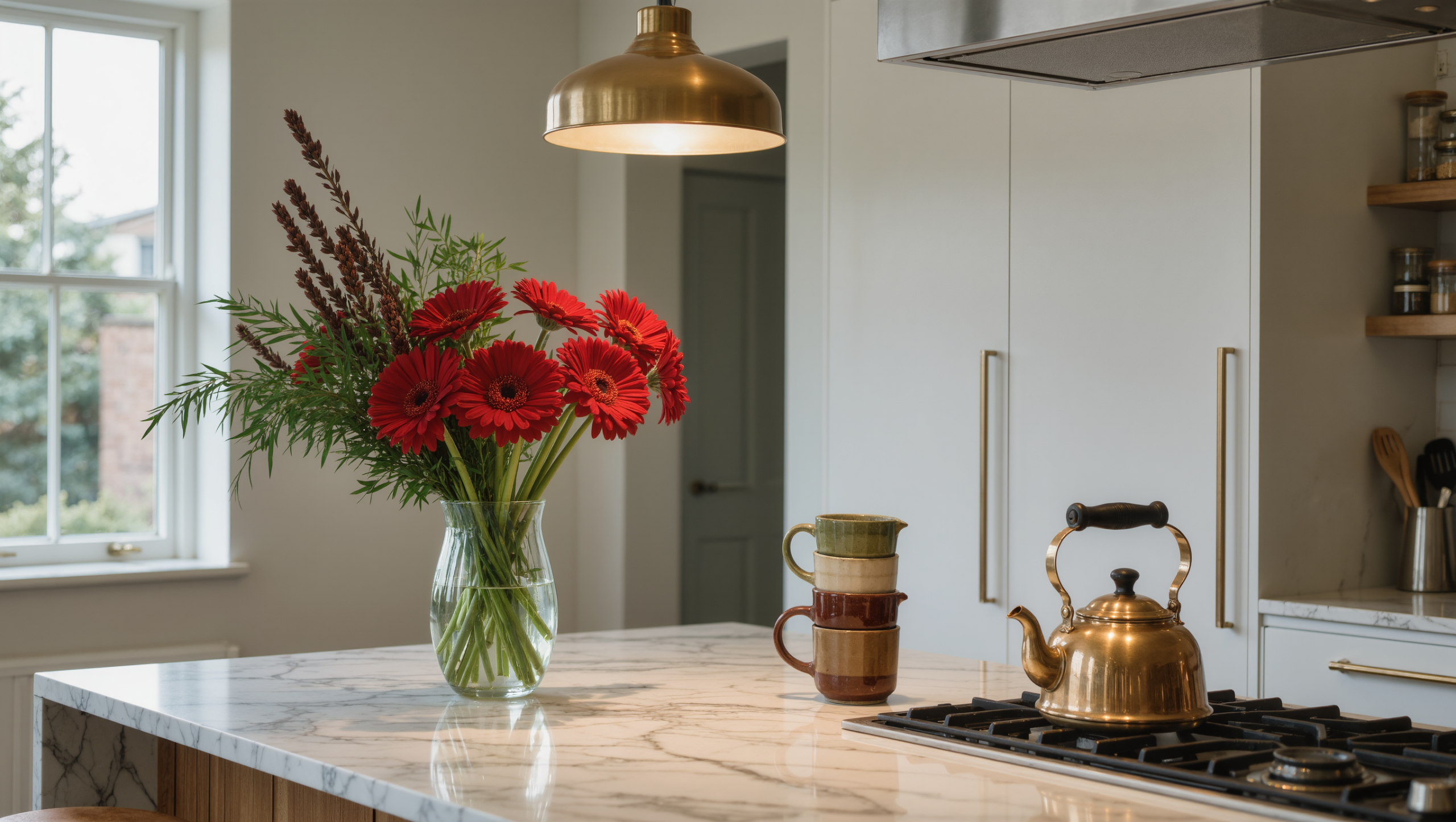
Flowers are often invited into a room on very limited terms. They may occupy one vase, remain neatly centered, and avoid disrupting the furniture. The arrangement is admired for several days, removed, and replaced by the same visual silence that existed before it arrived.
Living material can do much more. Branches can alter scale. Foliage can create a boundary. Repeated vessels can establish rhythm. One mass of color can connect art, upholstery, and light. The room changes when flowers stop behaving like table decor and begin acting like spatial material.
Choose the Role Before the Flowers
Decide what the living material should do. It might soften a hard corner, mark a threshold, bring height to a low room, interrupt a long table, frame a view, or create temporary drama where permanent change is not possible.
This prevents the arrangement from becoming a decorative afterthought. The flowers have a job in the composition, even when that job is simply to make the room feel gloriously less reasonable for a week.
Scale Is the First Decision

A small arrangement adds detail. A large branch changes architecture. A row of low vessels changes the length of a table. A planted grouping can create a green edge where the room needs containment.
Match the gesture to the space. Tall rooms can hold height. Narrow rooms may benefit from low, directional forms. A compact room can carry one oversized arrangement more convincingly than six tiny ones scattered like apologies.
Use Vessels as Part of the Furniture Story
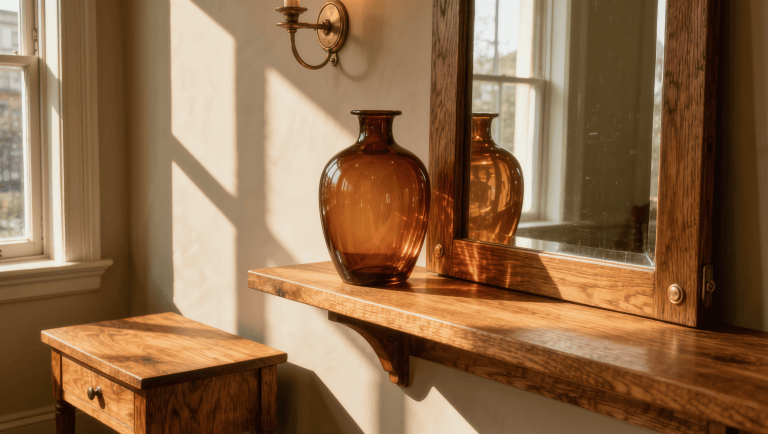
The vessel determines weight, reflection, color, and silhouette. Dark glass can make pale flowers sharper. Earthenware can ground loose branches. Metal introduces glint. Clear glass allows stems and water to remain part of the image.
Repeat one vessel material across the room in different sizes, or use one exceptional vessel as a set piece. Avoid collecting unrelated containers simply because they can technically hold water. Capacity is not a personality.
Let Color Travel
A floral color becomes more convincing when it has an ally elsewhere. Repeat a deep red in a book spine, textile, or artwork. Echo acidic green in glass or a painted object. Use cream flowers against a dark wall where their shape can register.
The room should not match the arrangement. It should answer it.
Mix Cut and Planted Life
Cut flowers bring change, season, and short-lived intensity. Plants provide longer structure. Used together, they prevent the room from feeling either permanently jungle-themed or briefly decorated for company.
A tall planted form can hold a corner while cut branches change with the month. Low foliage can establish continuity beneath a more dramatic floral gesture. The contrast between stable and temporary life gives the room movement.
Make the Arrangement Visible From More Than One Seat
Place living material where it contributes to several views: from the doorway, across the sofa, reflected in a mirror, or silhouetted against a window. A beautiful arrangement hidden behind the tallest chair is working very hard for almost no audience.
Check sightlines and conversation height. The flowers may be dramatic without becoming a floral barricade between people attempting dinner.
Allow the Room to Change With the Season
Spring may be loose, pale, and vertical. Summer can carry leaf mass and saturated color. Autumn supports seed heads, branches, fruiting forms, and darker vessels. Winter may rely on evergreen structure, bare branches, bulbs, or a single severe bloom.
The room does not need a seasonal costume. One shift in shape, color, or density is enough to change its atmosphere.
Temporary Does Not Mean Trivial
Flowers are valuable precisely because they allow the room to become something else without construction, upholstery, or a committee meeting about paint samples.
When living material is given scale, placement, and a clear role, it can alter the room’s architecture for an afternoon or a month. The change will not last. That is part of the pleasure, not a reason to keep it small.
Same problem, elsewhere in the house
Room notes
Keep the room on the record.
One useful note at a time: what to test, what to ignore, and what changed when the room got another vote.