Light and Atmosphere
My House Changes With the Seasons. The Plan Should Too.
I change the house with the seasons — not with token decorations, but with enough lighting, texture, and accumulated good pieces that it genuinely reads differently in February than it does in October.
On this page
6
For as long as I can remember, my house has changed with the seasons.
I do not mean I swap two pillows, put a wreath on the door, and announce that fall has arrived. I mean there is a storage room and additional storage devoted to the transition. The house is recognizably the same house, the furniture is mostly where it was, and nobody is carrying a sofa through a doorway four times a year. But the atmosphere absolutely changes.
It feels like a different house depending on the season, and I have realized that I genuinely need that.
Halloween starts in September, and no, I do not mean fall
September is when Halloween begins here. Not fall. Halloween.
There will not be a tasteful little pumpkin beside a beige throw and a sign politely informing everyone that it is sweater weather. That is not what is happening.
I have accumulated Halloween decor for years, and most of it is stuff I actually like. That matters to me. I would rather buy one good thing I will use for a decade than drag home something flimsy because it happened to be sitting by the checkout lane. I cringe a little when some giant ridiculous thing appears that looks as though it will survive exactly one windstorm.
That does not mean I am above giant ridiculous things. I bought a dancing Halloween DJ from Lowe’s last year because apparently I do have limits, but dignity was not one of them that day, and it was absurd, and completely up my alley. Both things can be true.
The difference, to me, is whether the ridiculous thing belongs to the world you are building. Halloween at my house is not three plastic tombstones thrown into the grass because October arrived. It is darker, stranger, more theatrical. Lighting changes. Objects come out that have been collected over years. The house gets moodier. The yard gets involved. There can be humor because Halloween should be fun, but the joke still has to live in the same world as everything else.
Christmas is when the house starts reflecting light from every direction
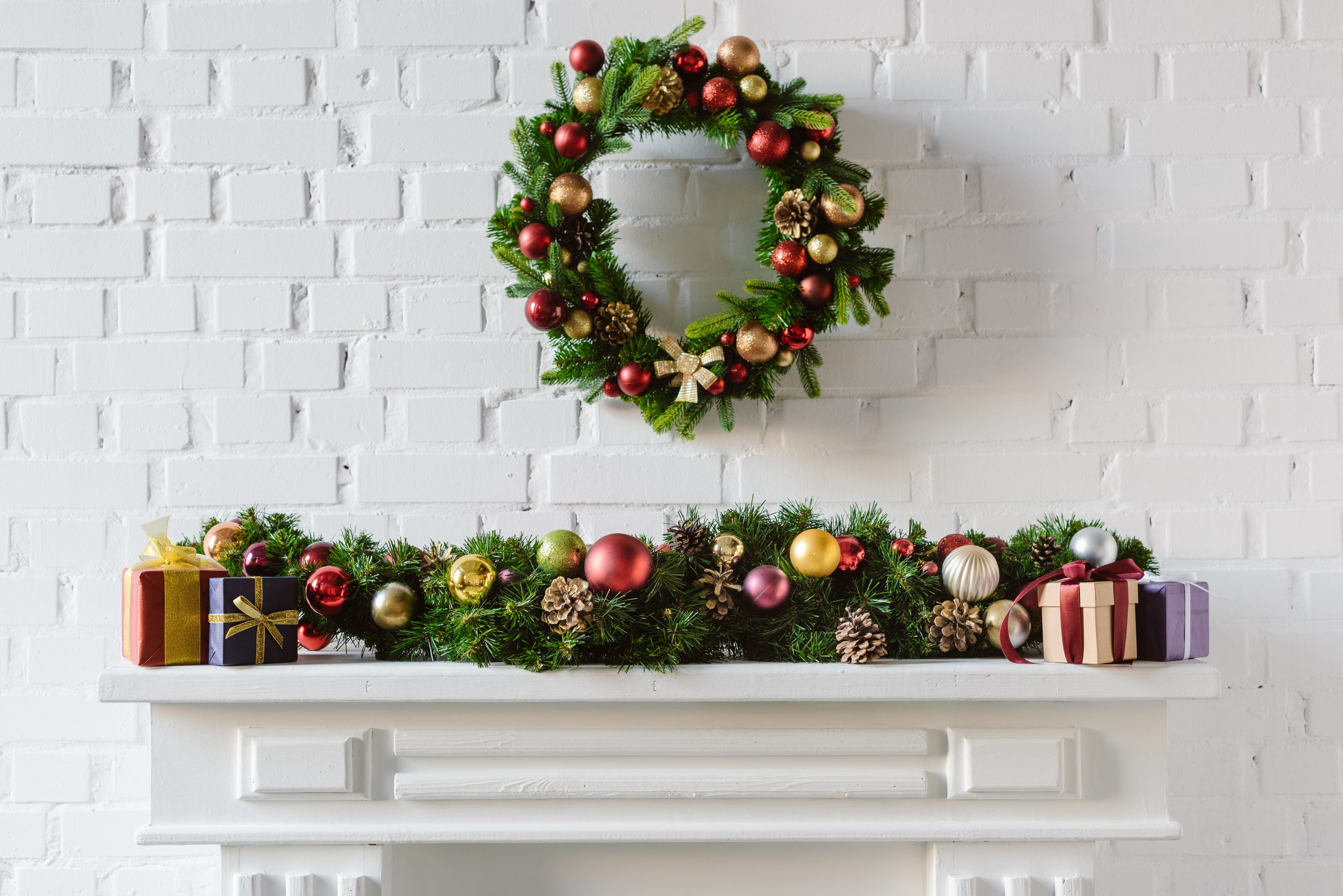
Then November arrives and Halloween starts giving way to Christmas.
Christmas is the sparkly season. If it shines and it can plausibly make sense at Christmas, there is a decent chance it has lived in this house at some point.
I am not especially attached to traditional red, white, and green Christmas decorating. Years ago I went hard into purple and silver. Very hard. I loved it until I did not, which is usually how these things go. As I have gotten older, the niche purple-and-silver obsession has loosened its grip. What stayed was the shine.
Glass, metallic finishes, reflective surfaces, lights, crystal, things that catch the room from across the room—that is more my Christmas language now than a fixed color scheme.
The decorations begin coming down after the first of the year, but I am not pretending the transition happens in one disciplined weekend. It does not. The obvious Christmas is gone. Then the quieter winter pieces linger. Something sparkly survives because it still looks good. A branch or lighted piece gets a temporary pardon. The full migration back to normal can stretch much later without the house looking like Christmas simply forgot to leave.
I actually like that slow transition. Houses do not need to behave like retail stores where one seasonal display is cleared overnight and the next one appears before breakfast.
Spring is less about bunnies and more about making the house believe the weather
Spring is a different problem where I live because actual spring can take its sweet time showing up.
I am not interested in filling the house with Easter eggs and calling the job done. Spring is more about forcing some life back into the place before the outdoors is fully cooperating. Lighter layers. More green. Flowers. Different textures. Things that make the rooms feel less enclosed after winter.
That spring version of the interior carries through summer. I do not completely rebuild the inside again once June arrives. By then my attention has moved outside.
In summer, the yard becomes another house
This is probably the seasonal shift that changes our actual daily life the most.
The pergola stops being a structure in the yard and becomes a room. Curtains. Blinds. Art. Lighting. Furniture. Flower pots for miles. Layers that make it feel enclosed enough to settle into without pretending it is indoors.
I spend a lot of time outside in summer and fall, right up until the weather makes the decision for me. Building the yard like an outdoor living space has changed how we use the house because it gives us somewhere else to be. When the inside is too hot, we go outside. When the evening is good, there is no reason to rush back indoors. Dinner stretches. People linger. I stay outside longer because there is somewhere comfortable to stay.
That is why I get slightly irritated when outdoor decorating is treated like adding two patio chairs and a planter. If you genuinely spend time outside, it deserves the same design questions as a room: Where does the eye go? Where is the shade? What happens when the sun drops? Can you sit there for three hours? Is there privacy? Does the lighting make people look vaguely haunted in the bad way? Where do you put a drink?
By fall, that outdoor room starts taking on Halloween too. Christmas makes an appearance later, although not at the same scale. Summer and Halloween are really when the backyard gets its starring roles.
The other holidays get a lighter hand
I change things for other holidays, but not every date on the calendar needs a full production. Some shifts are a table, a color, flowers, a few objects, maybe something at the door. Enough to acknowledge the moment without making the storage situation even more unhinged than it already is.
That is probably the part I would encourage even if you have absolutely no desire to devote square footage to seasonal decor.
You do not need my storage problem to get the benefit
I know this is more seasonal change than most people want. Fair. I am not suggesting everybody needs bins stacked to the ceiling or a dancing DJ with questionable career prospects.
But I do think changing a house seasonally can make you see it again.
Change the lighting. Put away a textile and bring out another one. Move the art you already own. Add branches, flowers, greenery, darker objects, brighter glass, a different table setup. Shift the porch. Change what is visible on a shelf. Make one room warmer in winter or lighter in spring. None of that requires buying a cart full of themed objects.
None of this is an obligation. I think I do it partly because I have always had a little wanderlust in me. I like the feeling of being somewhere slightly different. Changing the house gives me a version of that without going anywhere. The same rooms take on a different energy. I notice them again.
And, very simply, it makes me happy.
That is a good enough design reason for me.
Same problem, elsewhere in the house
Room notes
Keep the room on the record.
One useful note at a time: what to test, what to ignore, and what changed when the room got another vote.