Light and Atmosphere
Lighting After Dark: How the Room Behaves After Sunset
Daylight can conceal a weak lighting plan for half the day.

A room is not finished when it looks good in daylight. It is finished when it still knows what it is doing after sunset.
Lighting after dark changes the room’s hierarchy. Windows stop being bright openings and become dark rectangles or reflections. Materials lose or gain depth. Pale paint can go flat. Dark paint can become richer. The chair that looked perfectly placed at noon may become a useless island if the nearest light is behind it.
Night is a separate design condition.
Start with the evening activities
Write down what actually happens after sunset: reading, television, conversation, dinner, work, cleaning, getting dressed, hosting, or moving through the house.
Do not light the room as one generic space. Light the activities and the routes between them.
Choose the brightest evening zone
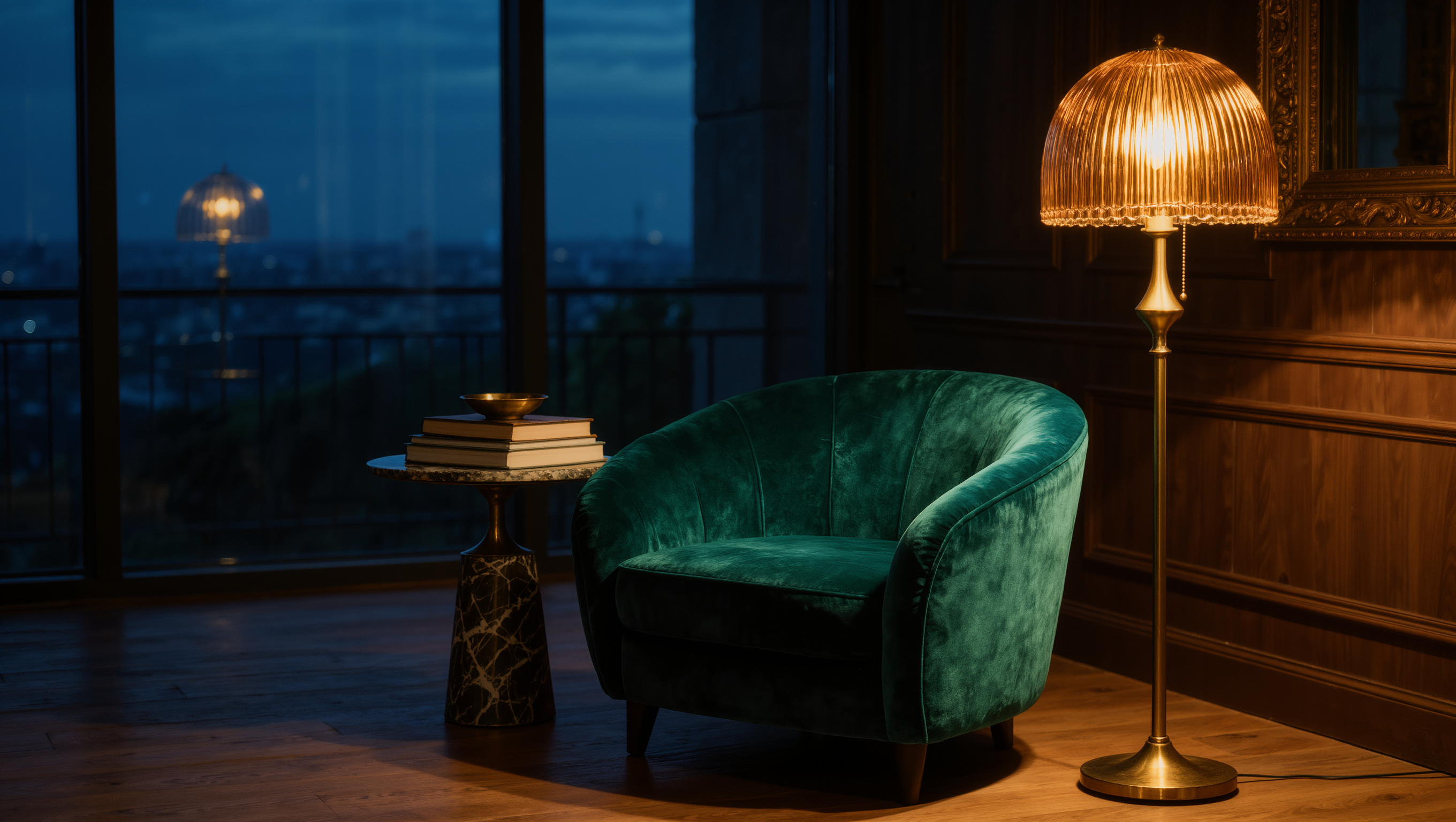
A good night room usually has a hierarchy. One area is brightest because it has the most important task or social function. The rest steps down in controlled levels.
In a living room, the reading chair or conversation group may lead. In a dining room, the table may be the brightest meaningful surface. In a bedroom, the bedside or dressing area may carry the useful light while the rest remains softer.
If everything is equally bright, the room loses focus. If everything is equally dim, useful activities become irritating.
The perimeter decides how big the room feels
A lamp near a wall, a picture light, an illuminated shelf or a wall fitting keeps the edges from dropping out. Vertical light makes a room feel larger because the eye can find where it stops. In deep or naturally dark rooms, one brighter wall at the far end buys more perceived depth than raising the ceiling light everywhere, and it costs one lamp instead of a rewire.
That does not mean lighting every edge. Some shadow is what makes the lit part legible, and a room with no unlit area anywhere in it reads as a waiting room with better furniture.
The distinction is between a pause and a failure. An empty dark corner is a pause. A dark step, a dark reading surface, a dark threshold or a dark run of stairs is a failure, and it is the kind somebody eventually finds with a shin.
Sit down before you decide anything
Sit where people actually sit and look at one another. Overhead-only light carves shadows under the eyes, bare sources glare, and a lamp behind one person turns the other into a silhouette holding a conversation with a lampshade. Lower sources and reflected light solve most of it without flattening the room.
While you are down there, look at the glass. After dark a window stops being an opening and becomes a mirror, and everything you have just switched on appears in it, reversed and slightly worse. Curtains, a shade, a moved lamp or a lower setting will usually clear it, and none of those cost you any daylight, because none of them are doing anything at noon.
Use task light unapologetically
Atmosphere is not improved by making someone squint. Reading, work, grooming, food preparation, stairs, and other detailed activities need enough usable light.
Put task light close to the activity and control its direction so the rest of the room does not need to match its brightness.
A strong reading lamp in one corner can coexist with a softer overall room. That contrast often makes the room feel better rather than less atmospheric.
Notice how materials change
Gloss, glass, metal, polished stone, velvet, wool, wood, linen, and plaster all respond differently after dark. A reflective object may suddenly dominate. A textured wall may become more interesting under directional light. A dark rug may disappear.
Evaluate the room’s actual materials under the fixtures you plan to use. Evening atmosphere comes from the relationship between source, surface, distance, and color—not from bulb color alone.
Art is the clearest case. A picture that vanishes after dark leaves the wall empty even though the daytime room felt finished, and the room quietly loses a third of the reason you liked it. Light one or two pieces properly rather than putting a small fitting over every frame.
Consider the sensitivity of artwork and materials to prolonged or strong illumination. Valuable or fragile pieces may need more specific guidance.
Do not forget the route between rooms
A beautifully dim lounge connected to a bright kitchen can feel much darker because the eye repeatedly adapts between the two. Likewise, a dark hallway between brighter rooms can feel unsafe and unpleasant.
Use transition light to soften these changes and keep thresholds, stairs, and controls legible.
Build three or four scenes and stop
Twelve lighting modes is a menu nobody reads. Most households want a few that make obvious sense: general use, task-heavy use, evening conversation, and maybe a screen or hosting setting. Group the lamps and switches so each scene is one action. A scene that requires crossing the room twice gets abandoned by the second week, and then everyone is back on the ceiling light, which is where the trouble started.
One of those scenes has to be the bright one, and it is the scene nobody plans. After dinner somebody has to find the spill, collect the glasses and put the chairs back, and doing that under lamps chosen for atmosphere is genuinely miserable. Being able to brighten the room for ten minutes is part of the design, not a lapse in it.
Test the no-buy version first
Before buying new fixtures, move the lamps you already own. Put one at the far wall, one beside the main activity, and one where the route becomes dark. Turn off the ceiling source and live with the room for an evening.
Then identify the missing job precisely. The room may need one additional lamp, not a lighting makeover.
The night shift has different rules
Most rooms get chosen in daylight, with the curtains open and nothing switched on. Then they spend the larger half of their working life in the other condition entirely, lit by whatever fitting happened to be there on moving day.
Judge the room at the hour it actually has to perform. If it only holds together with the ceiling light on, you have a daylight room working a second shift with no tools, and no amount of bulb-swapping will cover for it. Give the evening its own plan, even if the plan is three lamps and a decision about which corner you are letting go.
Continue with Lighting and The Room That Wears Black After Six.
Same problem, elsewhere in the house
Room notes
Keep the room on the record.
One useful note at a time: what to test, what to ignore, and what changed when the room got another vote.