Light and Atmosphere
Daylight Is Sneakier Than the Window
Daylight performance depends on what happens after light enters the room.

The window is not the only source of daylight. The room receives light from the sky, neighboring buildings, pale walls, dark floors, mirrors, landscape, open doorways, and every surface that catches or absorbs what comes through the glass.
That matters because daylight problems are often diagnosed too narrowly. A room can have a large window and still feel dim. A room with a modest window can feel luminous because the rest of the space handles light intelligently.
Start with the path, not the window size
Stand in the room at several times of day and watch where light actually lands. Direct sun is only one condition. Diffuse sky light, reflected light, and borrowed light from adjoining rooms may be doing more useful work for much of the day.
Mark the bright surfaces, the dark pockets, and the moments when the pattern changes. The useful question is how far usable light travels into the room.
Exterior conditions change the daylight before it arrives

Trees, overhangs, balconies, neighboring buildings, deep window recesses, screens, and landscape all affect the quantity and direction of light. A south-facing room under a deep porch may behave very differently from the orientation stereotype.
Observe the actual site rather than designing from a compass point alone.
Interior surfaces can extend or kill the light
Pale matte walls often scatter light farther than very dark surfaces. Gloss can create sharper reflections. Deep rugs and upholstery absorb more. A bright floor may bounce light upward. None of these responses is automatically better; they change the distribution.
If the back of a room feels dead, look at the surfaces between the window and that area. The room is probably eating the light before it arrives, and a bigger window will not fix a room that eats light.
Open doorways can provide borrowed light
A hallway, adjacent room, glazed door, or open passage can bring a secondary source into a darker space. Furniture placement and curtains can either preserve that connection or block it.
Before deciding a room has one light source, stand inside it with adjoining doors open and closed. Notice how much illumination and visual depth arrives from elsewhere.
Mirrors should reflect useful brightness
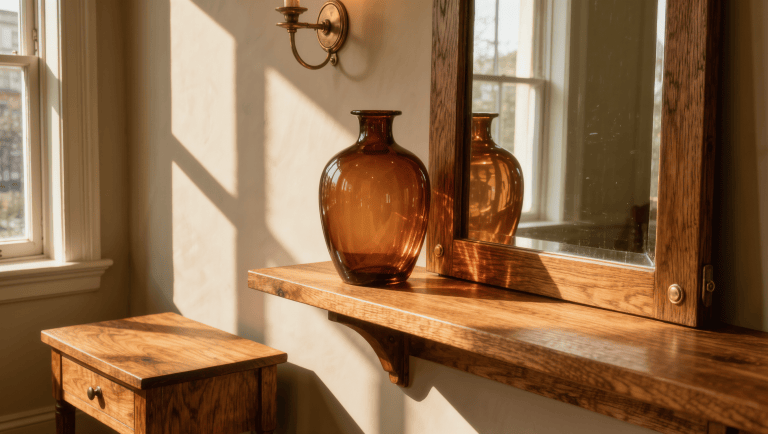
A mirror placed opposite or near a window can redistribute light, but only if there is something worth redistributing. Hang one facing the far side of a dim room and you have simply bought a second dim room.
Test the view from the mirror before mounting it. What does it catch through the day? Does it create glare? Does it reflect an attractive part of the room or a ceiling light nobody asked to see twice?
Mirrors are directional tools, not daylight generators.
Furniture can block the light path
Tall bookcases, heavy curtains, large plants, screens, and high-backed furniture near a window can reduce how far light travels or create unnecessary dark pockets.
This does not mean the window wall must stay empty. It means large objects should be evaluated as part of the light path.
Move one obstruction temporarily and compare the room at the same time the next day.
Use curtains for control, not permanent surrender
Window treatments have several jobs: privacy, glare control, insulation, softness, and atmosphere. They should not automatically reduce daylight all day because one hour is uncomfortable.
Layering sheers, adjustable shades, curtains, or other treatments can create more than one condition. The right solution depends on the window, exposure, privacy need, and room use.
Daylight and task light should cooperate
A desk beside a window may still need task light when clouds arrive or the sun moves. A reading chair can benefit from daylight without being positioned directly in glare. A kitchen counter may receive beautiful side light but need localized support later.
Place activities where daylight helps, then plan artificial light for the hours it does not.
Do not paint the room before observing the light
Color is one of the most tempting responses to a dim room. Sometimes a lighter or more reflective surface helps. Sometimes the room is better when the lower light level is accepted and lit for rather than painted over.
Observe the daylight pattern first. A paint color should respond to the actual light rather than being asked to correct a condition nobody measured.
For that broader decision, pair this with Lighting and the Light and Atmosphere hub.
The daylight audit
Do this one as a walk, in the order the light takes, because that is the order the answers arrive in.
- Start outside. The tree, the overhang, the balcony above, the wall across the street: all of it has already edited your daylight before the glass gets a vote.
- Stand at the window and follow the light inward. Mark the point where it stops being useful. That line, not the window, is the real dimension of your daylight.
- Look at what it crossed on the way. A dark floor, deep upholstery and a heavy curtain stack can consume most of a good window between them.
- Open the doors to the hall and the next room, then close them again. Anything that changes is borrowed light, and you already own it.
- Move the largest obstruction out of the path and look again at the same hour tomorrow.
- Last, list the activities. Some of them want the window. Some want a lamp whatever the weather, and pretending otherwise is how a beautifully lit room ends up with nobody working in it.
Daylight is a room-wide system. The window only admits it; the surfaces, openings, furniture, treatments and exterior conditions decide how far it travels and whether anyone gets the benefit.
Before blaming the window, follow the light all the way through the room.
Same problem, elsewhere in the house
Room notes
Keep the room on the record.
One useful note at a time: what to test, what to ignore, and what changed when the room got another vote.