Function and Flow
How to Make a House Feel Lived-In Without Letting It Get Fussy
There is a point where a room stops feeling finished and starts feeling managed. Here is where that line sits, and how to stay on the right side of it.
On this page
11
There is a point where a room stops feeling finished and starts feeling managed. I do not want to live there.
I like rooms with personality. I like layers, color, plants, books, art, lamps, objects with a little history or humor, and things that make it obvious somebody actually lives in the house. What I do not like is when every surface has been assigned a vignette, every shelf has been styled within an inch of its life, and moving a coffee cup feels like you have disturbed an installation.
That is the line I am always trying to hold: lively, not cluttered; layered, not fussy; personal, not precious.
A lived-in room needs evidence of a life
A room should tell you something about the people in it. Not everything. I do not need a visual autobiography spread across every horizontal surface. But I do want signs of actual interests, habits, comfort, and taste.
That might be books you really read, art you actually like, a plant you have managed not to kill, a bowl that gets used, a blanket that is there because someone gets cold, or a strange object you bought because it made you laugh. Those things create personality because they are connected to use or memory. They do not need a styling explanation.
Rooms get lifeless when everything has been chosen to coordinate and nothing has been chosen because somebody cared about it.
Too many competing ideas usually does more damage than too much stuff
I am a maximalist, so I am not going to tell you the answer is to remove half your belongings and paint everything cream. That would solve a problem by creating a different one.
Clutter is not simply quantity. A room can contain a lot and still feel calm if there is hierarchy. Your eye needs somewhere to land. A large piece of art can hold a wall. A substantial lamp can anchor a corner. One group of objects can read as a collection instead of twelve unrelated objects asking for attention separately.
The minute everything is trying to be the focal point, nothing is.
I would rather have one large, interesting gesture than six little decorative apologies scattered around it.
Use fewer tiny things
This is probably the fastest way to make a room feel less fussy without making it empty.
Tiny frames, tiny candles, tiny pots, tiny signs, tiny bowls, tiny decorative objects: individually they can be perfectly nice. Collect enough of them and suddenly the room looks nervous.
Scale does a lot of work. A bigger plant can replace a cluster of little pots. One substantial piece of art can replace a gallery of things you do not particularly care about. A larger lamp can create more atmosphere than three little accessories whose only job is to sit there.
When a room feels cluttered, I look at the smallest objects first.
Let useful things be part of the room
One of the easiest ways to make a house feel lived-in is to stop pretending useful objects have to disappear.
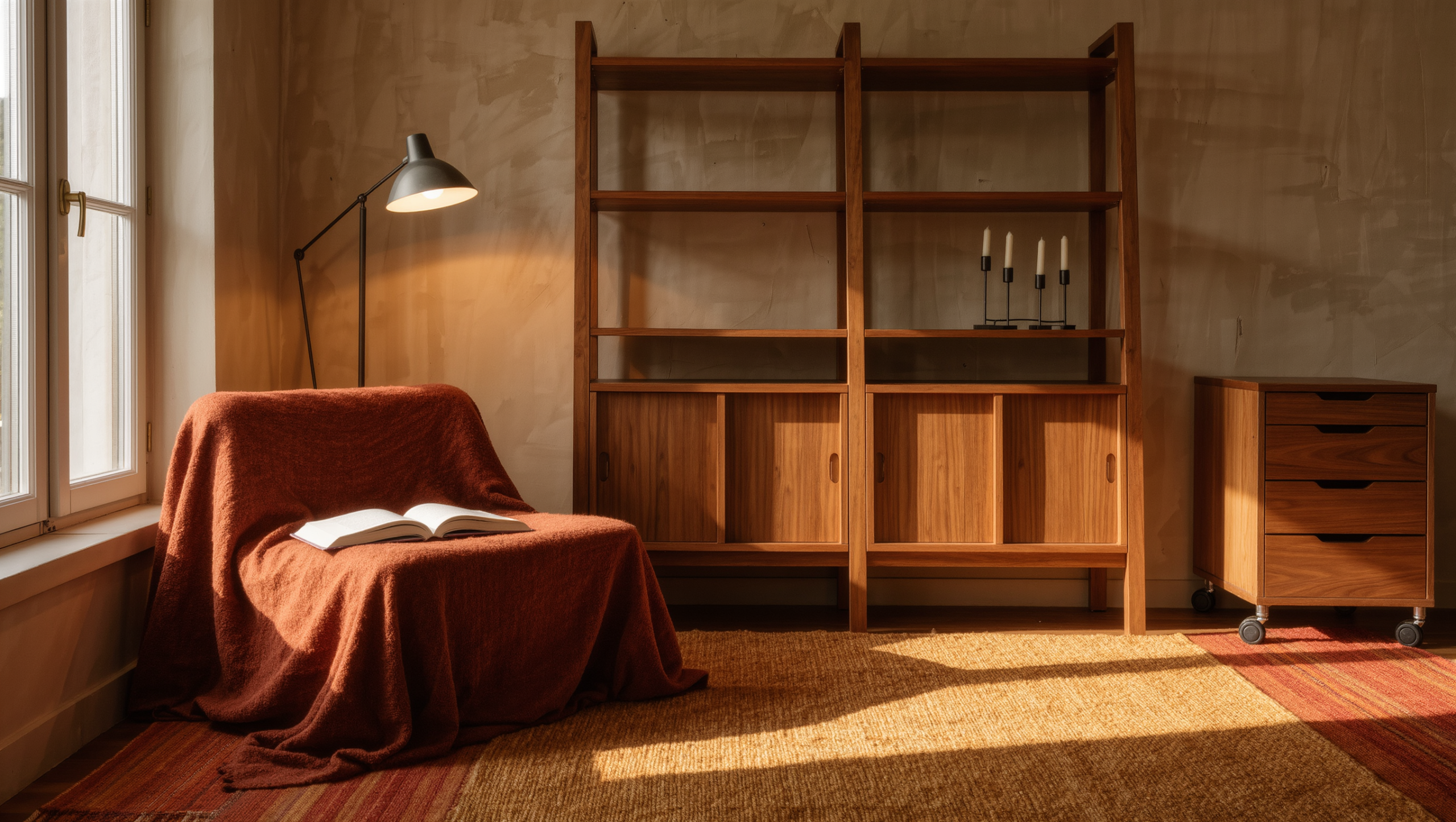
A stack of books can be useful and attractive. A beautiful tray can hold the things that genuinely migrate across a table. A basket can contain blankets instead of pretending blankets never exist. A lamp is decor, but it also fixes bad light. A cabinet can be beautiful and solve the problem that caused clutter in the first place.
I like useful beauty because it earns its square footage.
If an object is decorative, wonderful. But if every object in the room is decorative, the room starts to feel like it is waiting for a photographer instead of a person.
Lighting is doing more work than most accessories ever will
Count the objects in a lively room and you will learn almost nothing. Liveliness is atmosphere, and atmosphere is mostly lighting.
Bad lighting can make a beautifully furnished room feel flat and temporary. Good lighting can make a relatively simple room feel layered, warm, and complete. Lamps at different heights, softer pools of light, some shadow, and enough variation to change the room after dark do more for me than another decorative object on a shelf.
There is a reason I keep coming back to lighting in almost every kind of space. It changes how the whole room behaves without taking up much visual inventory.
Texture should create depth, not homework
I love texture. Wood, glass, metal, fabric, plants, woven pieces, stone, glossy finishes, matte finishes. Mixing them is one of the easiest ways to make a room feel richer.
But texture does not mean adding twelve pillows because the internet said layering was important.
You can get depth from the materials already doing a job: curtains, rugs, upholstery, cabinetry, lighting, plants, blankets, art frames. The room can feel layered without every layer being another object you eventually have to dust.
Leave some surfaces alone
This is the part maximalists sometimes do not want to hear.
You need somewhere to put your drink.
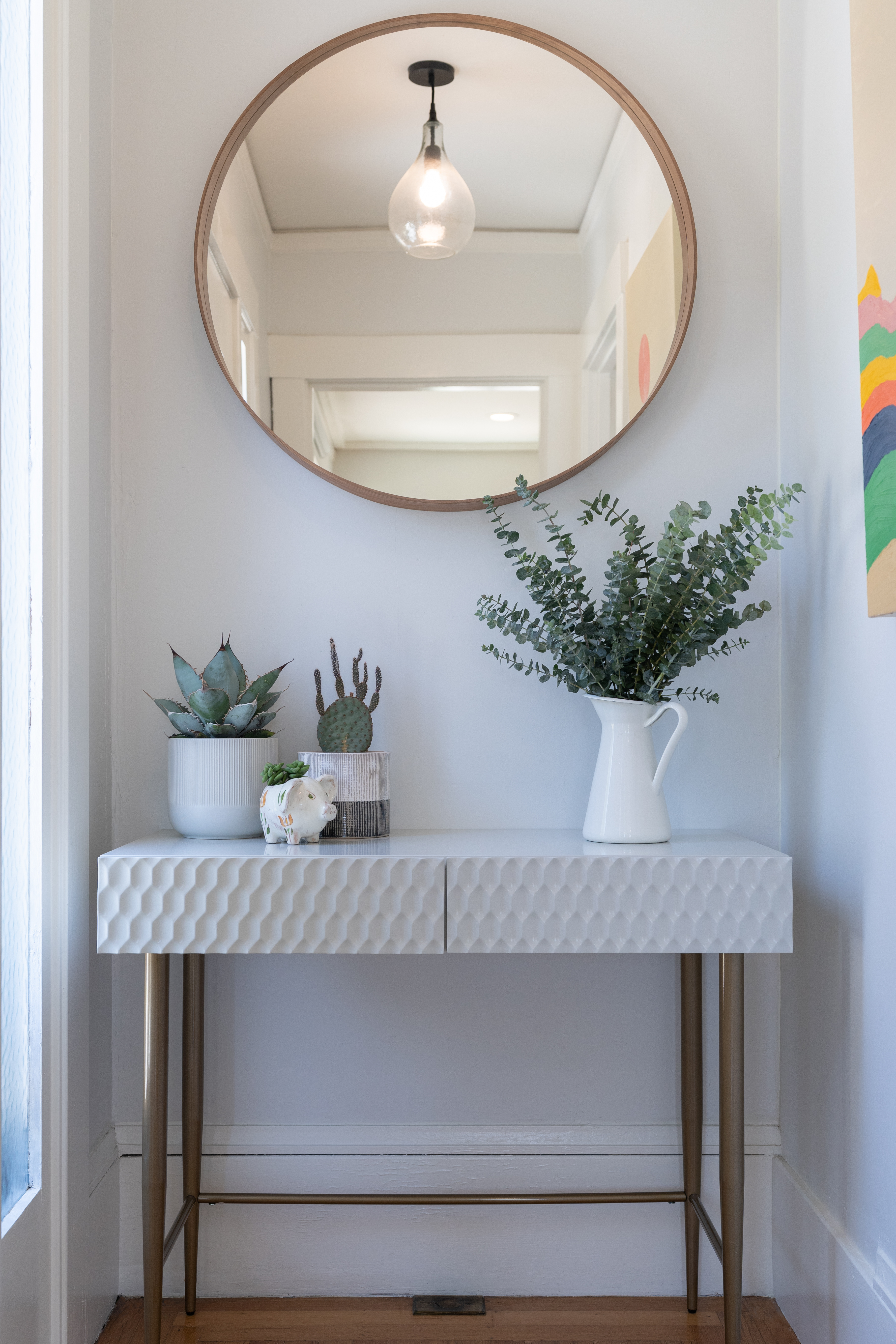
You also need visual rest. Not every console needs three stacks, two candles, a vase, a sculpture, and a decorative box. Not every kitchen counter needs to become a still life. An empty patch of table is not a design failure.
Open space makes the things you did choose look chosen. It also makes the house easier to use, which matters more.
Do not confuse coordinated with personal
A lot of rooms become fussy when every small preference gets promoted to a visible object.
Everything matches. The wood tones match. The frames match. The pillows repeat the art. The decorative bowl matches the rug. Nothing is technically wrong, and yet the room feels like it arrived together on one truck.
A lived-in house benefits from a little friction. Something older next to something new. Something shiny near something rough. Something sentimental beside something purely practical. One piece that is a little stranger than the rest.
You do not need chaos. You need enough variation that the room feels collected instead of issued.
Edit for annoyance, not minimalism
I do not edit a room because someone says there should only be five things on a shelf. I edit when the room starts getting in its own way.
If I have to move three objects to sit down, that is annoying. If a table cannot hold a plate because it is too styled, that is annoying. If cleaning requires dismantling a decorative ecosystem every week, that is annoying. If a room feels visually noisy every time I walk into it, something is competing too hard.
That is a much more useful standard than asking whether a room has too much.
The room should still work when life happens
A good lived-in room can absorb a jacket on a chair, a glass on the table, a stack of mail waiting to be dealt with, a blanket somebody actually used. It does not collapse aesthetically because a human entered it.
That matters to me.
I want the house to look like somebody decided things, but I do not want everybody in it performing maintenance on the aesthetic all day. The room should have enough structure that normal life does not ruin it.
The shortcut I come back to
If a room feels flat, I usually do not think it needs more stuff first.
I look for better light. Something living or botanical. A stronger focal point. More useful texture. One object with actual personality. A place for the things people genuinely use.
Then I stop.
The goal is a house that feels awake.
Interesting enough to look around. Comfortable enough to stay. Personal enough that it could not belong to just anybody. Functional enough that nobody is afraid to touch anything.
That is lived-in. The clutter is optional.
Same problem, elsewhere in the house
Room notes
Keep the room on the record.
One useful note at a time: what to test, what to ignore, and what changed when the room got another vote.