Function and Flow
Tiny Changes That Make a House Feel Better
You do not have to repaint the house or start a renovation. The changes that matter most are often embarrassingly small — here are the ones that actually move a room.
You do not have to repaint the house, replace the sofa, or start a renovation to make a room feel better. A lot of the time the changes that matter most are embarrassingly small. You add something alive. You give the room a little color. You move a chair six feet. Suddenly the whole thing behaves differently.
I am very pro-drama, but I am also very pro-not-making-life-harder-than-it-needs-to-be. If a room feels flat, awkward, cold, crowded, or just vaguely wrong, I would try the small things before I started shopping for a new room.
Start with something green
Plants are powerful. Real plants are wonderful when the light, your schedule, and your willingness to keep them alive all cooperate. Fake plants are also completely acceptable. I am not interested in turning greenery into a character test.
The only rule is that the fake kind should not look aggressively fake. If you can see the molded plastic veins from across the room, we have lost the argument. Look for believable shape, varied leaves, decent scale, and enough irregularity that it reads as a plant instead of an object pretending very hard to be one.
Any green you can add to a room usually makes it feel better. It brings in a color that works with almost everything, softens hard lines, gives corners a purpose, and adds visual life without asking the room to become busier. A tall plant can fill dead vertical space. A smaller one can make a shelf feel finished. A trailing plant can soften something too rigid. You do not need a jungle. One well-placed piece of green can change the temperature of a room.
Then give the room some color

I am not asking you to paint the bathroom canary yellow unless you want to. If you do, I support the commitment.
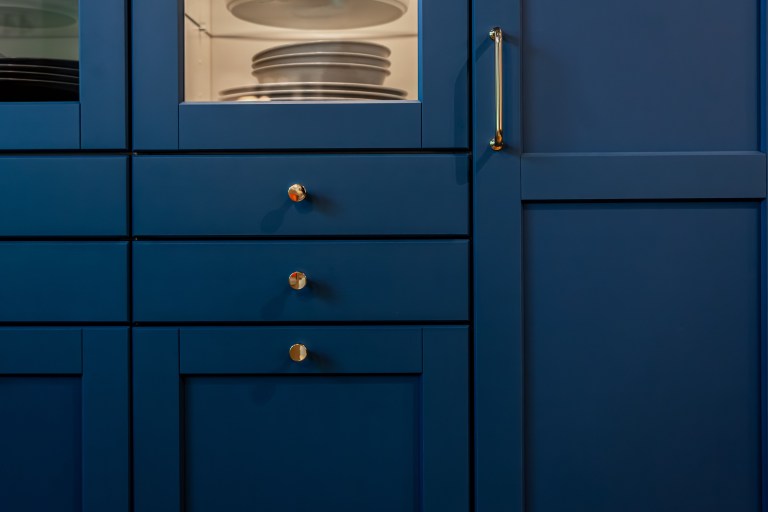
But even the most neutral house can take more color than people think. Blankets, pillows, throws, curtains, art, lamps, rugs, flowers, and one very well-placed piece of colorful furniture can do a remarkable amount of work. Color does not have to take over the room to wake it up.
The trick is not sprinkling twelve unrelated colors everywhere because somebody told you a room needs personality. Pick a color with enough presence to matter and repeat it just enough that the eye connects the repeats. One deep green chair can carry more weight than ten tiny green accessories scattered around trying to form a committee.
Furniture placement is not a boring detail
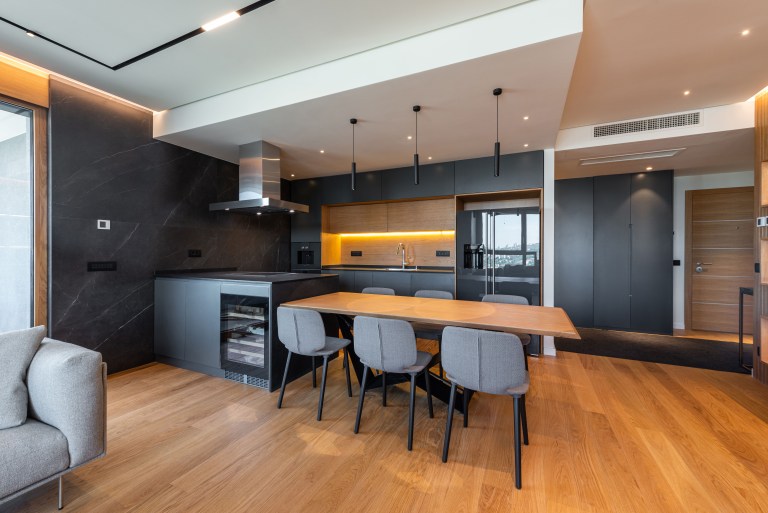
Flow and use of space are your friend in a small room and in a large one. Furniture can help a room tremendously or quietly ruin it based entirely on where it sits.
A sofa can create a conversation area or cut the room in half. A chair can make an empty corner useful or block the only comfortable path through the space. A coffee table can anchor the room or eat the exact bit of floor everyone needs to move through it. A giant piece of furniture can technically fit and still cost you an entire other use for the room.
Before buying anything, spend a little time moving what you already own. Pull furniture off the walls. Turn a chair. Change the angle. Ask where people naturally walk, where they actually sit, what they look at when they sit there, whether conversation feels easy, and which areas are doing absolutely nothing except holding furniture.
Think about what the room could be doing
This is the part people skip because it does not come in a shopping bag. A room has a finite amount of space, and every piece you put in it spends some of that space.
If a piece is not helping with comfort, storage, conversation, atmosphere, or function, it is worth asking what else that footprint could become. Maybe it is a reading chair. Maybe it is open floor. Maybe it is a plant. Maybe it is room for two people to actually pass each other without turning sideways.
There are almost always more options than the first layout you tried. Small rooms are not doomed to feel cramped. Large rooms are not automatically good at conversation. Both need decisions.
The tiny-change test
If you want to change a room without turning it into a project, I would start with three questions: Where could I add something green? Where could one real hit of color make the room feel more alive? And is the furniture helping the way we actually use this space?
Those are not dramatic renovations. They are small edits. But small edits can change where your eye goes, how your body moves through the room, whether people want to sit there, and whether the whole space feels a little more awake.
You do not always need more house. Sometimes you need to look at the house you have and give it a better chance.
Same problem, elsewhere in the house
Room notes
Keep the room on the record.
One useful note at a time: what to test, what to ignore, and what changed when the room got another vote.