Function and Flow
The Long, Narrow Bedroom Needs a Spine
A long, narrow bedroom needs one strong furniture line and one clear route. The room should feel intentional, not evenly obstructed.
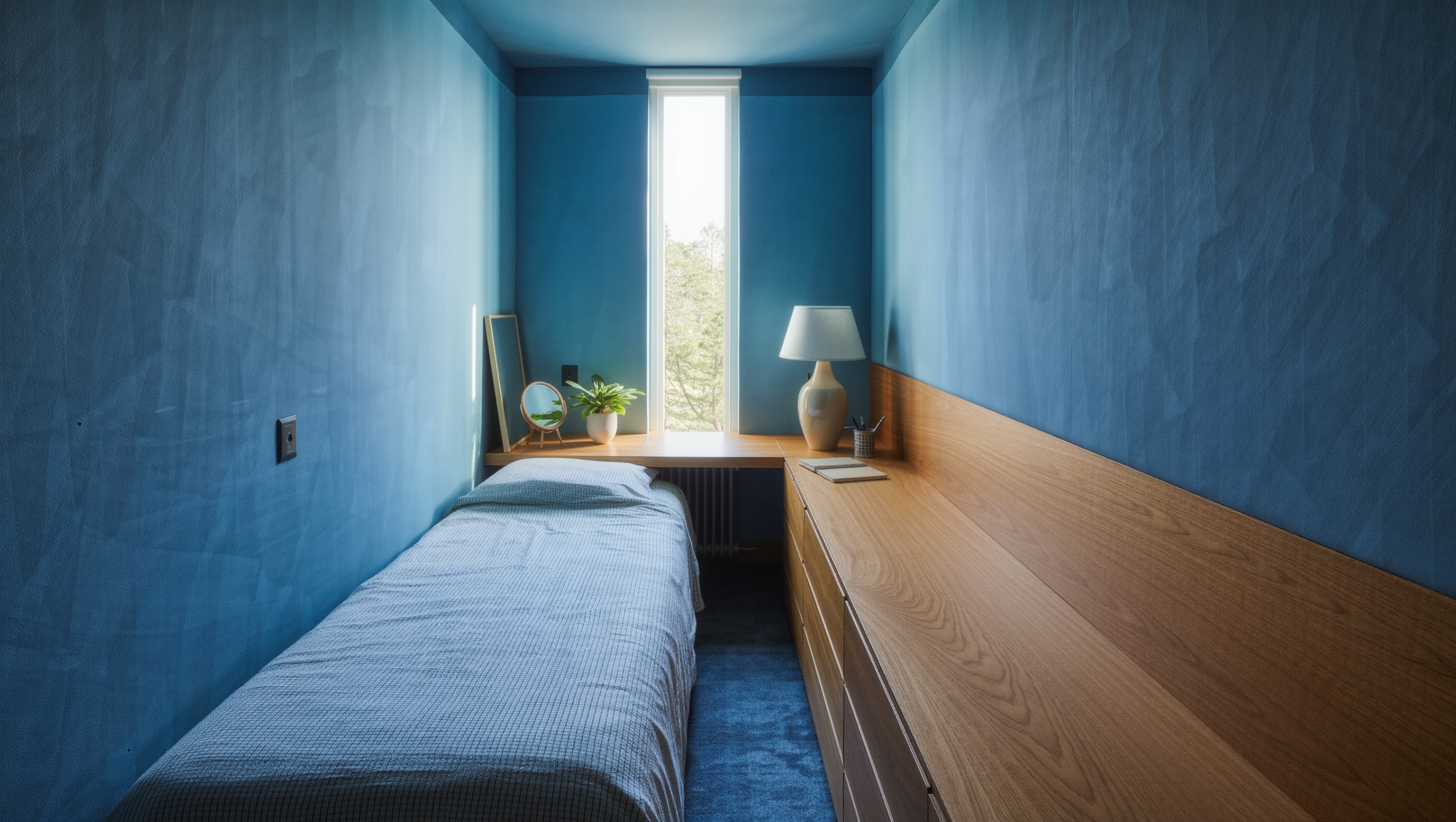
A long, narrow bedroom does not need furniture distributed evenly down both walls like everyone was promised equal representation.
It needs a spine.
One dominant line should carry most of the visual and practical weight: the bed, a wall-mounted night surface, a shallow desk, taller storage, maybe a dresser at the far end. When those pieces cooperate, the room reads like a plan. When every piece gets its own little patch of wall, the room becomes a very polite obstacle course with a mattress in it.
Pick the route before you pick the furniture arrangement
I will choose good circulation over a perfectly balanced furniture plan every single time. You live in the route. You only admire the elevation occasionally.
Map how somebody gets from the door to the bed, closet and window. Then open the drawers. Pull out the desk chair. Imagine the laundry basket sitting exactly where it always sits when nobody has put it away yet. A narrow room punishes wishful thinking very quickly.
If furniture on both long walls leaves a pinched center, choose one wall to do more. That is the room finally getting edited.
The bed gets first claim because it is already enormous
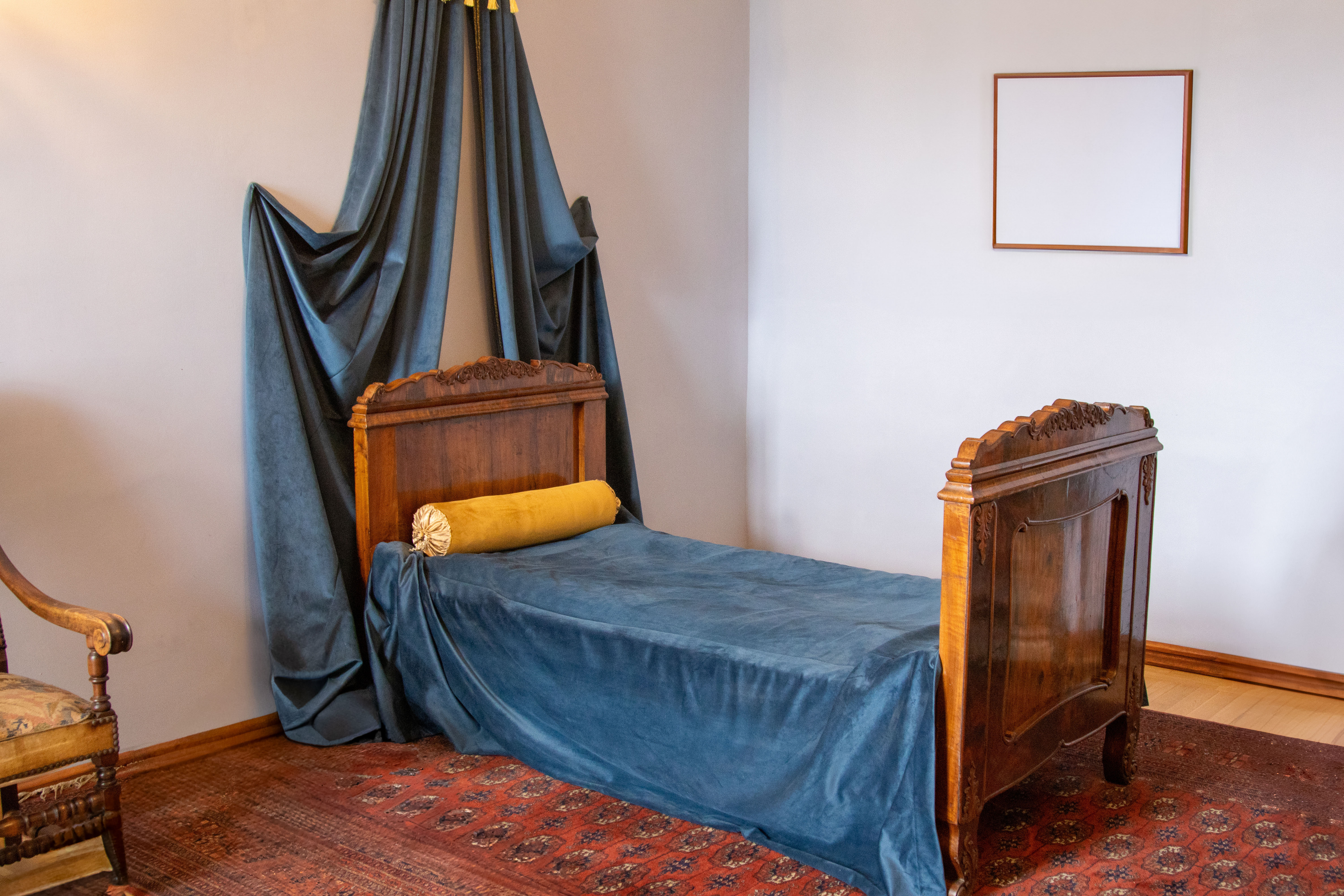
In some narrow bedrooms, the bed works best lengthwise along one wall. In others, it belongs on the short wall if there is enough clearance to make the room function. Door position, closet access, window placement and who actually sleeps there matter more than any universal layout rule.
If one side of the bed has to be tighter, I would rather make the other side genuinely usable than create two equally miserable slivers in the name of fairness. The room does not become more successful because two people are irritated symmetrically.
Use the wall when the floor cannot afford another set of legs
A wall-mounted night shelf, sconce, shallow desk or floating cabinet can give back inches that matter. Seeing more floor can also make the room feel less packed, which is useful when the architecture already resembles a hallway with ambition.
But please do not float everything simply because floating furniture is having a good week online. Wall-mounted pieces still need depth, secure installation and a reason. A wall covered in brackets is not more spacious than a wall with one dresser against it.
Give the eye somewhere to stop
The far short wall is doing important psychological work. Long rooms feel longer when the eye has no full stop.
A dresser, one tall cabinet, art with enough scale, a strong color field or a curtain wall can create an ending. This is the bedroom version of the same move that helps a long narrow living room stop behaving like a bowling alley.
And no, the foot of the bed does not automatically need a bench because an empty strip feels unfinished. In a narrow room, a few open feet can be the most luxurious thing you own.
The editing is what pays for the drama
One taller storage piece can be excellent if it removes the need for two smaller ones. If the wardrobe gets added on top of the dresser, nightstands, baskets and little shelf unit, we have not solved storage. We have simply made the clutter taller.
Keep daily-use things where a normal human can reach them. Upper storage is for the categories that do not need to report for duty every morning. I am not climbing a ladder for socks in the name of vertical efficiency.
A linear layout is the skeleton. Please put some clothes on it.
Use a long curtain with presence. One substantial rug instead of several nervous little ones. Art that pulls the eye sideways. Layered lighting. A stronger color at the far wall. Texture where the room needs depth. Small does not require pale, minimal or apologetic.
Efficiency is not the reward here. It is the currency. A narrow room that has been properly edited hands back a strip of open floor and one clean far wall, and those two things are the entire budget a room like this will ever have. Spend them on the curtain and the color. Do not spend them on a fourth small cabinet.
Trend context: see The Spruce’s 2026 small-space trend reporting.
Same problem, elsewhere in the house
Room notes
Keep the room on the record.
One useful note at a time: what to test, what to ignore, and what changed when the room got another vote.