Function and Flow
Martin Brudnizki: Theatrical Rooms Still Have to Serve the Guest
Martin Brudnizki is useful to study because his theatrical hospitality interiors keep context, hierarchy, lighting, function, and circulation underneath the spectacle.

Martin Brudnizki can design a dining room with enough pattern, brass, mural, and fringe to keep your eyes employed through an entire meal, and the waiter can still reach the table. That’s the whole case for including him here: hospitality maximalism has obligations private rooms can dodge. People must arrive, understand the room, find the bar, and leave without a decorative map. The prettier the room gets, the less excuse it has for being confusing.
The route stays simple even when the surfaces don’t
A Brudnizki restaurant can contain an aggressive ceiling, patterned walls, and a heroic bar while keeping the path between entrance, table, and restroom comparatively clear. Call that operational intelligence; the restraint is too consistent to be an accident. When the eye has a lot to process, the body shouldn’t have to solve the same level of complexity at the same time. At home, the translation is immediate: if the room is visually dense, simplify the circulation. The path around the sofa shouldn’t become another decorative puzzle.
Narrative is what keeps the abundance from reading as several expensive things standing near each other. Brudnizki’s projects often begin with a story grounded in the building, the neighborhood, or an invented character, and that story is what lets colors and materials repeat with purpose rather than randomly. At home the story doesn’t need to be theatrical — a night-focused dining room or a bar that feels like a small hotel drawing room is enough of a narrative to decide what belongs and what’s merely enthusiastic.
An elephant in every minibar
Take Broadwick Soho, which Dezeen documented in detail at the end of November 2023: MBDS, Broadwick Street, fifty-seven rooms across eight floors. The decision list reads like a dare. Italian maiolica with Sicilian folk motifs at the restaurant bar, hand-painted with a Sicilian family firm. Tigers and elephants on marbled guestroom wallpaper. Coral lacquered ceilings. Bespoke elephant-shaped minibars made by artisans in India.
An elephant-shaped minibar is either total commitment or a gift shop, and nothing about the object settles which. What settles it is whether the room around it is disciplined enough to let it land — and that is precisely the part an imitator cannot photograph, because it consists of restraint somebody else exercised off-camera.
The second thing worth stealing there is not visual at all. The references were specific and real: women who were actually in Soho in the sixties and seventies. A brief with names in it makes decisions for you, and it keeps making them at eleven o’clock at night when you are choosing between two tiles and cannot remember why you cared. A brief that says “eclectic and glamorous” decides nothing, which is exactly why it never stops costing money.
Concentrate the event, then repeat the details
Even a maximalist room needs hierarchy. A ceiling, a bar, or a mural can carry the dominant event; if every surface gets an equal theatrical treatment, the room loses the ability to surprise, because the baseline has become spectacle — an exhausting job for a baseline. Layered light does similar work at a smaller scale, breaking a large room into legible zones after dark so a table or banquette feels held even when the room around it is busy.
Craft is what makes the density feel constructed instead of accumulated: a few decisions repeated well — one trim language, one metal family, one recurring shape — keep a dense room from looking like twelve separate ideas that formed a coalition.

Context matters here too. A room with a specific building, view, or neighborhood history already has material to work with, which is a useful corrective to the version of global luxury styling where the same stone and brass migrate from city to city without learning anything.
A restaurant can be louder than your Thursday
Hospitality can tolerate more stimulation than a room you occupy every day — what feels thrilling for a two-hour dinner can feel like a marching band beside your sofa by Thursday. I would not copy the density. I’d borrow the hierarchy, the narrative, the lighting territories, and the discipline of repeating a few decisions instead of adding new ones. Fringed lamps and jewel tones aren’t the method. They’re evidence that the method has excellent costume resources.
Source: MBDS’s stated design principles and project archive, including Broadwick Soho and Le Grand Mazarin; Dezeen’s November 30, 2023 account of the Broadwick Soho interiors; Architectural Digest’s profile of Brudnizki.
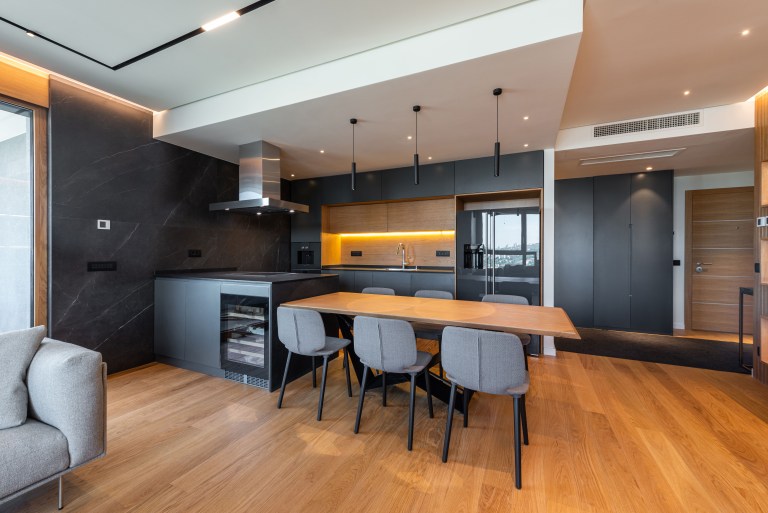
Designer study. This concise study is part of Designers Worth Studying, the deeper Room for Drama index for what to borrow, what not to copy, and how each idea survives an actual room. Photographs in this series are Room for Drama’s own illustrative images, not photographs of the designer’s projects.
Same problem, elsewhere in the house
Room notes
Keep the room on the record.
One useful note at a time: what to test, what to ignore, and what changed when the room got another vote.