Function and Flow
Roman and Williams: Light and Craft Can Make a Room Feel Older Than the Renovation
Roman and Williams is useful to study because its rooms feel built before styled: architecture, substantial materials, light, furniture, and craft carry the atmosphere at a deeper level.

Pull the pillows out of a Roman and Williams room and the identity should still be standing. That’s the test worth applying, because the studio’s real argument is that atmosphere begins in architecture, material, and light — not at the end, carrying a tray of accessories. Robin Standefer and Stephen Alesch work across architecture, interiors, furniture, and hospitality, and their rooms feel like built worlds rather than decorated shells: the ceiling, the millwork, the table, and the fixture all belong to the same physical argument.
The set-design problem, inverted
They founded the studio in 2002 after years in film production design, with credits including Gattaca, Practical Magic and Zoolander. That fact is more useful than any description of their palette, and it cuts in the direction nobody expects. A film set is built to convince from one angle, for a few seconds, and then be struck. Everything it does is surface. The obvious prediction is that two people trained in that discipline would produce rooms that are handsome and completely hollow — and they went the other way. Having spent years making shallow things photograph as deep, they seem to have concluded that the only dependable route to depth is to build it.
You can go and stand in the evidence, which is rare in this field. The British Galleries at the Metropolitan Museum of Art are theirs, and they opened on March 2, 2020: a permanent installation in a public building, no client’s front door to get past, no styling day, no expiration date. That is the hardest possible venue for this argument, because the room has to hold its own in front of objects that are genuinely three hundred years old, under lighting that is not permitted to flatter anything.
Identity starts before the loose furniture arrives
Ceilings, wall treatments, built-ins, and lighting establish the first layer of a Roman and Williams room, which changes the decorative workload entirely — a chair doesn’t have to manufacture atmosphere by itself because the room already has material weight. At home, the same principle scales down fine: a strong wall treatment or one meaningful millwork decision can do more than a dozen accessories attempting to build depth one small object at a time.
Materials are allowed to look substantial rather than decorative — stone reads as stone, woodwork has real depth, metal gets more presence than a thin accent. A room full of materials pretending to be other materials can feel visually thin even with a sophisticated palette; one honest, substantial material anchors several quieter decisions around it. Furniture has to agree with that scale, too — when architecture and furniture disagree, styling rarely fixes it. A small table in a muscular room still looks small after someone puts beautiful books on it.
Light is architecture, not the last line item
Fixtures establish scale and rhythm here the way a load-bearing wall does; low sources create human territories, and directional light reveals texture the same material would otherwise hide. That’s different from choosing a decorative fixture after the furniture plan is already finished — the light is helping decide what the room feels like. Before adding another object to a flat room, change what the existing material looks like after dark first. It may need illumination with more intention, not more inventory.

This is also the cheapest place most people can actually intervene, and the one they skip because it does not arrive in a box. Swapping every bulb in a room to the same color temperature, then killing the overhead and lighting from three low points instead, costs less than a side table and changes more. I would spend there before I spent on another object, every time.
History enters as archetype rather than costume — familiar shapes make a room feel rooted while contemporary scale and craft keep it from becoming a reconstruction. Take the proportion or material logic that still works. Don’t automatically import every decorative signal attached to it; a room can feel like it has memory without pretending the renovation happened in 1890.
Dark wood and brass are not a structure
Dark wood, brass, and vaguely historical objects can become a theatrical shortcut in a room without enough volume or architectural structure to earn them — the result reads themed instead of rooted. I would not copy the surface vocabulary before deciding where a deeper intervention actually belongs. Choose one material or lighting decision capable of shaping the whole room, and let it affect furniture and atmosphere instead of assembling several unrelated statement moments. The goal is a room with a world in it, not a room with props.
Source: Roman and Williams’s studio site and interiors archive (founded 2002 by Robin Standefer and Stephen Alesch, both from film production design); the Metropolitan Museum of Art’s announcement of its British Galleries, which opened March 2, 2020 to the studio’s design; Architectural Digest’s designer profile of the practice.
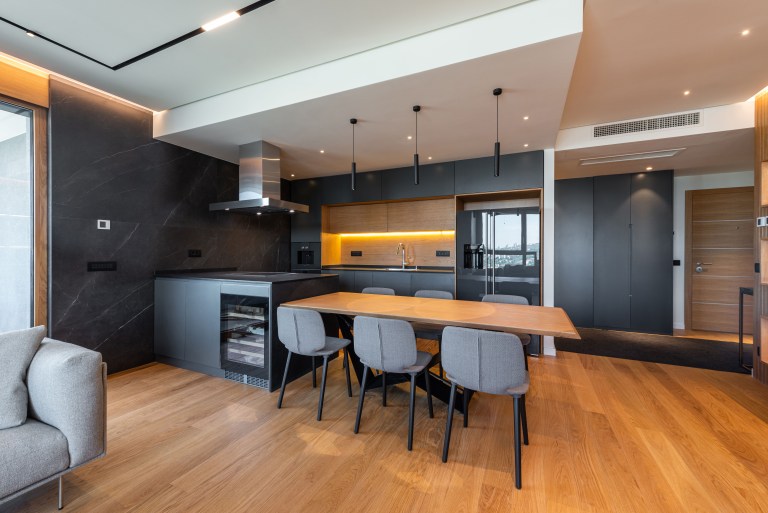
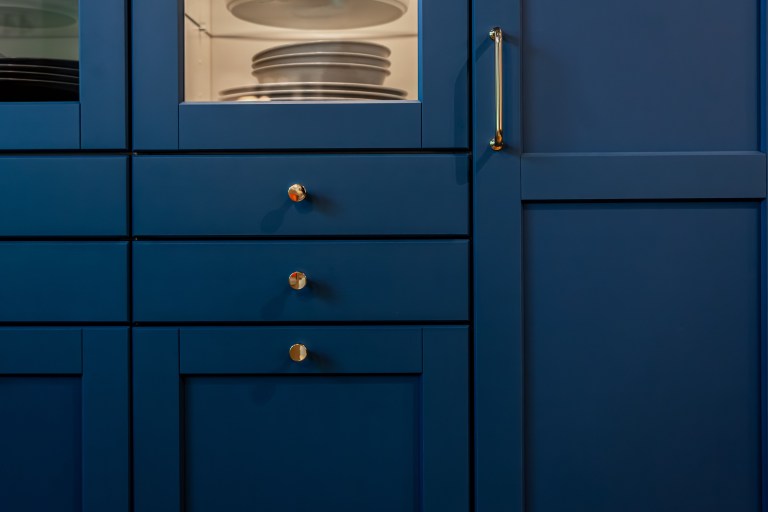
Designer study. This concise study is part of Designers Worth Studying, the deeper Room for Drama index for what to borrow, what not to copy, and how each idea survives an actual room. Photographs in this series are Room for Drama’s own illustrative images, not photographs of the studio’s projects.
Same problem, elsewhere in the house
Room notes
Keep the room on the record.
One useful note at a time: what to test, what to ignore, and what changed when the room got another vote.