Light and Atmosphere
A North-Facing Room Can Be Moody Without Becoming Miserable
Design a north-facing room around cooler, steadier daylight using paint tests, warm materials, layered lighting, contrast, and reflective surfaces instead of forcing it to imitate a sunny room.
North-facing rooms (south-facing, if you live below the equator) are often prescribed the same cure: make everything pale, warm, and cheerful until the room agrees to stop being north-facing.
That can work. It can also produce a beige room that still feels gray because the underlying light never joined the plan.
A north-facing room usually benefits from accepting its cooler, steadier daylight and then deciding how much warmth, contrast, and artificial light to add.
Test color in the room, not on your phone
Paint samples on large movable boards and look at them beside the window, across from it, and in the darkest corner. Check morning, midday, and evening under the lamps you actually use; Color Decisions That Survive Morning, Afternoon, and Night runs the full version of that test.
A warm white may turn creamy or dull. A cooler neutral may look unexpectedly clean. A saturated green, blue, rust, plum, or brown may become richer rather than darker in a bad way. The room decides; the paint name does not.
Choose whether to lift or deepen
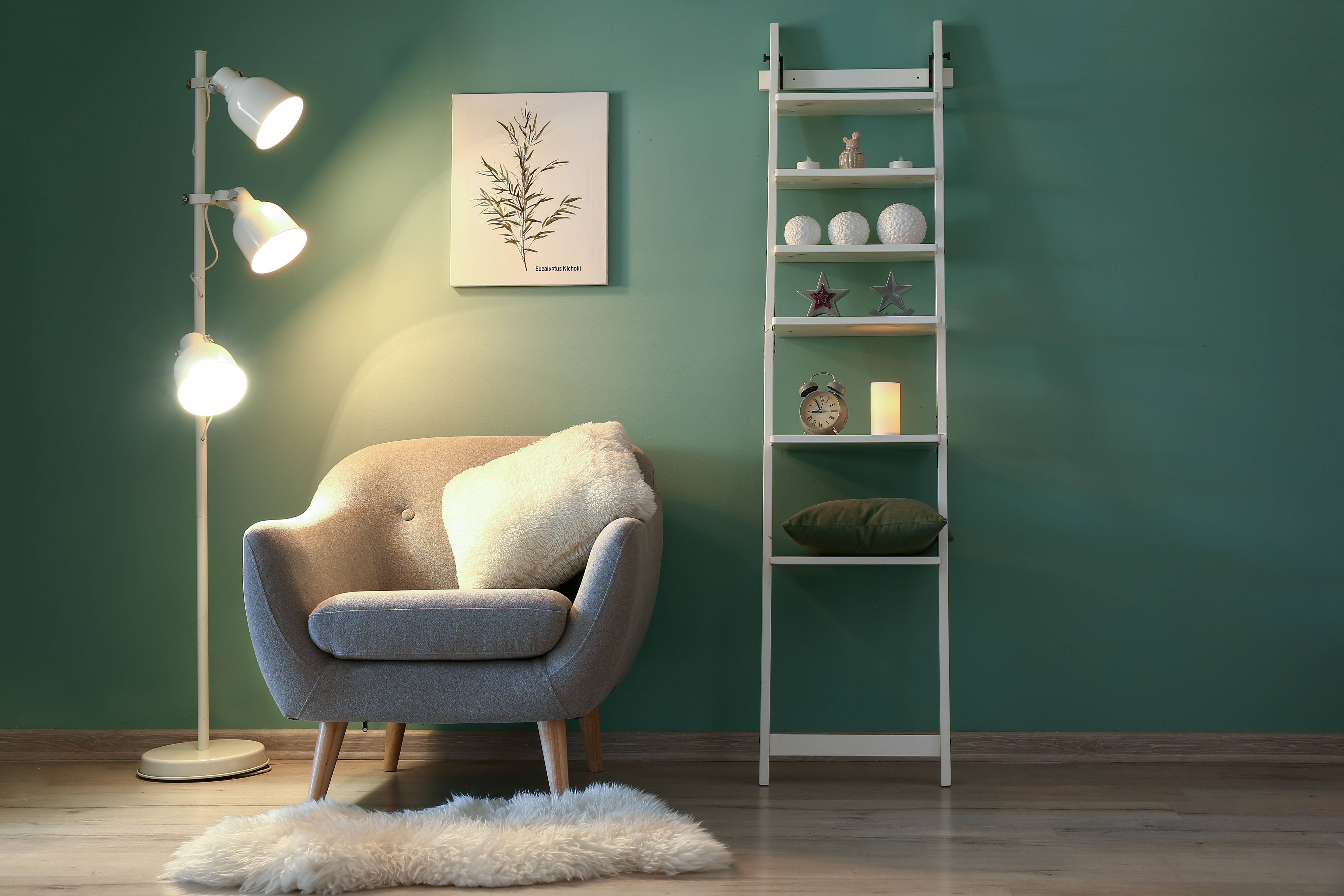
There are two valid strategies. Lift uses lighter walls, quiet contrast, warm wood, reflective surfaces, and generous artificial light to make the room feel open. Deepen uses stronger color and controlled shadow to make the cooler daylight feel atmospheric.
The weak strategy is accidental middle ground: a pale gray-beige with insufficient light, low-contrast furniture, and no material warmth. Nothing is dark enough to be dramatic or bright enough to feel fresh.
Bring warmth through material before you reach for paint
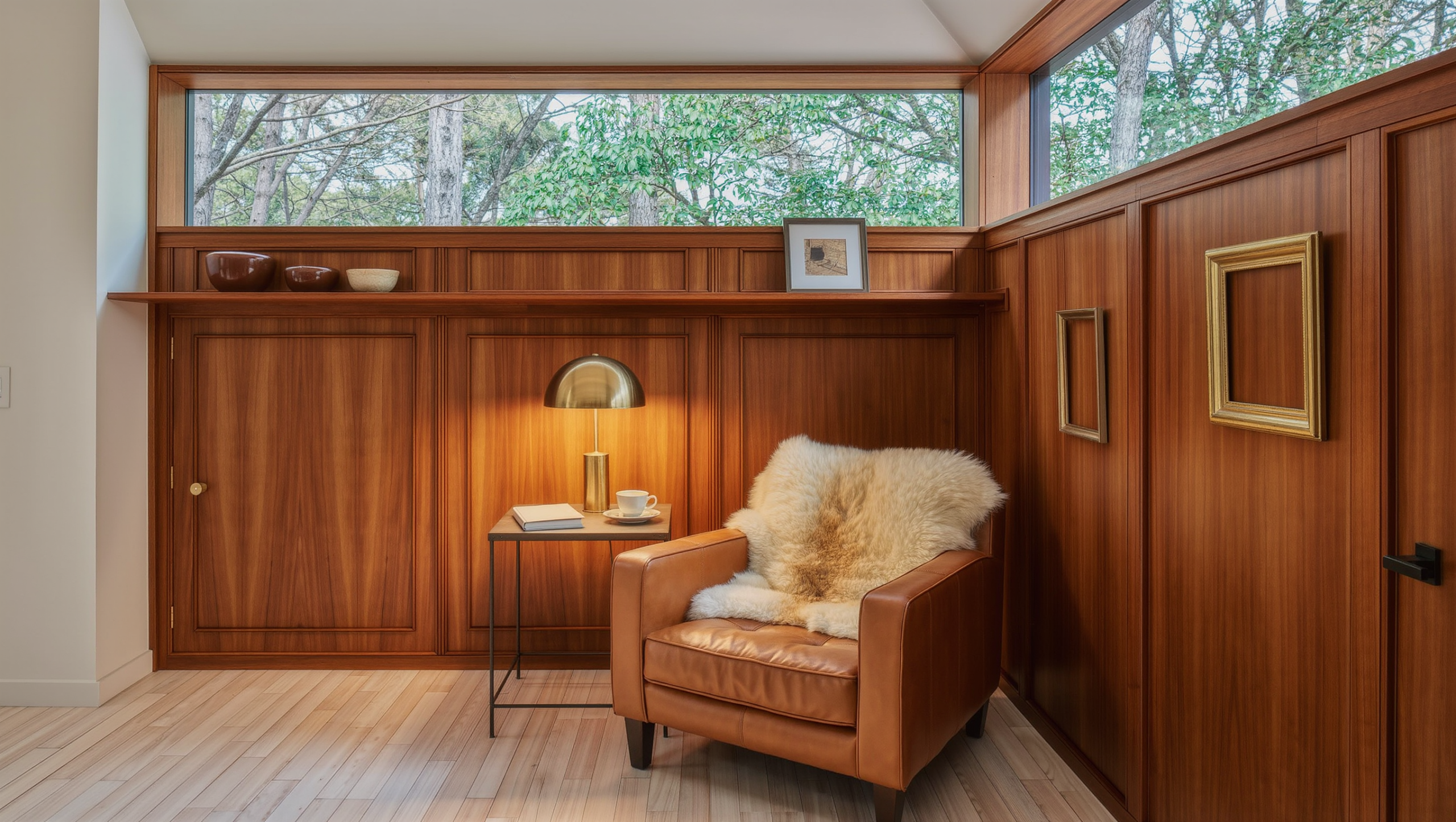
Wood, wool, aged brass, warm leather, woven fiber, colored glass, and textured fabric can supply warmth without forcing every painted surface toward yellow.
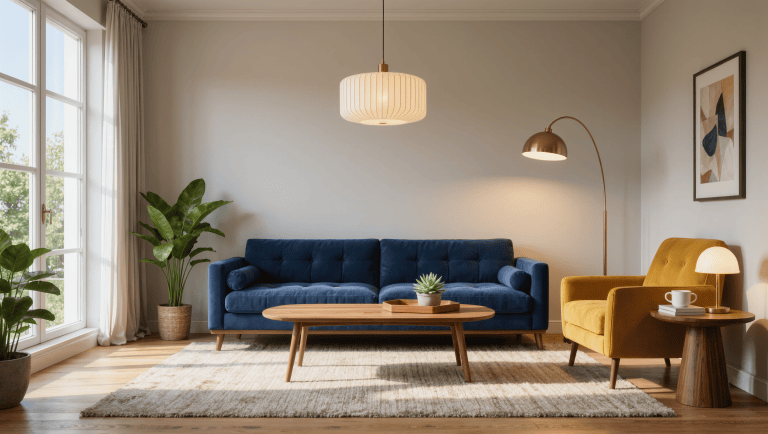
Repeat the warm material at several points so it feels like a language rather than a corrective accessory. One wood table in an otherwise cool room may look lonely; wood plus a woven shade plus warm-toned art can create a relationship.
Use artificial light before the room asks for it
North-facing rooms may feel dim earlier than rooms with stronger direct sun. Put useful lamps on a schedule or switch them on before the room becomes gloomy. Waiting until full darkness makes the transition feel harsher.
Layer light at different heights. A single ceiling source can make cool walls feel flatter. A lamp near seating, a second pool of light at the far end, and a softly illuminated vertical surface give the room depth.
Spending the light you actually have
A lamp aimed at a wall, at art, at shelving or into a curtain makes the room feel brighter and more dimensional without raising the total light level much at all. In a room where the far wall dissolves into cool shadow, that single redirection does more than two extra fittings would.
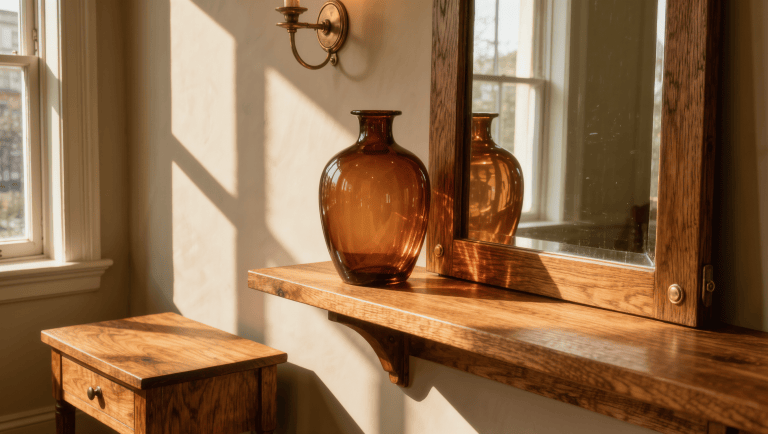
Add one bright or glossy event for the eye: a mirror, pale artwork, a glazed lamp, a glass element, a lighter ceiling, a metallic line, a lacquered cabinet. Something that catches the little light there is and hands some of it back.
One. Not a reflective room. The trade-off here is real and worth naming out loud: every extra shiny surface in cool diffuse light buys a bit more sparkle and costs a bit of the steadiness that made the room worth keeping. North light is unusually good at steadiness. Do not spend all of it on glint.
Watch the window treatment
If privacy allows, keep the glazing as open as practical during the day. Heavy fabric stacked across the glass can cost more useful light than its decorative contribution is worth.
Mount curtains wide enough that panels clear the window when open. Where privacy is essential, consider whether a lighter sheer, blind, or layered treatment can preserve more of the daylight.
Notice exterior reflection
Greenery, brick, pale paving, neighboring buildings, and sky can cast color into a north-facing room. The light may be cool overall while still picking up strong reflected tones.
Look outside before blaming paint for every undertone.
Use contrast so the room does not dissolve
Very low-contrast rooms can feel flat under cool diffuse light. A darker frame, artwork, furniture silhouette, or trim detail can give the eye necessary edges.
Contrast does not require black. It requires enough difference that objects remain legible.
Warm the seating zone, not necessarily every wall
A warm rug, lamp, timber table, or textile around the place people sit can make the room feel comfortable even if the walls remain cooler.
Concentrating warmth where the body experiences the room can be more effective than forcing the whole palette warmer.
Use plants only where the light supports them
North-facing rooms can support some plants well and others poorly depending on window size, season, and distance from the glass.
Choose species for the actual light or use plants elsewhere. A suffering plant does not make a dim room feel more alive.
Do not compare it with the sunny room next door
A north-facing room may never have the sparkle of a west-facing room at golden hour. It can have something the sunny room does not: consistent color, quiet light, strong evening potential, and a natural affinity for art, books, textiles, and saturated materials.
Designing for the light you have is more convincing than dressing the room as an impersonation of a different orientation.
A one-day test
Remove one heavy window obstruction, place a lamp at the darkest useful point, add one warm material near the center, and move a reflective object where it catches window or lamp light. Photograph the room at 10 a.m., 2 p.m., and 8 p.m.
If the room improves, you have a direction before buying paint.
North light is a condition, not a flaw
A north-facing room is also the easiest room in the house to get right after dark, because it has no golden hour to live up to and nothing to be measured against. Whatever the lamps do is the room.
What you are trading away is sparkle. What you get back is a room where the color you chose in March is still the color in August, where a screen has no glare hour, and where nothing on the walls is quietly bleaching. That is not a consolation prize. People in south-facing houses pay for the same conditions, and what they pay for them with is blinds.
Same problem, elsewhere in the house
Room notes
Keep the room on the record.
One useful note at a time: what to test, what to ignore, and what changed when the room got another vote.