Awkward Spaces
The Off-Center Fireplace Is Not a Mistake. Your Layout Is Just Panicking.
Fix an off-center fireplace layout by deciding whether it is the visual lead, balancing mass instead of symmetry, and arranging seating around real use rather than forcing the room into a false center.
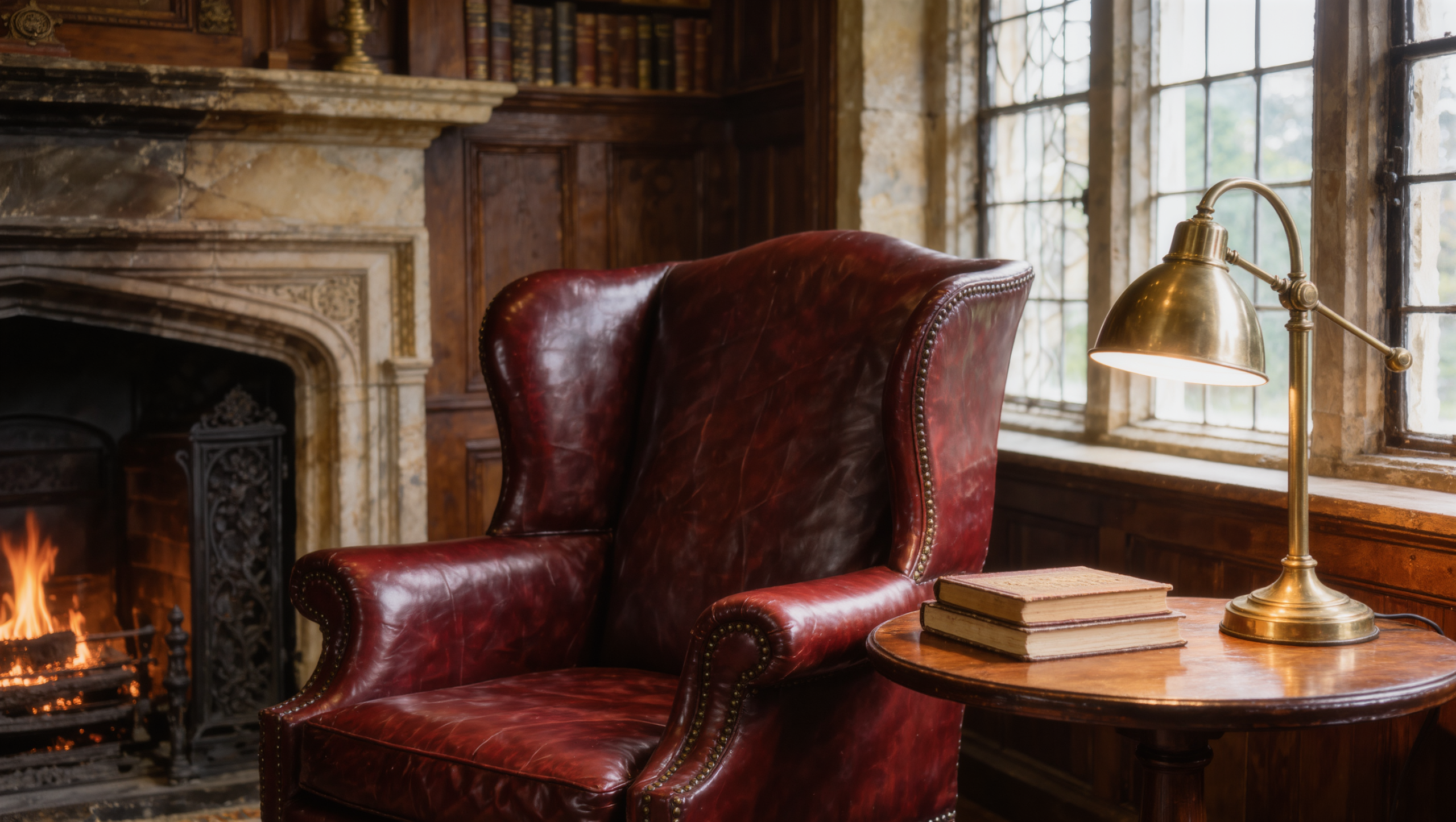
An off-center fireplace becomes a crisis only when the room is told that every important thing has to sit on the middle axis.
Nobody says this part out loud: the fireplace is fixed, but almost nothing else in the room is. The sofa, the chairs, the rug, the art, the television, the lighting, the visual weight around it—all movable. All negotiable. Stop trying to drag the architecture into line with a coffee table and start deciding what role the fireplace actually deserves. Spoiler: it doesn’t automatically get the lead just because it’s made of brick.
Decide whether the fireplace gets to lead
If it’s used often, visually strong, and central to how people actually gather, let it lead—even sitting off-center on the wall. The seating group can acknowledge it with angles instead of forcing rigid symmetry. If the fireplace is rarely lit and something else matters more—a view, a television, an open route—it can stay an important side character, and that’s fine. Not every fixture gets to be the main event just because it’s technically load-bearing to the room’s personality.
Balance mass, not coordinates. A heavy fireplace on one side of a wall may need visual weight elsewhere, but that weight doesn’t have to be an identical cabinet or another large rectangle playing mirror—the room isn’t a Rorschach test. A tall plant, a substantial artwork, open shelving, a dark painted zone, a sculptural chair, a console—any of these can balance the composition without pretending the wall is symmetrical when it very obviously isn’t. Stand at the entrance and squint. The question is where the visual weight actually collects, not whether two objects sit the same distance from a tape measure nobody’s holding anyway.
Let the rug set the center the architecture won’t give you

Place the rug with the seating group and the traffic pattern, not by splitting the room mathematically down the middle like you’re dividing dessert between siblings. A sofa can sit slightly off the room’s geometric center and still feel completely correct, as long as the rug, coffee table, chairs, and lighting all agree with it. That’s usually cleaner than forcing the sofa to center on the fireplace and leaving the rest of the room scrambling to compensate.
Angle one seat instead of rotating the whole room. A chair turned toward the fireplace can connect it to a conversation group that mostly faces elsewhere—a swivel chair does real work here when both focal points are real rather than decorative wishful thinking. But don’t rotate every piece toward the hearth unless the room truly lives that way. A living room shouldn’t look like all the furniture is required to attend a mandatory fireplace briefing every evening.
Answer the lighter wall once, at full size
The open wall beside an off-center fireplace tends to get overdecorated in a small, panicked attempt to “fix” the imbalance—one picture frame at a time, like the wall is being apologized to. Instead, decide on purpose whether that side needs storage, art, a television, a chair, or genuinely just negative space. One substantial answer almost always beats several small objects straining to equal the fireplace’s visual mass.
If a television is going there, choose the relationship on purpose—same wall as the fireplace, or an adjacent wall entirely—and test sightlines, glare, and neck angle from the actual seats before you commit. Don’t default to mounting it high just because that’s the fireplace-adjacent instinct; stacking a TV over the mantel can create an uncomfortable viewing angle along with heat and installation headaches, so check manufacturer guidance first, not vibes. On the art side, one strong piece or a disciplined grouping is enough—resist the urge to fill every empty inch until both halves of the wall have matching object counts like a very literal-minded scale. And a floor lamp, wall light, or illuminated artwork can add vertical weight to the lighter side without requiring more furniture at all.
One safety note that outranks everything above it: if the fireplace is operational, the layout has to respect required clearances, heat, hearth conditions, and manufacturer guidance. A chair that looks gorgeous near the hearth can be genuinely too close in actual use, and no design instinct on earth beats a burn hazard. Safety requirements beat compositional enthusiasm every time—use a qualified professional for any fixed installation.
Test it with tape before you buy cabinets
Tape the rug and seating positions first. Move one chair to connect the hearth to the conversation group and see how it feels. Place something temporarily tall on the lighter side of the wall—a floor lamp, a moving box, whatever’s around, this is not the moment for precious. Photograph the room from the entry and from the main seat; photos catch imbalance your eye politely adjusts past in person. If a television’s involved, use painter’s tape to test size and position before anything gets mounted. Then live with it for a few evenings before you decide it’s right.
If the stand-in makes the wall suddenly feel balanced, you’ve proven the fix without spending a dollar on cabinets yet—which is, frankly, the best kind of proof.
An off-center fireplace isn’t asking to be corrected. It’s asking the room to stop confusing symmetry with order. Choose the lead, balance the visual mass, let the seating establish its own center, and treat the asymmetry as composition instead of a construction error somebody needs to apologize for at every dinner party.
Room Case · the receipts
Job → Friction → Constraint → Hypothesis → Test → Result → What changed.
Seven fields stay fixed here because this is one place where consistency helps. If the ending is missing, it stays missing until the room has lived long enough to answer.
-
01
Job
Give an asymmetrical wall order without pretending the fireplace sits on an axis the architecture never provided.
-
02
Friction
Furniture and small decor keep trying to manufacture symmetry, which makes the lighter side of the wall busier and weaker.
-
03
Constraint
The fireplace is fixed and any operational clearance, heat, and hearth requirements outrank composition.
-
04
Hypothesis
Deliberate visual weight on the lighter side will balance the wall more convincingly than forced symmetry.
-
05
Test
Tape the seating and rug positions, place one tall temporary object on the lighter side, and photograph from the entry and main seat.
-
06
Result
Still waiting on Recheck. The room has not lived with the change long enough for us to call it a result.
-
07
What changed
Not yet. We are keeping this open until Recheck gives us a reason to keep, change, or reverse the decision.
Same problem, elsewhere in the house
Room notes
Keep the room on the record.
One useful note at a time: what to test, what to ignore, and what changed when the room got another vote.