

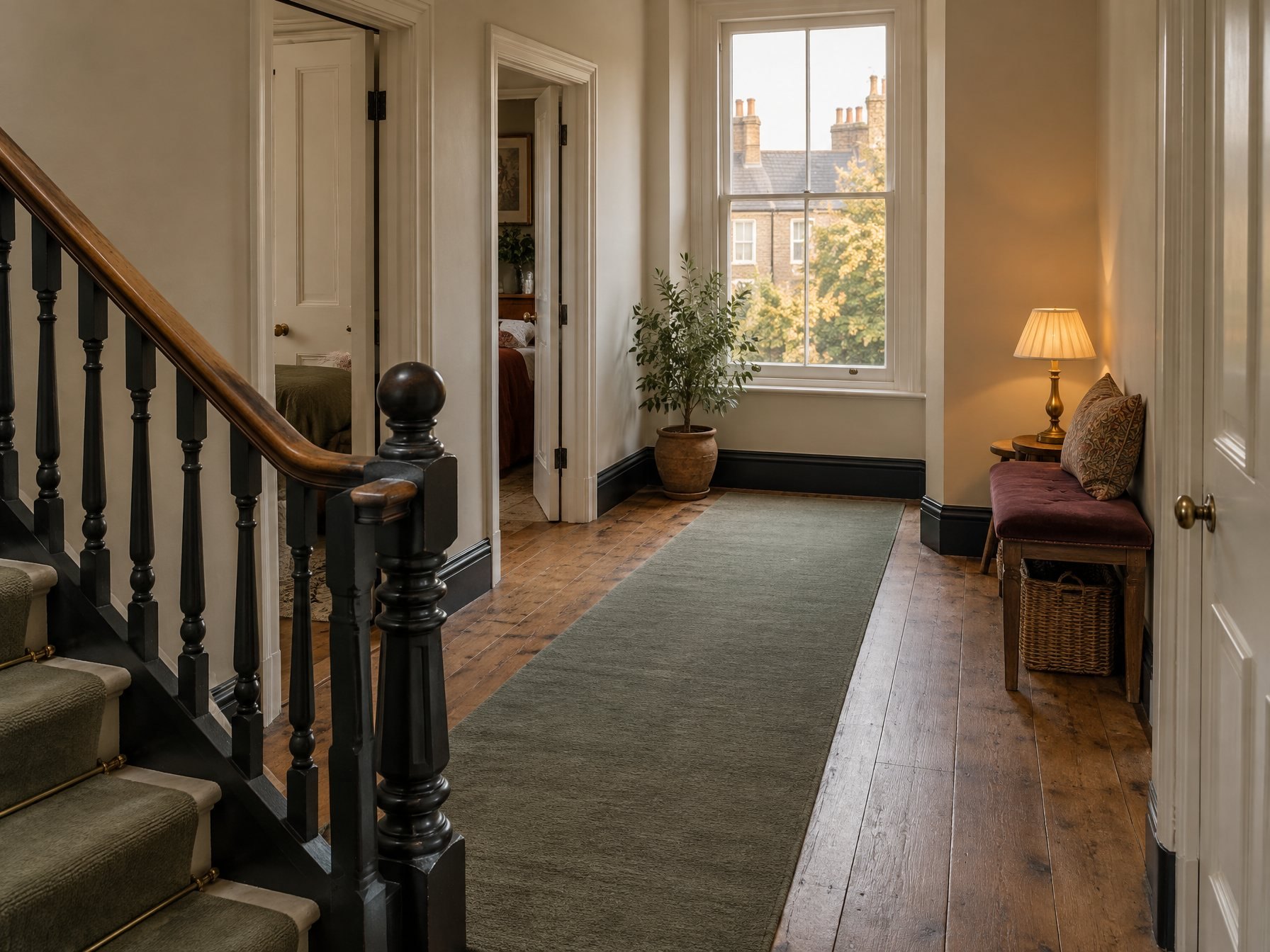

Description
Room Edit Edition · Unused Space · Circulation
The problem
An upstairs landing, a hall bulge or the dead end of a hallway is passed a dozen times a day and used for nothing on purpose. So it gets used by accident: the laundry basket waits on the top step, bags and shoes collect by the newel, a chair nobody sits in holds a pile, a charging cable runs from the only outlet across the floor, and clothes dry over the banister. The space is not unused. It is used badly, in exactly the places a body needs clear at night.
What changes after you use it
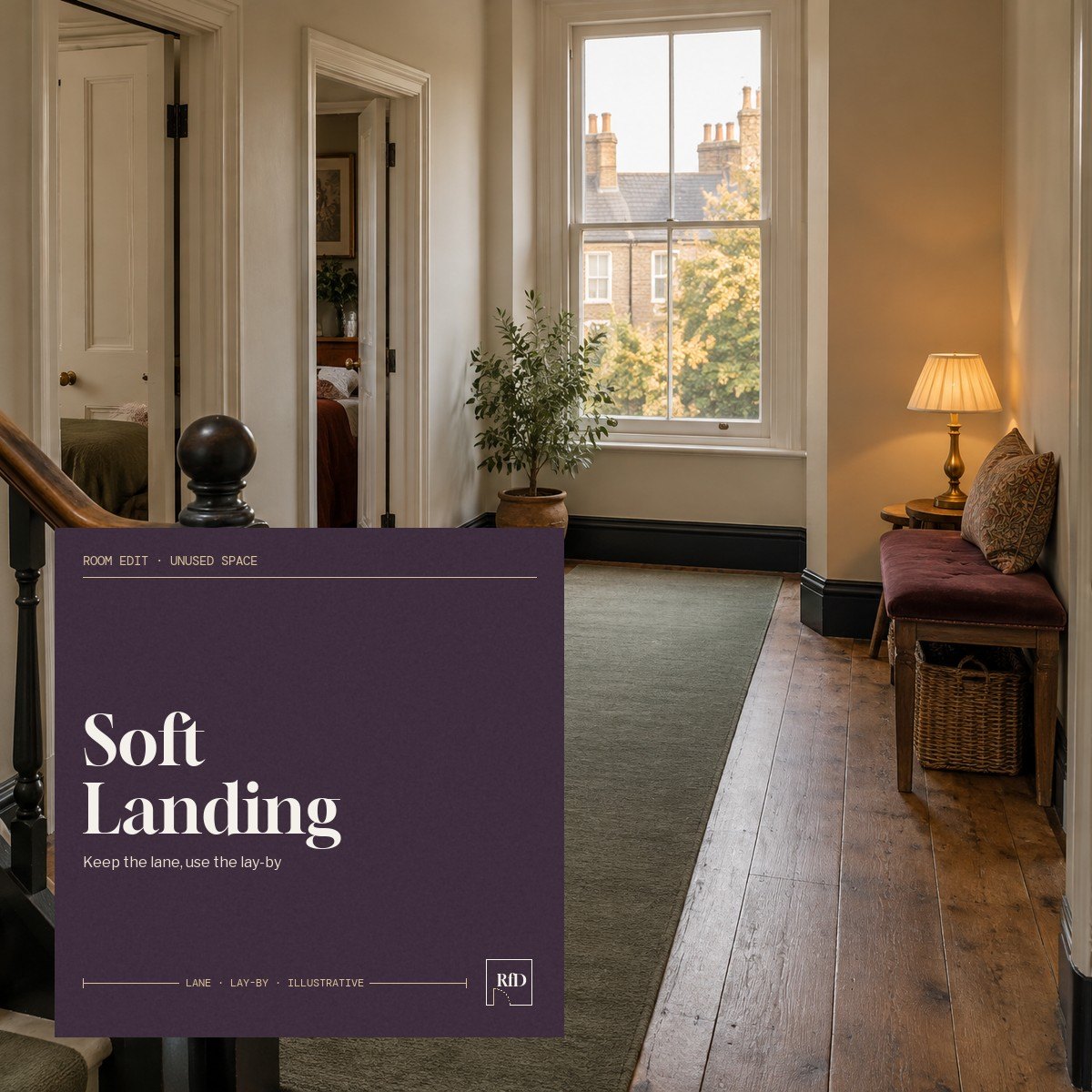
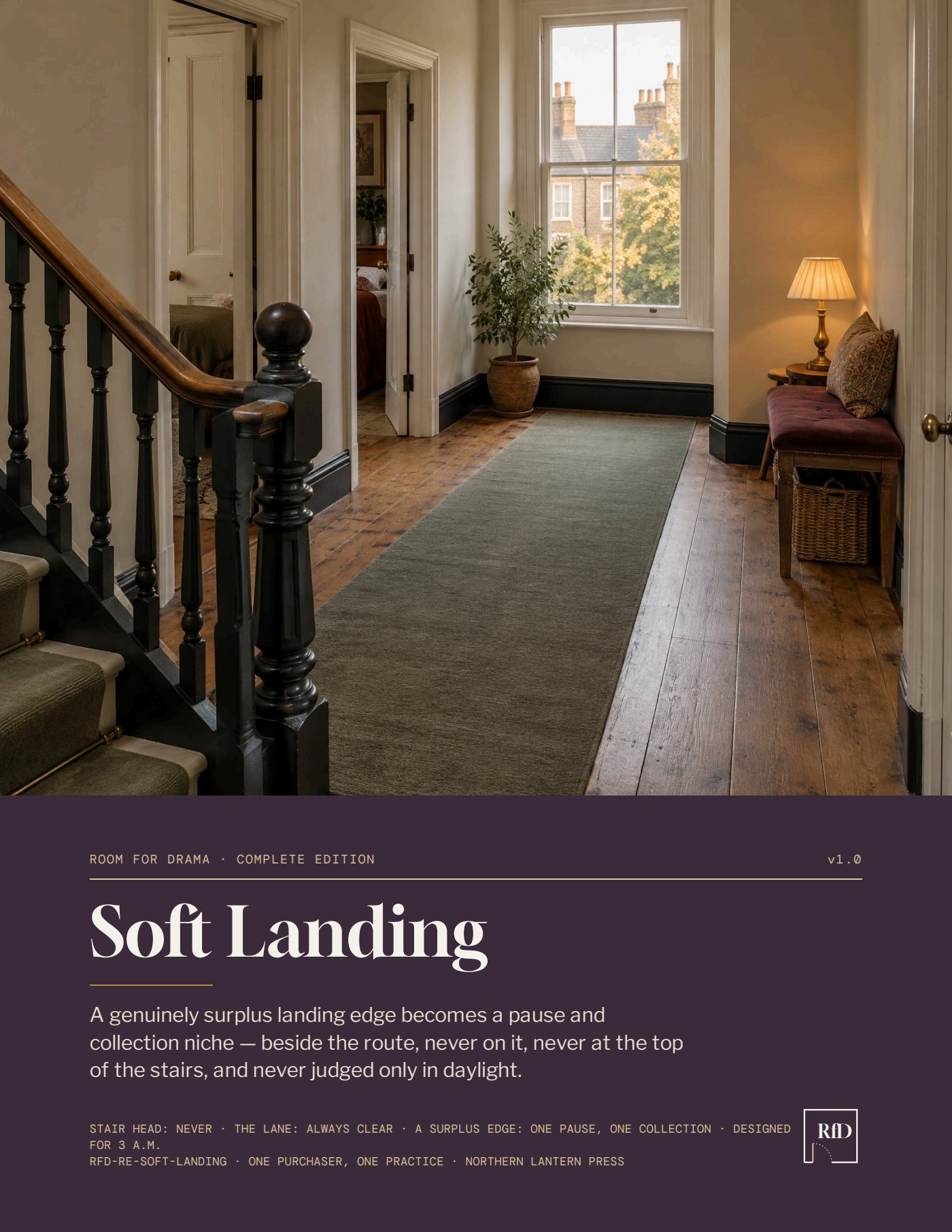
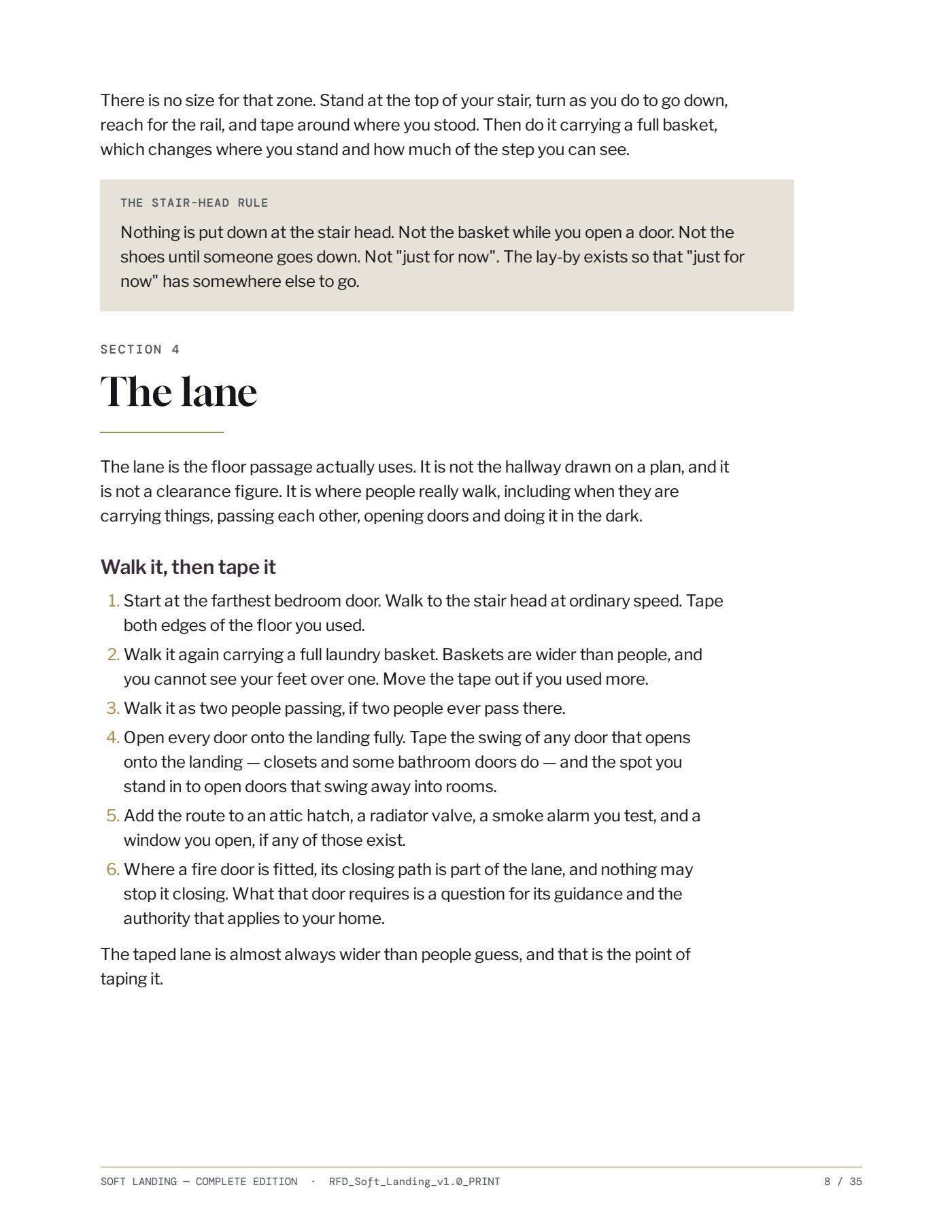
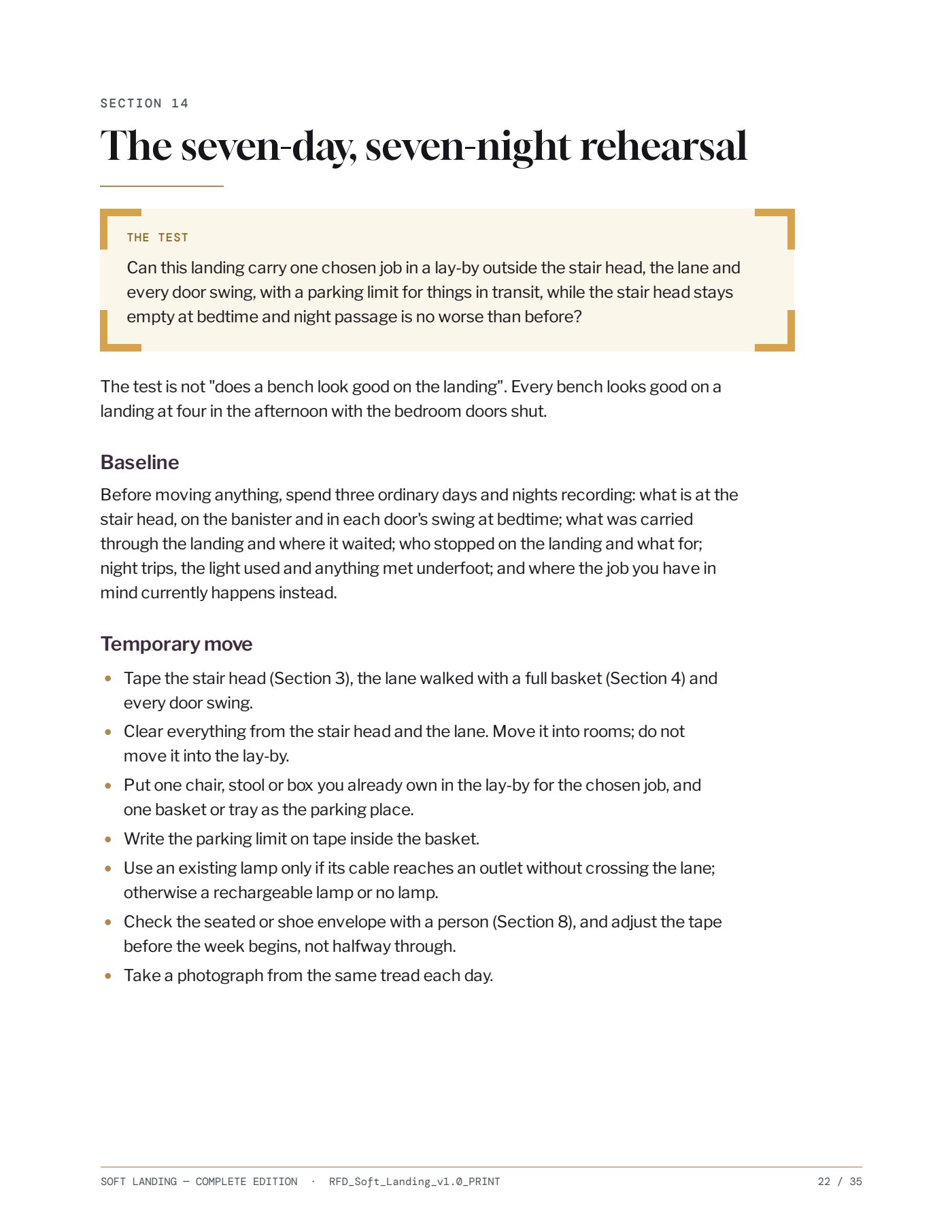
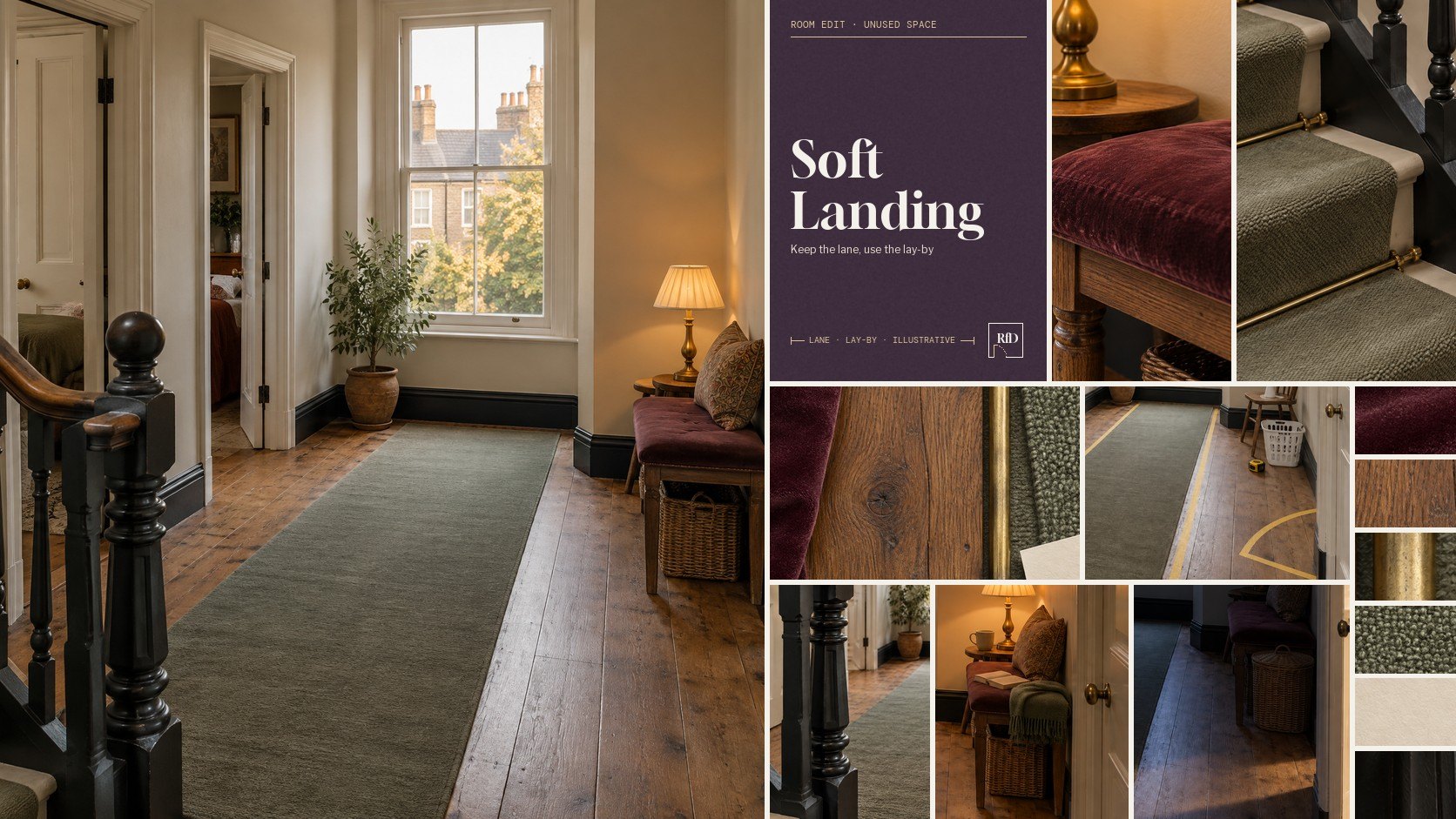
Keep the lane; use the lay-by. The stair head and the lane — the line actually walked from the top step to every door, each door's swing, the handrail and a carried basket — stay permanently clear and walkable in the dark with the light the household actually uses. Only the lay-by — a genuinely surplus edge outside both — takes a niche: at most one pause, with the body's full envelope outside the lane, and one collection point, on one freestanding piece that presents no end or step at the stair head or the balustrade. The collection point is one parking place with a stated limit for things in transit. The lane is the width the household member who needs most room actually uses. Nothing is set down at the stair head, including 'just for now'. It replaces the vague rule 'keep the landing tidy', which fails because transit has nowhere to go, with a spatial rule that gives transit a place away from the most dangerous floor in the house. It forces the job to be sized to the lay-by that actually exists rather than to the landing's apparent width, and it moves the test from daylight appearance to night passage and carrying.
Who it is for
wide landings with floor beyond the walked route, especially at a window; hallway ends beyond the last door that nobody walks through; hall bulges where the landing widens on the side away from the stair; households with one recurring in-transit job that already lands in the wrong place.
Who does not need it
Anyone the free Study already solved; landings at or near the minimum width for passage, where all of the floor is lane; landings that are the only escape route past a bedroom door, where any parked object sits on that route; homes with small children who climb furniture, where the only lay-by is at the stair head or beside a balustrade; half landings and winders, which are part of the stair; steep or attic-conversion stairs arriving at a restricted landing.
Exactly what you receive
- Complete Edition · Print Letter PDF35 pages
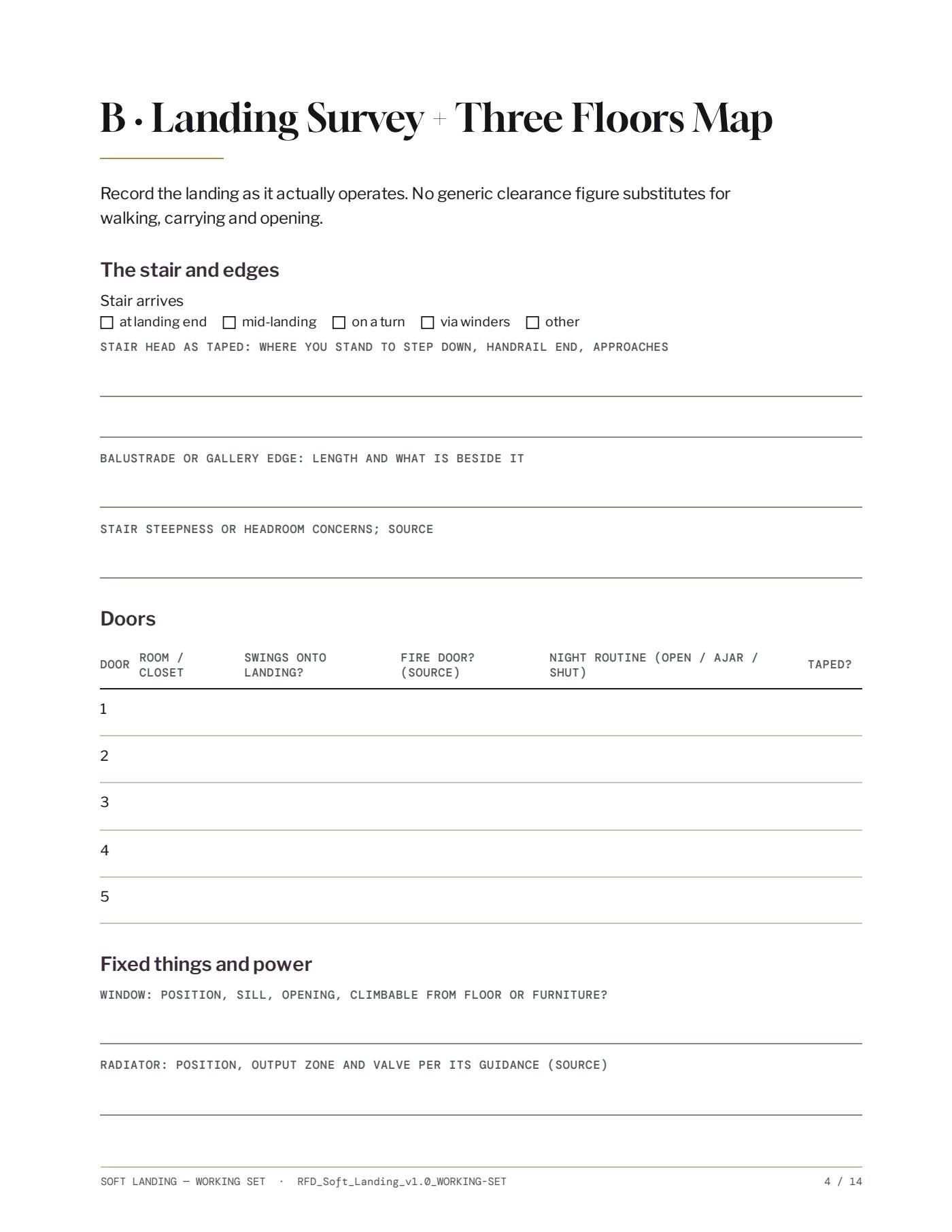
- Working Set · Working Sheets PDF14 pages
The Edition: The room accusation; Three kinds of floor; The stair head; The lane; The lay-by; Pause, collection, or both; Four job patterns; Bodies, not furniture; Things in transit: one basket, one trip; The landing at night; Seen from the stairs; Landing shape branches; The seven-day, seven-night rehearsal; The alternatives are part of the product; Retain before replacing; Specification after proof, and budget; Reset, household change and failure; Test It / Make It Work / Build It In; Practitioner handoff and Room Lab; The stopping rule; Visual proof and its limits. The Working Set: Use this on the actual landing; Fit Verdict; Landing Survey + Three Floors Map; Transit + Stair-Head Baseline; Niche Choice + Envelope Check; Seven-Day, Seven-Night Lane Log; Night + Stair Sightline Record; Alternative + Phase Decision; Specification + Sourcing; Decision + Household Recheck; Practice Handoff — Fixed Work Only.
What it cannot do
It gives no universal clearance numbers and makes no structural, electrical, fire, egress, accessibility or code determination; those belong to site-specific authority. Every photograph is a concept visual of an authored room, not a measured site.
Print and offline
Home-print Letter PDFs with embedded fonts; readable offline once downloaded. Working pages have real writing space and survive grayscale printing.
Start free
Read the free Study and download the Field Guide first. Buy the Edition only when the drawings, worksheets and adaptations would save you real work.
License, refunds and updates
License: one purchaser may read, download and print the Edition repeatedly for their own rooms and their own clients’ rooms, and may give a client a completed, client-specific record. Do not resell, redistribute or republish the blank Edition or Working Set, share the files or access, or use them to train a model. Refunds: fourteen days, no reason required. Updates: corrected releases of this Edition stay available to you. Terms of Sale.
Edition v1.0. Corrected releases of this Edition stay available to you at no extra cost, and you should never have to buy the same Room Edit twice.