Function and Flow
The Analog Room Trend Fits in One Corner.
Build a screen-free analog corner for reading, cards, games, or conversation with the right seat, surface, light, storage, and a small amount of space.
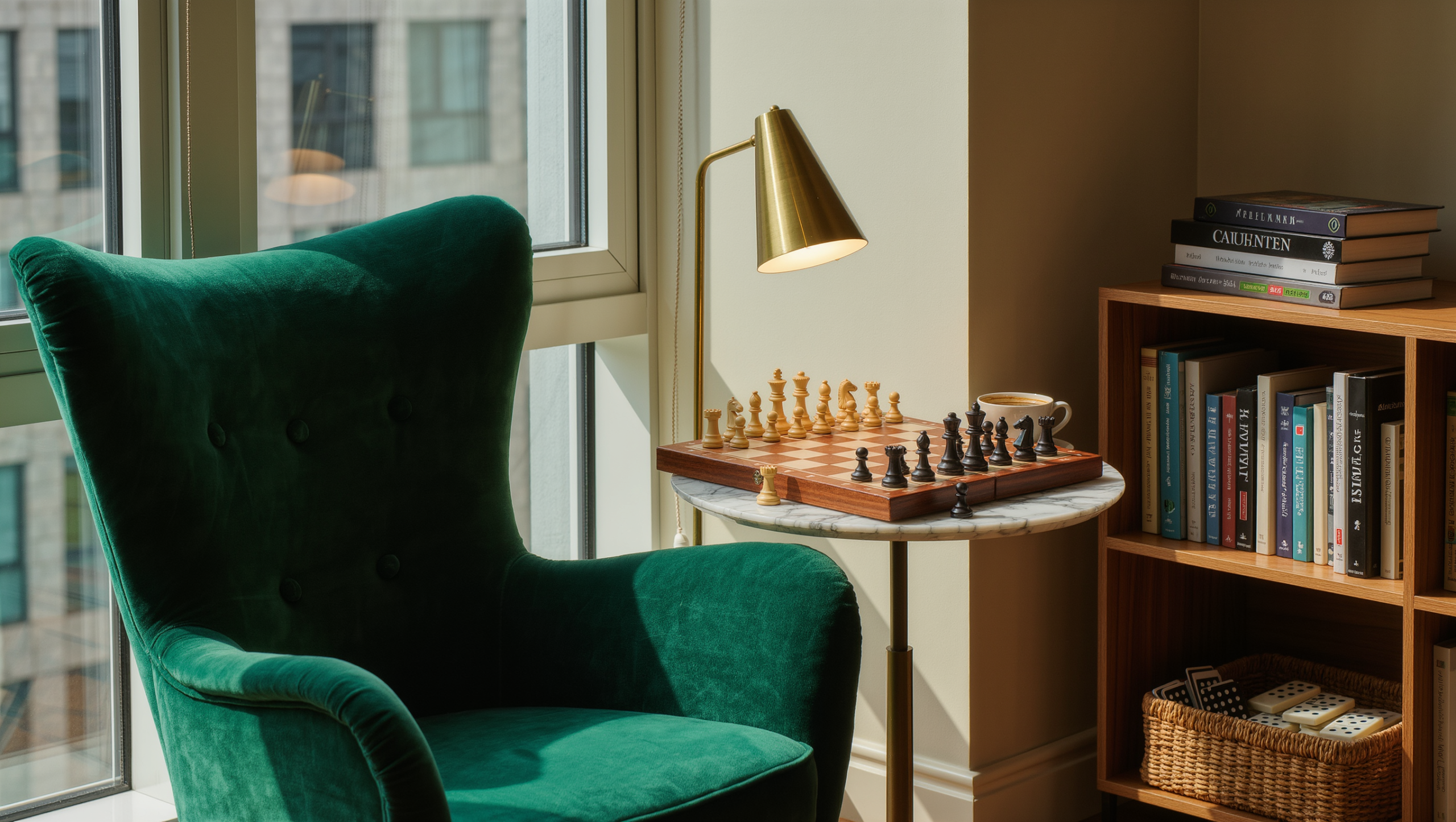
Apparently the house is tired of being one large charging station. Houzz’s 2026 search data has mahjong rooms up nearly twentyfold, card rooms up 129%, board-game rooms up 45%, bibliothèques up 191%, and playrooms up 38%. Zillow also found reading nooks appearing 48% more often in listings.
The trend is being photographed as dedicated rooms because dedicated rooms photograph beautifully. Normal floor plans do not need to care. I have always been much more interested in the wasted corner, the weird end of the room, the place that technically exists but has no convincing job. The actual desire here is simple: somewhere to do a thing that is not scrolling.
Start with the activity, not the aesthetic
Do you want a place for cards, puzzles, reading, drawing, records, conversation, or the board game that currently lives under six unrelated objects? Pick the behavior first.
A mahjong corner and a reading corner need different furniture, light, storage, and clearances. Analog is a decision more than a design style: giving a non-screen activity enough spatial respect that it might actually happen. I am not interested in building a beautiful corner that nobody uses.
Read those numbers carefully, too. A twentyfold rise in mahjong-room searches is a statistic about what people are shopping for. It is not a statistic about how many people played mahjong last week. Furniture does not create a habit. What it can do is remove the friction from a habit already trying to exist: the deck somebody keeps getting out, the puzzle that lives half-finished on the dining table because there is nowhere else to put it, the book that never gets read because the only comfortable seat faces a screen. If nothing in the house is already pushing in that direction, a beautiful table will not start it, and you will have bought a very handsome surface for keys.
One small table can become a destination
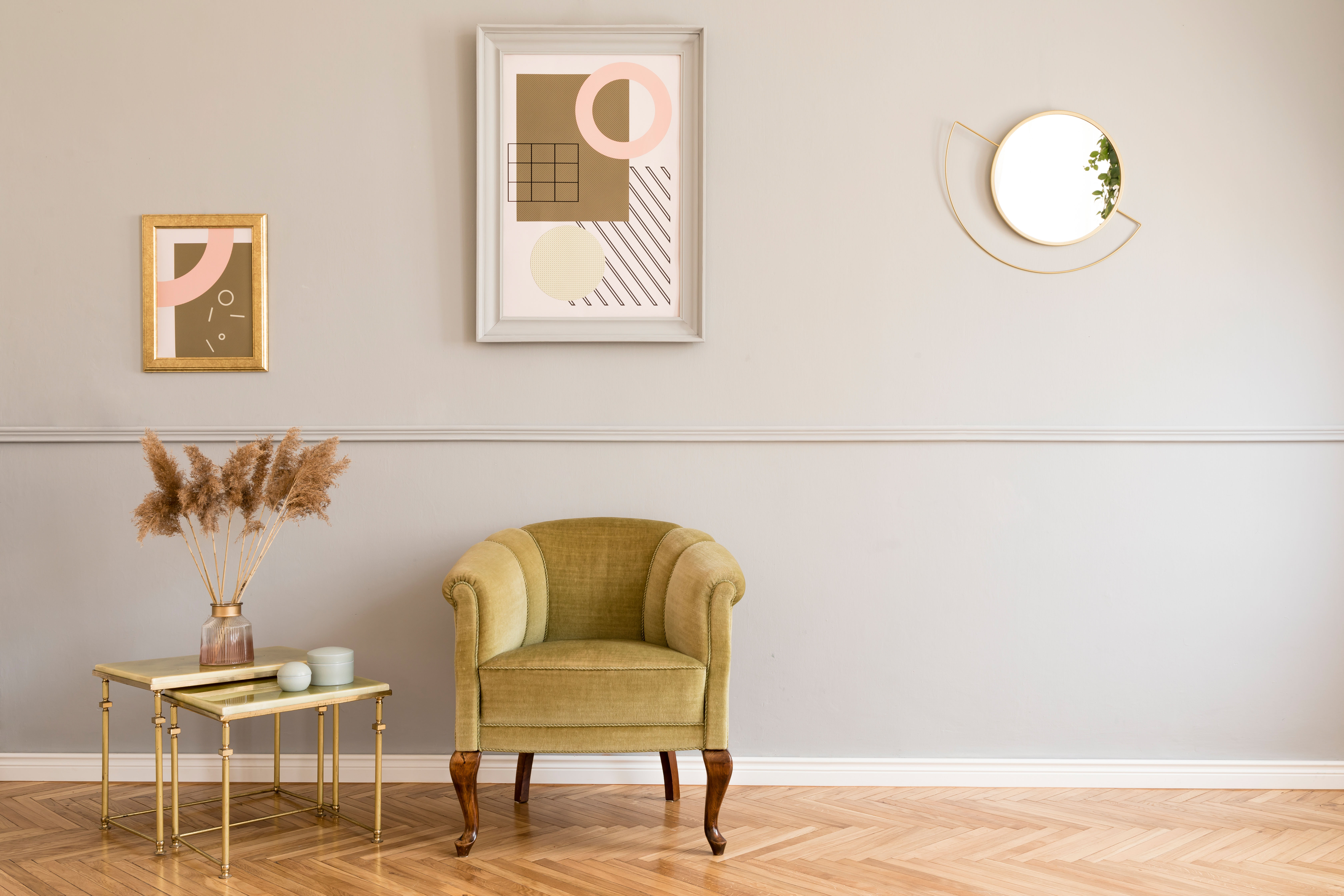
A round or square table with two to four chairs can create an analog zone inside a larger living or dining room. Enormous is not required. It wants enough surface for the activity, enough clearance to sit down, and enough light that nobody is reading tiny cards by the television glow.
Give the table a visual edge with a rug, a portable light where appropriate, wall art, or a nearby cabinet. I like a zone that reads clearly even when nobody is using it. It should look like a destination, not like overflow dining furniture waiting for Thanksgiving.
The reading nook needs more than the chair
A chair shoved near a window is not automatically a reading nook. It needs light when the sun is gone, somewhere for a drink or book, a position that does not sit in the main traffic route, and enough comfort that you will choose it over the sofa.
If the best corner is awkward, use that. Rentals are full of leftover spaces that are too small for conventional furniture but perfect for one focused activity. A shallow alcove, end of a hallway, bay window, bedroom corner, or unused dining edge can become the quiet place without requiring a built-in anything. This is exactly the kind of wasted-space problem I cannot leave alone.
Storage should make starting easier
If the cards live in a bedroom closet, the puzzle board is under the bed, and the books are on another floor, the activity has to survive a setup phase before it begins. Put the materials near the zone in a cabinet, basket, drawer, cart, or box that belongs visually to the room.
The best analog corner lowers friction. You should be able to sit down and begin without moving the printer, clearing mail, and hunting for a missing deck. If using the space feels like event setup, it is not going to become a habit.
Light it for faces and hands
Game and reading zones need useful light, but they do not need to feel like a conference room. Use a floor lamp, table lamp, plug-in sconce, or other appropriate source that puts light where the hands, cards, pages, and faces actually are.
Then let the rest of the room go lower. A bright island inside a quieter room creates a destination. Lighting can help if every source in the apartment currently illuminates everything and nothing at the same time.
Make it socially easy, not ceremonially precious
If the card table is so beautifully styled that using it requires moving twelve objects, it has become decor wearing an activity costume. Keep the center usable. Store the supplies nearby. Choose chairs people will actually sit in for an hour.
I love a styled moment. I love it considerably less when the styling prevents the moment from happening. The room should invite someone to pull up a chair without asking whether the vignette is finished being photographed.
A screen-free zone does not need a banishment policy
You do not need to create a monastery. The television can still exist. Phones can still exist. The point is giving another activity a clear physical home so the screen is not the only thing the floor plan knows how to support.
That may mean turning the back of one chair slightly away from the television, placing the game table beyond its direct focal line, or using a screen or plant grouping to make the corner feel distinct without building a wall. The shift can be small. The point is that something in the room stops facing the television.
Use what the rental already gives you
A weird built-in ledge can hold books. A deep sill can become a perch. An unused dining nook can become cards and puzzles. A corner with bad television sightlines may be perfect for conversation precisely because it is bad at being television space.
I would not force the analog zone into the most valuable square footage just because the trend photographs that way. Look for the space that currently has no convincing job and give it one. That is usually more satisfying anyway.
Nobody needs a library, a game room or a mahjong salon. Twelve square feet that stop pretending the television is the only plot in the house will do the job. If that works, then by all means make it bigger, stranger, darker, prettier, more elaborate—whatever fits your life. Everything is scalable once the idea works.
Source note: Houzz’s May 2026 U.S. search report showed sharp growth in mahjong rooms, card rooms, board-game rooms, bibliothèques, and other analog gathering spaces; Zillow’s 2026 home-trends report found reading-nook mentions up 48%. Houzz, “8 Design Trends Emerging in 2026.” Zillow, 2026 Home Trends.
Same problem, elsewhere in the house
Room notes
Keep the room on the record.
One useful note at a time: what to test, what to ignore, and what changed when the room got another vote.