Awkward Spaces
The Column in the Middle of the Room Needs an Alibi
A structural column can become a zoning device, lighting anchor, display surface, or quiet architectural element. The goal is not to disguise it at any cost, but to make its relationship to the room deliberate.
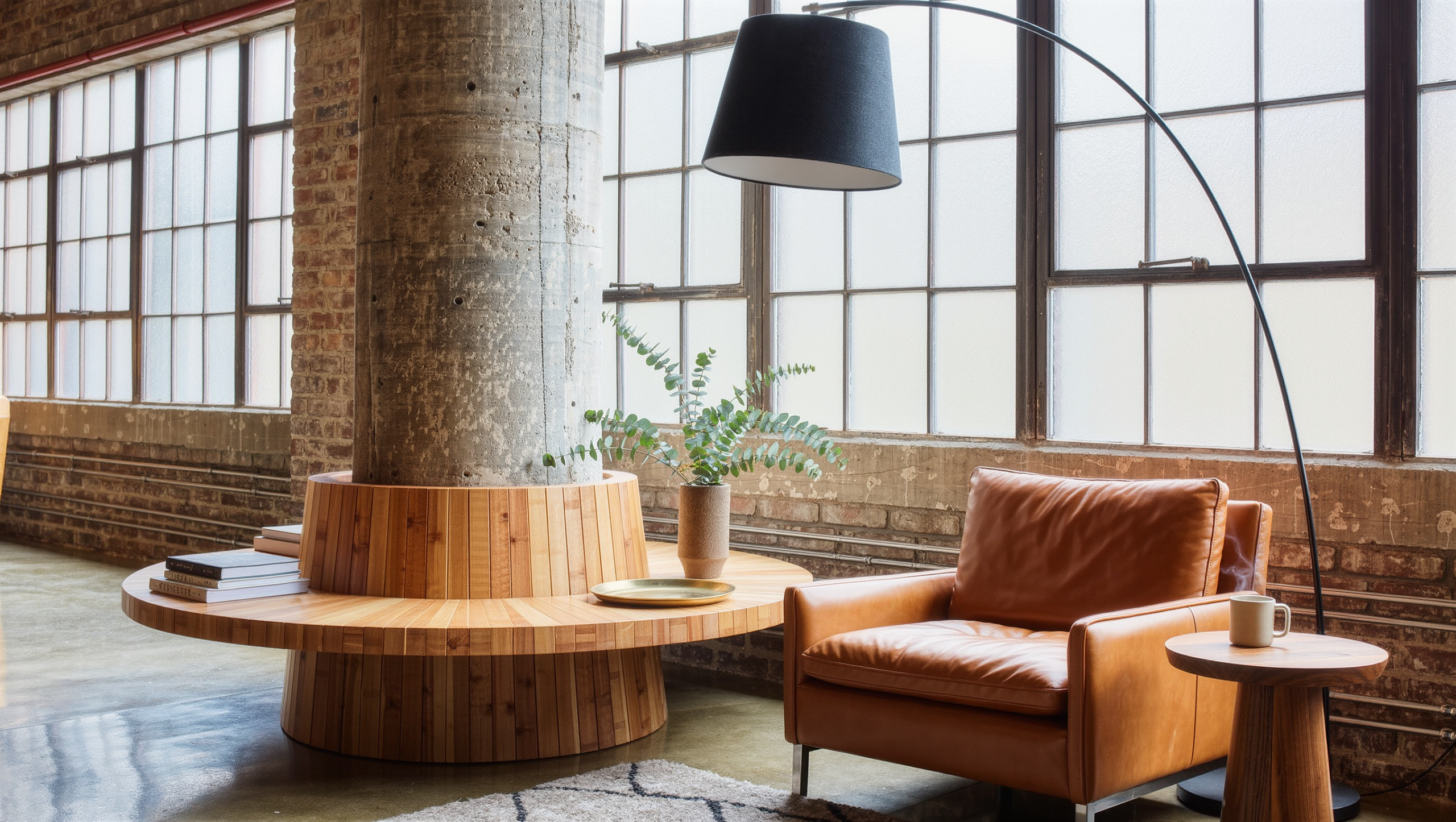
A structural column in the middle of a room is not subtle. Pretending otherwise usually produces a plant, a decorative bowl, and several years of everyone walking around the problem.
The column does not want camouflage. It wants a role. Give it one and it stops being the thing everyone apologizes for.
First decide whether it is a divider or an object
Stand where the room changes character, between living and dining, kitchen and seating, entry and everything else. If the column is standing near that line, it is already a divider and the layout should say so out loud. If it is marooned in open floor with no boundary anywhere near it, stop trying to make it mean something. Finish it well, light it deliberately, keep the floor around it clear, and let it be an object.
Do not attach furniture just to prove usefulness

Wrapping a column in shelving or a bench works when the shelving or the bench belonged there anyway. It fails when the column is the reason. A twelve-inch post becomes a three-foot obstacle the moment you build around it, and the room notices. Tape the finished footprint on the floor and live with it for a week before anything gets screwed down.
The column is not asking for a job application. Sometimes its best contribution is organizing the room visually while staying physically lean.
Use material to connect it to something important
Clad it in a wood that already appears somewhere else in the room. Paint it the wall color and let it recede. Or go the other way and finish it hard, if the room has nothing else to look at. What matters is that the treatment repeats something. Repetition reads as belonging. A one-off accent finish reads as a decorated obstacle, which is worse than a plain one.
Lighting can turn interruption into rhythm
A column will hold a sconce, a directional head, or a concealed wash, assuming the wiring and the construction cooperate. In a long room with more than one column, lighting them the same way turns an interruption into a rhythm. It also means one fewer floor lamp standing in the walking route, which is the lamp everyone kicks.
Protect the walking route
Measure the clear path on every side anyone actually uses. Then measure it again with a chair pulled back, with a laundry basket, with a child running. You know where the column is. Your guests do not, and they will find it with a hip. Sharp projecting shelves and delicate objects on a column in the middle of circulation are a bet you will eventually lose.
Use it to terminate something
A low cabinet, a banquette, a kitchen run, a console, a change in the ceiling: any of these can end at the column instead of near it. Landing a line there converts the post from an interruption into a full stop. Check it from the doorway, from the sofa, and from the kitchen, not just from the one angle that photographs well.
Mirrors are not an invisibility cloak
Mirrored cladding does reduce visual mass, in the right room. It also doubles every bit of movement, every fingerprint, and every pile of things you meant to put away. On a column standing in a busy route, that reflection does not calm the room down. It gives it a twin.
If the column is truly ruining the plan, get structural advice
Do not assume it can be removed, slimmed, drilled into, or quietly swallowed by cabinetry. That column is holding something up. A structural engineer will tell you in an afternoon what is actually possible, which is cheaper than finding out the other way.
In most rooms the fix is not structural at all. The layout simply has to stop acting surprised that the column is there. That costs nothing, and it works better than making it disappear.
Same problem, elsewhere in the house
Room notes
Keep the room on the record.
One useful note at a time: what to test, what to ignore, and what changed when the room got another vote.