Light and Atmosphere
Bring Golden-Hour Mezcal Energy Into an Everyday Terrace or Lounge
A terrace scheme built out of mezcal, grilled pineapple, green chile and amber light — starting with the one honest question underneath it. Does your space actually get that hour?

On this page
12
A space can be finished and still be off duty. The chairs are there. The lighting works. The plants are alive, more or less. And nobody stays longer than the errand that brought them.
The usual fix is a mood. Warm bulbs, a terracotta pot, something in rust linen. It photographs beautifully and changes nothing, because atmosphere is not a product you add at the end. Atmosphere comes from an hour of the day — and from whether your room actually gets that hour.
So this one starts with the hour. Pale light turning amber, smoke and warm fruit and herbal green, the point where an ordinary evening becomes persuasive. Then it asks the unglamorous question sitting underneath: does your terrace get that light, and what is the space supposed to do for the other eleven hours?
Decide what the space does at four in the afternoon
Name the primary daily use before you name a single color. A terrace for morning coffee and evening conversation wants a different center than a sunroom used for work, reading and the occasional meal.
One primary activity. One secondary. Everything else is occasional and can arrive temporarily. The primary gets the protected position, the best available light, the shortest route and the most comfortable posture. The rest negotiates around it.
And the space should change modes in about three deliberate moves. Dim a source, pull one chair, open a shade, clear the table. If the evening version requires hauling furniture and fetching accessories from another floor, you have not designed a room. You have scheduled a production, and productions get cancelled.
Give people one place to put the glass down
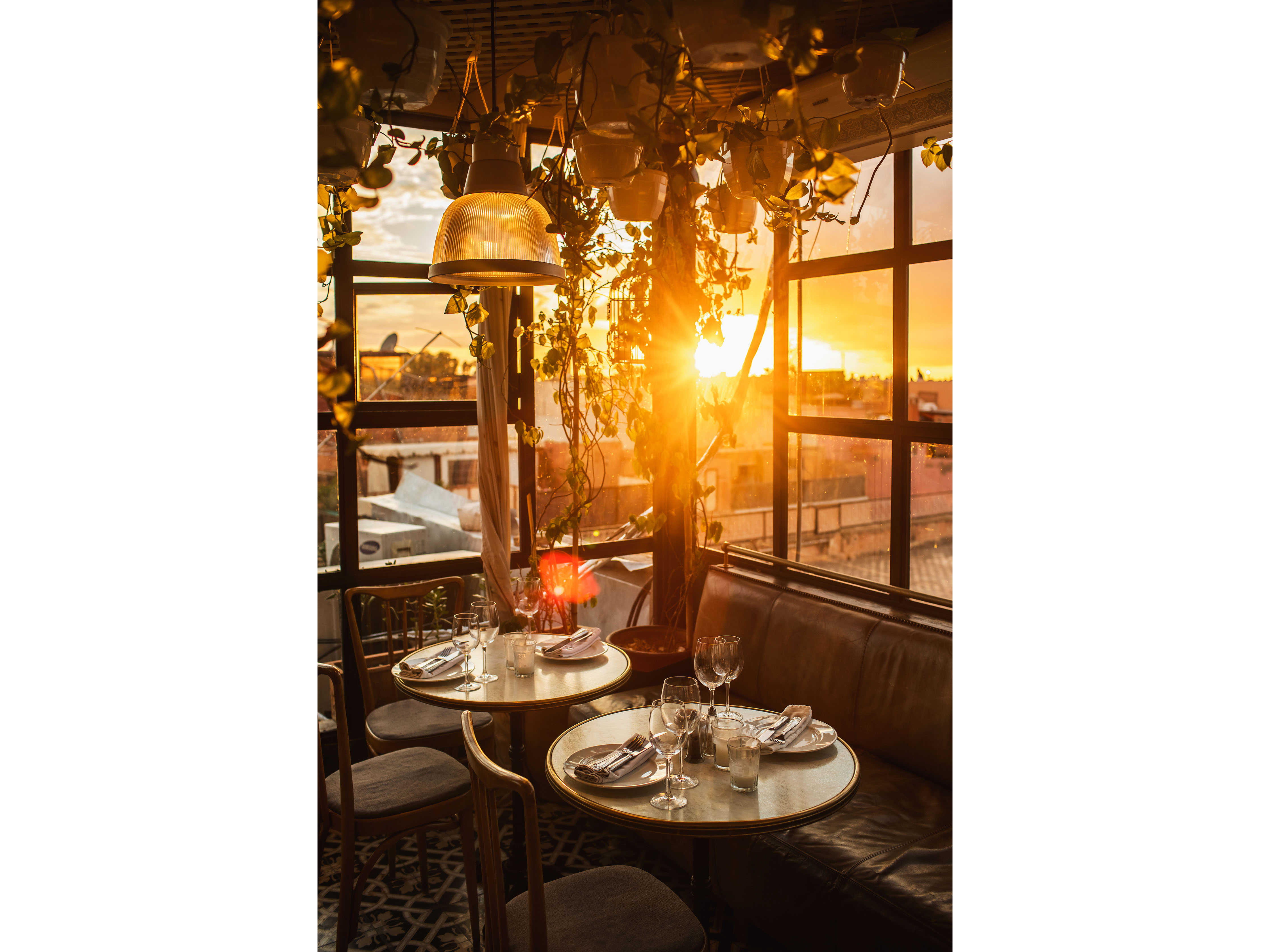
Build one social anchor and put it where people already stop.
A round table, a low stone surface, a broad worktable, a compact sofa-and-chair pairing, a built-in bench. It does not need the geometric center, which is a prize nobody actually awarded. It needs to gather the primary seats without blocking the route from the door to wherever people go next.
Every regular seat needs a credible relationship to that anchor and somewhere to set a glass, a book or a phone. That is most of the test. Staying should be easier than leaving.
Protect the route before you add a single beautiful thing
Walk the path from the door to the seats, to the storage, to any exterior exit. Walk it with the door open, the chairs occupied and something in both hands. That is the real route, and it is always narrower than the plan suggested.
Keep the busiest line along one edge of the gathering zone. A rug edge, a sofa back, a long bench, a line of light — any of those will separate movement from dwelling without building a wall.
Do not spend the narrowest part of the space on a deep console, a decorative planter, or an occasional chair nobody ever occasions. Nothing feels relaxed while everyone is edging past the furniture.
Four colors, and every one of them has a job
The palette should read sun-warmed rather than tropical, smoky rather than rustic. Start with a calm base — plaster, sand, oat, clay, sun-bleached linen — then bring in herbal green, one restrained note of chile or rust, and a single charred line in blackened timber, dark bronze or smoked glass.
Then give each color something to do. The rust holds the social center. The green ties the room to whatever is actually growing in it. The dark line sharpens pale architecture and keeps the warmth from going soft. Scatter all four evenly across cushions and trays and small ceramics and you have not built atmosphere, you have built a gift shop.
One large warm surface. One controlled dark counterweight. Everything else is allowed to support those two quietly, which is a thing even maximalists are permitted to do.
Materials have opinions about weather
Every material here carries a maintenance bill, and the showroom never prints it.
Matte plaster and mineral finishes do the best work with changing light, because they hold variation instead of throwing glare back at you. The result lives or dies on preparation, though, and repairs show. Timber brings warmth and grain, and outdoors it will move, fade and ask for attention on a schedule set by your climate rather than your intentions. In Montana that schedule is short and completely unsentimental.
Terracotta, ceramic and honed stone give you weight and held heat. They also stain, go cold, need sealing, and have to be carried by somebody.
Woven materials soften hard architecture and filter light beautifully. They also collect dust, react to damp, and vary enormously in durability. Woven is a category, not a quality.
Smoked or ribbed glass catches evening light and adds real depth, provided you keep it out of hard glare and away from the places hands land.
One rule holds across all of it. For every reflective surface, put enough matte material nearby to keep the room tactile instead of glossy. Gloss reads as expensive in a photograph and cold in the chair.
Build for the last hour of daylight
Sit in the space during the hour that matters. Not with a moodboard — with a chair. Note where the sun actually lands, where glare arrives, which seat stays comfortable, and the moment the room begins losing its edges.
Through the middle of the day, deal with heat and glare before you deal with warmth. Shade, ventilation, window treatment and furniture position will each do more than any color you choose.
As the light drops, hand the room to lower sources. The table or seating group should stay legible, faces should stay comfortable, and one farther wall or plant or surface should stay softly visible. Otherwise the room quietly shrinks to the size of the lamp.
And do not turn the whole thing orange. Warmth should come from shade material, reflected light, timber and clay, not from forcing every bulb to impersonate a sunset. That move is the lighting equivalent of a grape-purple wall: confident, committed, and wrong inside two weeks. Ask me how I know.
Leave one edge alone
Leave one edge underused. A calm wall, a bare strip of floor, a restrained planting zone. The eye needs somewhere to rest, and the room needs somewhere to absorb an extra chair, a bag, or an activity nobody planned for.
This matters more when the palette runs to rust and green and dark metal and texture, not less. Without relief the space goes visually hot as well as physically crowded. Hot rooms empty out.
Where the cushions live when nobody is looking
Put closed storage next to the activity it serves. Chargers, games, serving pieces, throws, tools — anything that has to cross the room after every use will eventually just stop being put away.
Keep cords out of the routes and settle power before the furniture is final. Outdoor and fixed electrical work needs suitable products and proper installation; portable testing will tell you where things belong before anything permanent happens.
If the scheme depends on cushions, covers, tools or seasonal pieces, decide where they live before you buy them. Nothing feels effortless when every use starts with a search for the room’s own parts.
Plants that can survive your actual conditions
Choose for real light, real wind, real temperature, and how far you are genuinely willing to carry water. A few substantial forms framing the social center or blocking an unwanted view will do more than a miscellaneous line of pots around the perimeter.
Keep planting out of the primary route. Think about drainage, mature size, what the pot does to the surface underneath, and what the space looks like in the month everything seasonal has been pulled out of it.
Test one corner first
Do not transform the space. Transform a corner.
Put an existing chair or bench near the most persuasive light. Add a stable surface, one low lamp, one warm textile, one dark or green counterweight. Then live with it through an ordinary day and an ordinary evening, not a staged one.
If the corner holds the activity, stays comfortable and resets without effort, expand the language outward. If it looks wonderful and nobody chooses to sit there, the problem is position or function. It is not a shortage of paprika cushions. It never is.
When this is the wrong terrace for it
- The light is wrong. A space that is bright at eight in the morning and in full shade by four has no final hour to build around, and no quantity of clay, rust or blackened timber will manufacture one. Design that space for breakfast and stop pretending the evening is coming.
- The wind. Exposed roofs and open decks put out candles, tip light glassware and turn a woven shade into a sail. Screening one side fixes it, but a screen that survives weather is a construction decision rather than a styling one, and it has to be settled before a single cushion is chosen.
- The space is a corridor. If the path to the bins, the garage or somebody’s bicycle crosses the seating, people keep standing, however well the anchor is placed.
What the space already does well
Do not force warm color onto architecture that already catches beautiful late light. Do not cover good stone, timber, brick or plaster just to make the concept more obvious. If the room already has a convincing texture or a real horizon, let it lead and stay out of its way.
The scheme has worked when the space becomes more useful at noon and more magnetic at nine. It should not look like a cocktail party waiting for its guests. It should look like ordinary life finally worked out what time to show up.
Same problem, elsewhere in the house
Room notes
Keep the room on the record.
One useful note at a time: what to test, what to ignore, and what changed when the room got another vote.