Light and Atmosphere
The Blank Wall Is Not Begging for a Gallery Wall
A blank wall is not an emergency. Before covering it with twelve small frames, decide whether the room needs art, scale, texture—or simply somewhere for the eye to rest.
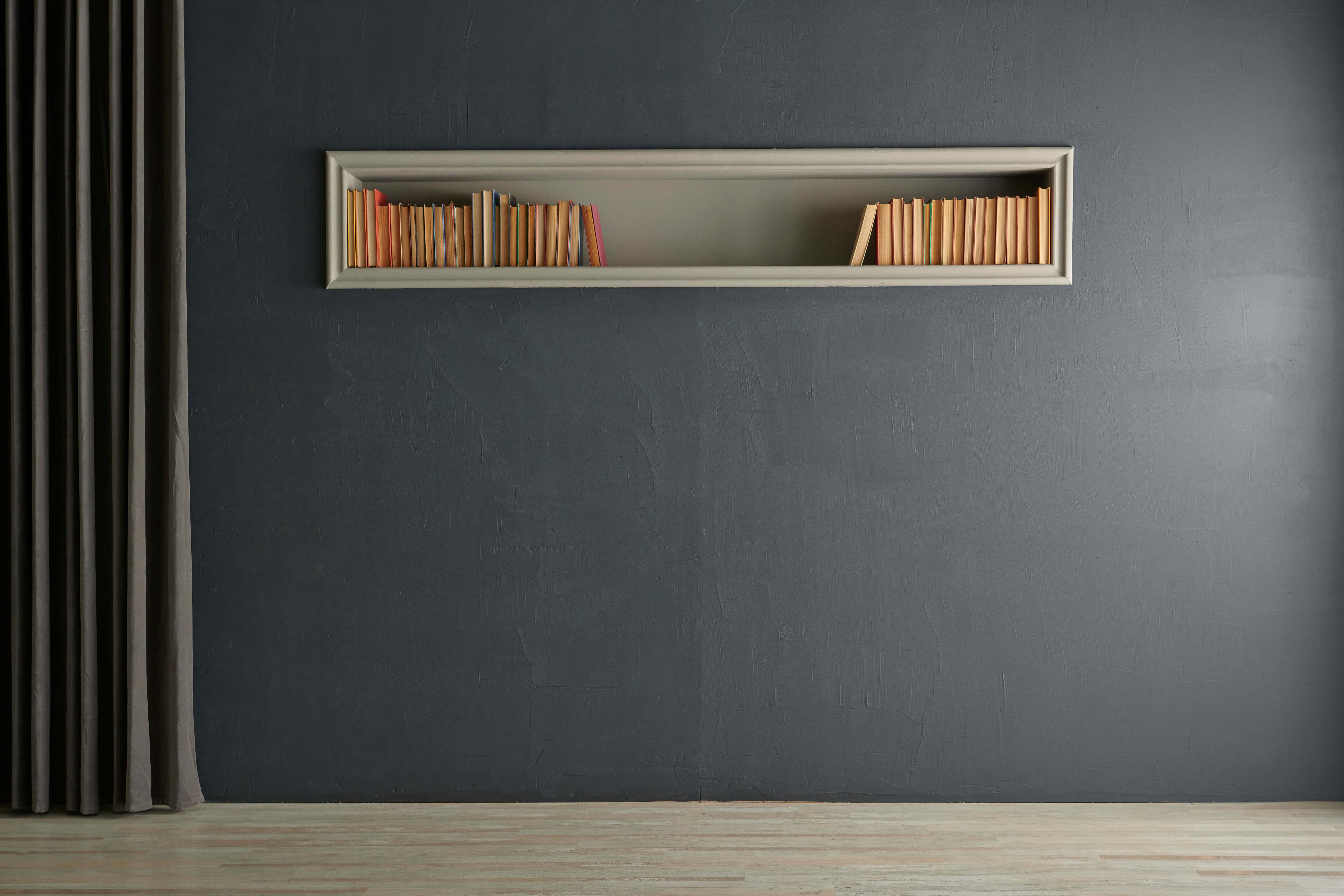
Room for Drama · Diagnosis Card
A blank wall may be the thing making the room breathe.
Diagnose first. Buy last.
A blank wall has become suspicious.
Leave one alone for long enough and somebody will suggest a gallery wall.
Not because the room needs twelve framed objects. Because the wall is empty, and apparently emptiness now requires an intervention plan.
I like art. I like collections. I like walls with nerve.
I also like a wall that knows when to stop talking.
The useful question is not how do I fill this wall.
It is what does this wall need to do for the room.
Start with the furniture, not the frame count
A wall behind a sofa, console, bed or dining table is already part of a larger composition.
Look at the width and height of the furniture. Look at the ceiling. Look at the objects on either side. Look at the sightline from the doorway.
Then decide what visual weight the wall needs.
A single large piece can give a broad sofa enough authority. Two works can create a clean relationship without pretending to be a set. A salon-style collection can be fantastic when the room has enough visual appetite to support it.
But twelve small pieces do not automatically equal one strong wall.
Sometimes they equal twelve small decisions hovering above a large piece of furniture.
The room may need scale, not quantity
This is the distinction that saves money.
A blank wall often feels unfinished because the objects around it are too small for the architecture.
The instinct is to add more small things.
Try one larger thing first.
Large art. A textile. A mirror where reflection actually helps. A sculptural object. A wall-mounted light. A dramatic piece of furniture whose height changes the composition enough that the wall no longer feels abandoned.
The goal is not to cover square footage.
It is to establish proportion.
A gallery wall should be a collection before it is a layout
If you already own photographs, drawings, prints, small paintings, objects or documents you actually care about, a gallery wall can give them a real home.
That is a collection becoming architecture.
Buying nineteen unrelated prints because the wall is nineteen-print-sized is a different exercise.
Start with what deserves to be together. Shared subject is not required. Shared framing is not required. What matters is that the group has some internal logic: color, era, medium, personal meaning, scale, contrast, or simply the fact that you have collected the work over time and like seeing it together.
A gallery wall should not feel like a wall-decor starter pack.
Empty space can make the expensive thing look more expensive
This is one of the cheapest tricks in the room because it is not a trick.
Give a strong object room around it.
A painting with breathing space can feel more important. A sculptural lamp against a quieter wall becomes clearer. A cabinet with beautiful wood or hardware can carry more of the composition when it is not surrounded by small visual interruptions.
Negative space is not minimalism as a belief system.
It is hierarchy.
A maximalist room still needs hierarchy or every beautiful thing is forced to shout at once.
The wall across from the busy wall may need to stay calm
Rooms are not designed one elevation at a time.
If one wall already holds books, windows, art, television, shelving or a fireplace, the opposite wall may not need an equal amount of information.
Balance does not mean identical density.
A quieter wall can make the richer wall legible.
This is particularly useful in smaller rooms where every surface is visible at once. Covering all four walls with equal intensity can flatten the hierarchy and make the room feel visually smaller even when the individual pieces are lovely.
Pick the wall that gets to be loudest.
Let another one listen.
Art height should belong to the viewing condition
The phrase eye level is useful until you ask whose eye and from where.
Art in a hallway is mostly seen standing. Art above a sofa is often experienced seated and from across the room. Art in a stairwell moves with you. Art in a dining room may be looked at for two hours from a chair.
Place the work in relation to the furniture and the actual viewpoint, not an isolated measurement copied from a generic rule.
If a piece floats awkwardly too high above furniture, it stops participating in the composition and just occupies altitude.
When the small piece was just the size you had
A large wall with one small piece can work if the contrast is deliberate.
But if the small piece is there because it was the only size available, the wall usually exposes the uncertainty.
Either commit to the intimacy—perhaps with a small light, unusual placement or strong furniture relationship—or increase the scale of the overall composition.
You can group small work tightly. You can use a larger mat. You can build the wall around a strong object below it.
What you should not do is scatter little frames farther apart until they occupy enough acreage to technically fill the wall.
Distance is not scale.
Texture can finish a wall without adding pictures
Paint finish, plaster, paneling, wallpaper, textile, wood, stone and even shadow from lighting can give a wall enough presence that art becomes optional.
This is especially useful when the architecture already has something to say.
A deep paint color in beautiful evening light may not need twelve frames to prove it was designed. A paneled wall can carry rhythm on its own. Wallpaper may already be the picture.
Do not decorate over the feature you paid to create.
Remove something before you add anything
Photograph the wall and the full room.
Then temporarily remove the small things already competing around it: tabletop accessories, one lamp, a stack of objects, maybe another piece of art nearby.
Does the blank wall still feel empty?
Or did the room simply have too many small notes and no strong one?
If the wall still needs something, you now know more about what.
Blank is not the same as unfinished.
Some walls are waiting for one excellent thing. Others are already finished, and what finished them was the decision to leave them alone while the rest of the room did the talking.
Same problem, elsewhere in the house

