Function and Flow
The Renter-Safe Transformation Ladder
Renters need meaningful change without pretending every alteration is reversible or permitted.
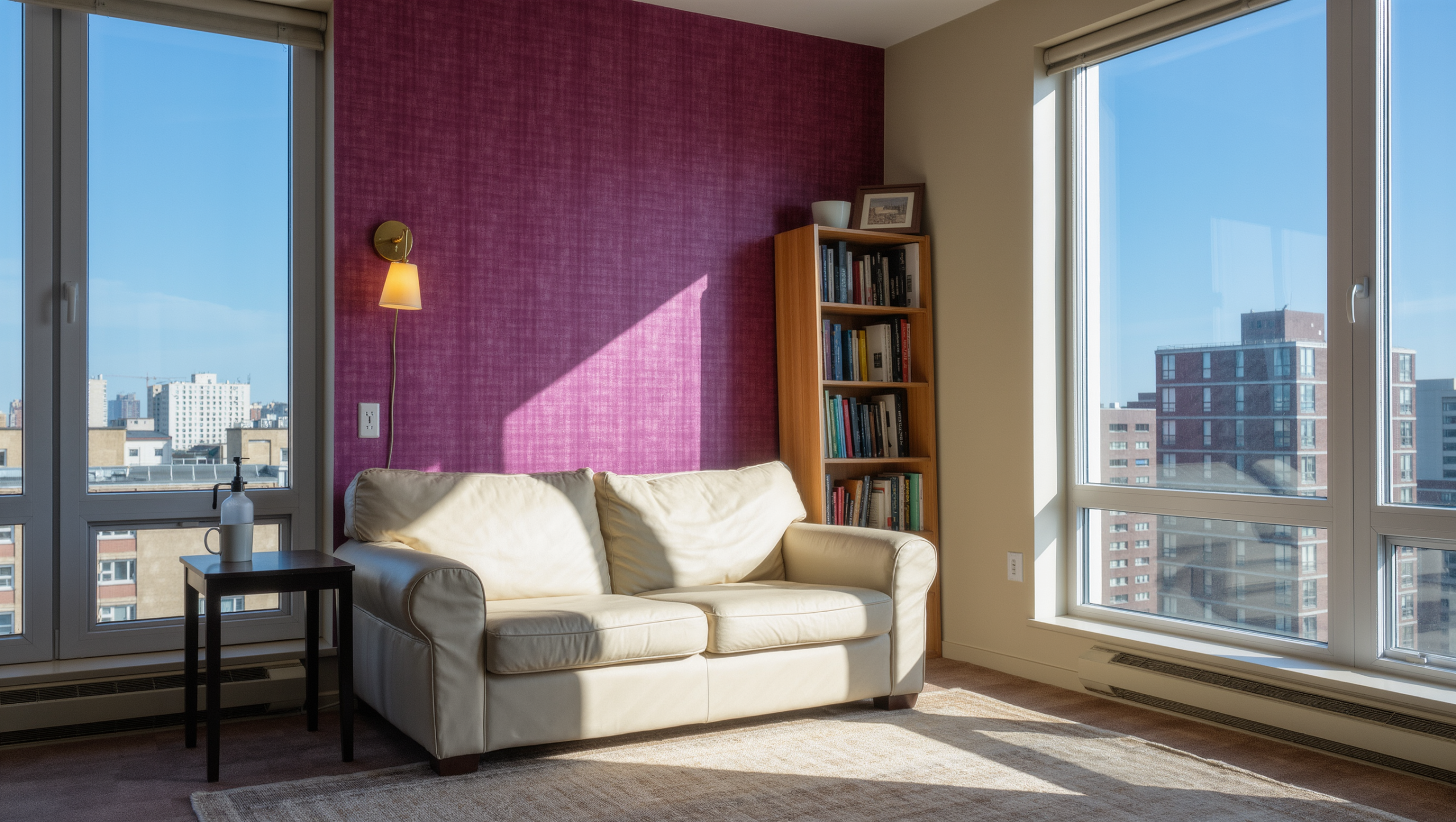
Renters deserve meaningful transformation without pretending every product labeled removable is harmless, permitted, or genuinely reversible. The strongest changes often begin before adhesive, anchors, or paint enter the conversation.
A renter-safe strategy is a ladder: start with the lowest-impact move capable of solving the friction, then escalate only when the evidence justifies it.
First, Name What the Room Is Asking For
Do not begin with a product category. Identify what needs to change: the room lacks a focal point, the sofa blocks circulation, the entry has no landing place, the bedroom needs darkness, or an open-plan space needs a boundary.
Once the friction is specific, several low-impact solutions may become available. A screen can create separation. A floor lamp can establish an evening zone. A rug can connect furniture. A freestanding cabinet can add storage without altering the wall.
Level One: Remove and Rearrange

Clear circulation, change furniture relationships, relocate lighting, edit visual weight, and return surfaces to their real jobs. These moves can transform behavior without touching the property.
Use the architecture as it exists. Align furniture with useful walls, protect door swings, make the best daylight serve the most frequent activity, and stop filling every recess simply because built-ins are unavailable.
Level Two: Freestanding and Textile
Rugs, curtains on appropriate existing hardware, screens, lamps, freestanding shelving, movable art supports, and nonfixed storage can create boundaries, color, softness, and atmosphere.
Their footprints still need to respect routes and daily use. A large screen that creates a bedroom zone but blocks the only path is not renter-safe in any useful sense. A heavy leaning object needs stable, appropriate placement rather than optimistic gravity.
This is also the rung most of the money should go to, because these are the things that leave with you. Put the major color and scale on what you own: full-height curtains, a room-size rug, bedding, art, slipcovers, painted freestanding furniture, or a substantial screen. A rental does not need dozens of small temporary accents when one large move can give the room authority.
Let lighting travel with you through floor lamps, table lamps, plug-in sconces, clamp lights, and other properly rated portable fixtures. Large art, framed textiles, and freestanding storage can also create the sense of architecture without asking the building to become permanent collateral.
Level Three: Reversible With Verification
Adhesives, temporary coverings, tension systems, and removable hardware depend on substrate, finish, humidity, installation, removal method, product age, and lease language. “Renter-safe” is marketing shorthand, not a universal property condition.
Confirm that the method is allowed. Test discreetly on the actual surface. Follow installation and removal instructions. Document the condition before work begins. Keep packaging and restoration materials together.
Level Four: Permission or Professional Work
Electrical changes, structural attachment, plumbing, built-ins, door modifications, fixed glazing, and other property-sensitive interventions require the appropriate permission and expertise.
Written approval should identify the scope and restoration expectation. A verbal “probably fine” is not a design specification.
Classify Impact Before You Buy
A spatial friction should not be escalated to a property alteration when furniture placement, textiles, freestanding storage, or light can solve it. Conversely, do not rely on a fragile temporary method where safety or daily performance requires a proper installation.
Design for Removal From the Beginning
Record where each temporary component belongs, how it is removed, and what condition the surface must return to. Avoid systems that require destroying one layer to access another. Keep spare paint information, original hardware, instructions, and photographs in one place.
Reversibility goes beyond taking something down. It is the ability to restore the room without a forensic investigation.
Where to Spend the Nerve
Expression can come from scale, contrast, textile, art, light, and composition rather than permanent alteration. One large freestanding artwork, a deeply colored curtain, a decisive rug, or a sculptural lamp can change the room more convincingly than many timid temporary accessories.
Concentrate the transformation where the room needs authority. Reversibility does not require visual apology.
Assign Every Change a Rung Before You Spend Anything
- Write the change as a friction rather than a product. “The entry has nowhere to put anything down” is a brief. “Floating shelves” is a purchase pretending to be one.
- Assign it a rung: no-impact, freestanding, verified reversible, permission-required, or professional. Most changes sit lower than the first instinct suggests.
- Try the lowest rung that could plausibly solve it, then live with it through ordinary use before deciding it failed.
- If you do escalate, document the surface first and keep the approval, the instructions, the original hardware and the restoration materials in one place. The person being protected here is whoever does the restoring, in a hurry, at the end of the lease.
A rental can be expressive and alive, and notice that almost none of the strongest moves above touch the property at all. What the ladder actually protects is the deposit and the last four hours of moving day, which is a less romantic argument than self-expression and a great deal harder to talk yourself out of.
Same problem, elsewhere in the house
Room notes
Keep the room on the record.
One useful note at a time: what to test, what to ignore, and what changed when the room got another vote.