Awkward Spaces
The Dead-End Hallway Needs a Destination
A hallway that ends in a blank wall feels longer and more accidental than it is. Give the sightline a destination without blocking circulation or turning the end wall into a clutter shelf.
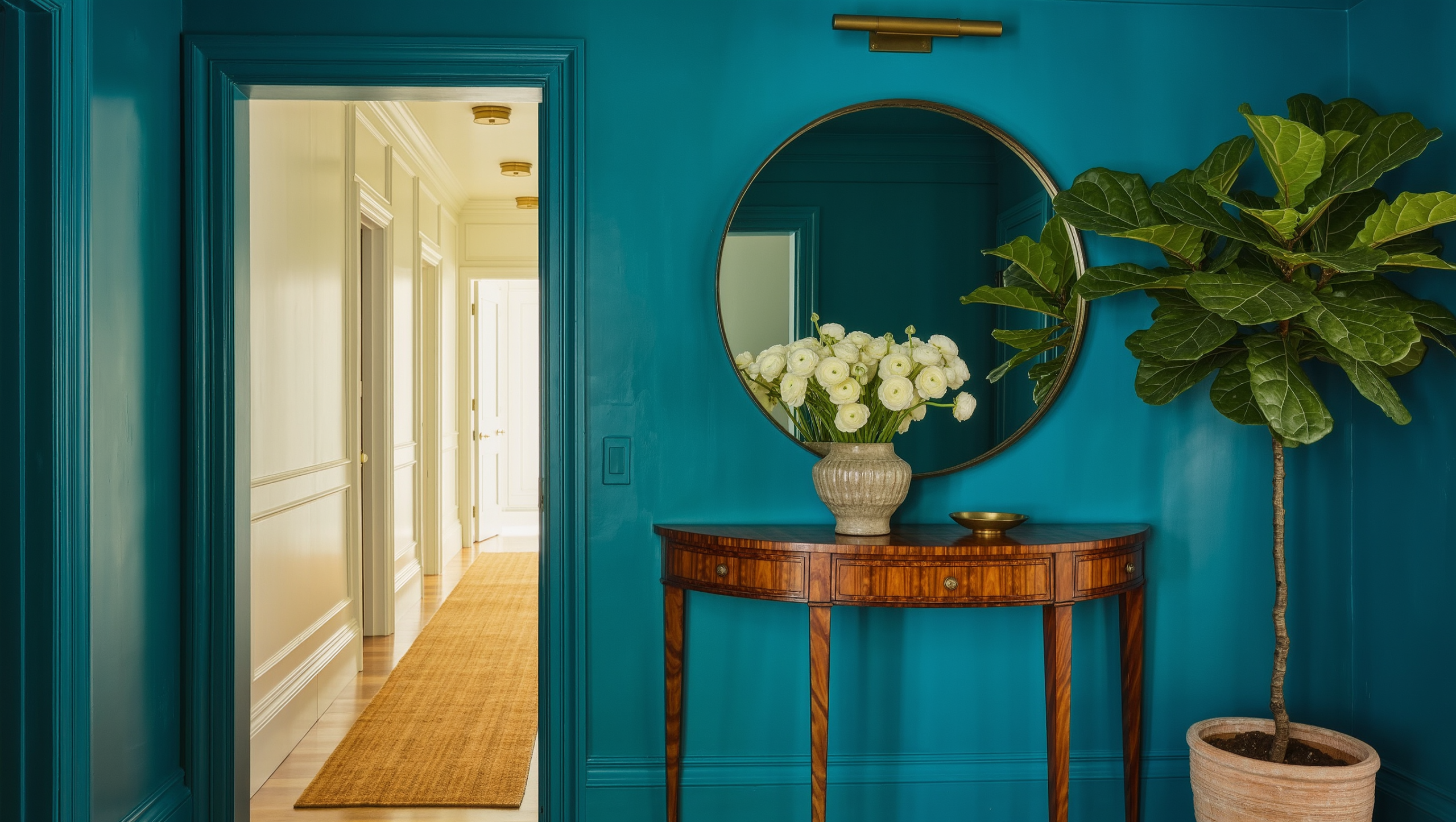
A dead-end hallway has one visual problem before it has any decorating problem: your eye travels down the corridor and receives no answer.
That is why a tiny table shoved against the end wall so often looks nervous. The furniture is trying to create importance without enough depth to function. The better move is to treat the far wall as the destination of the sightline.
Start from the approach
Stand where the hallway begins. What do you see first: a door, a sliver of wall, a window, a thermostat, a return grille, or a blank rectangle? The end treatment should be composed for the approach and the close view.
Use depth only if the corridor can spare it
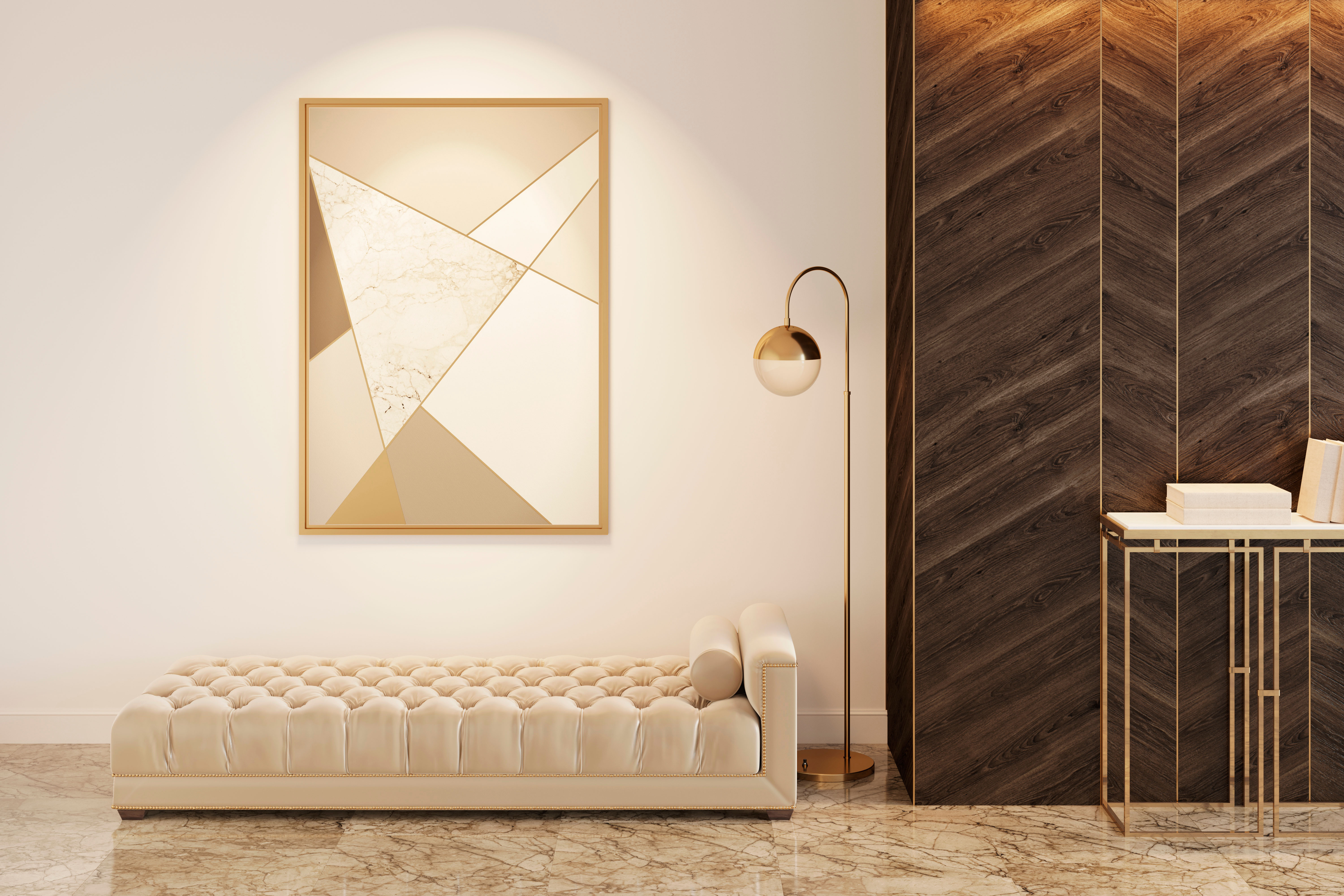
A narrow hall rarely needs furniture at the end. Art, a mirror, a painted shape, wallpaper, or a wall-mounted light can create a terminus without stealing walking room. If the hall is generous, a shallow console or bench may work, but test the remaining clearance with doors open and people passing.
The end of the hall is not successful if everyone turns sideways around the decor.
Make one element large enough to matter
A single substantial artwork often works better than a cluster of tiny frames. A mirror can return light and visually lengthen the route, but place it where it reflects something worth repeating. A sculptural sconce can give the wall presence without occupying the floor.
Small objects on a small shelf usually produce the opposite effect: the hallway starts to look like it collected leftovers from other rooms.
Borrow light when you can
If the end wall contains or can safely accept glazing, a transom, interior window, or partially glazed door, borrowed light can change the corridor more than decoration will. Reeded or frosted glass keeps the privacy on one side and still lets the hall borrow daylight from the room beyond it. Darkness makes a dead end feel more final.
Use color to change the perceived distance
A stronger color at the end wall can visually shorten a long corridor and give the eye somewhere to land. Continuing the hallway color everywhere can create a calm tunnel; changing the end wall creates punctuation. Neither is universally better, but the timid version of either is worse than both. An end wall painted one shade darker than the rest of the hall does not read as a decision. It reads as a second can of paint. If the corridor feels too long, commit at the far end: oxblood, bottle green, an inky blue deep enough to swallow the thermostat. If it is short and already chopped up by doors, one color carried all the way through will do more for it than any punctuation.
Do not create a drop zone where none belongs
Hallway ends attract baskets, mail, chargers, keys, and decorative bowls because a surface exists. Before adding storage, ask what task actually occurs there. If nobody puts on shoes, sorts papers, or leaves the house from that point, a console with drawers may be inviting clutter to commute farther into the home.
If the end is a door, frame the door
A door at the end of a hall can become the focal point through paint, trim, hardware, or a strong overhead fixture nearby. Resist surrounding it with so many objects that the route becomes visually busy. The door already has a job. Make its presence feel deliberate.
The final test is movement
Walk the corridor at night. Carry a laundry basket. Open every nearby door. Notice glare in a mirror and shadows around the end wall. A hallway is a moving room; the design has to survive motion.
Make the route feel like it was always headed somewhere. An occupied-looking dead end is still a dead end.
Room Case · the receipts
Job → Friction → Constraint → Hypothesis → Test → Result → What changed.
Seven fields stay fixed here because this is one place where consistency helps. If the ending is missing, it stays missing until the room has lived long enough to answer.
-
01
Job
Give the long sightline an intentional answer without narrowing the walking route.
-
02
Friction
A nervous little table at the end creates clutter without giving the corridor a reason to end there.
-
03
Constraint
Walking width, door swings, and limited borrowed light must remain clear.
-
04
Hypothesis
Composing for the view from the beginning of the hall will work better than decorating the end wall at close range.
-
05
Test
Compose the end treatment from the hallway entrance, then walk the route at night while carrying a laundry basket.
-
06
Result
Still waiting on Recheck. The room has not lived with the change long enough for us to call it a result.
-
07
What changed
Not yet. We are keeping this open until Recheck gives us a reason to keep, change, or reverse the decision.
Same problem, elsewhere in the house
Room notes
Keep the room on the record.
One useful note at a time: what to test, what to ignore, and what changed when the room got another vote.