Awkward Spaces
Above the Door Is Real Storage, but It Has to Look Intentional
Over-door storage can recover useful vertical space in small rooms, but only when it aligns with the architecture and holds the right things. Use it for light, infrequent items—not daily clutter at ceiling height.
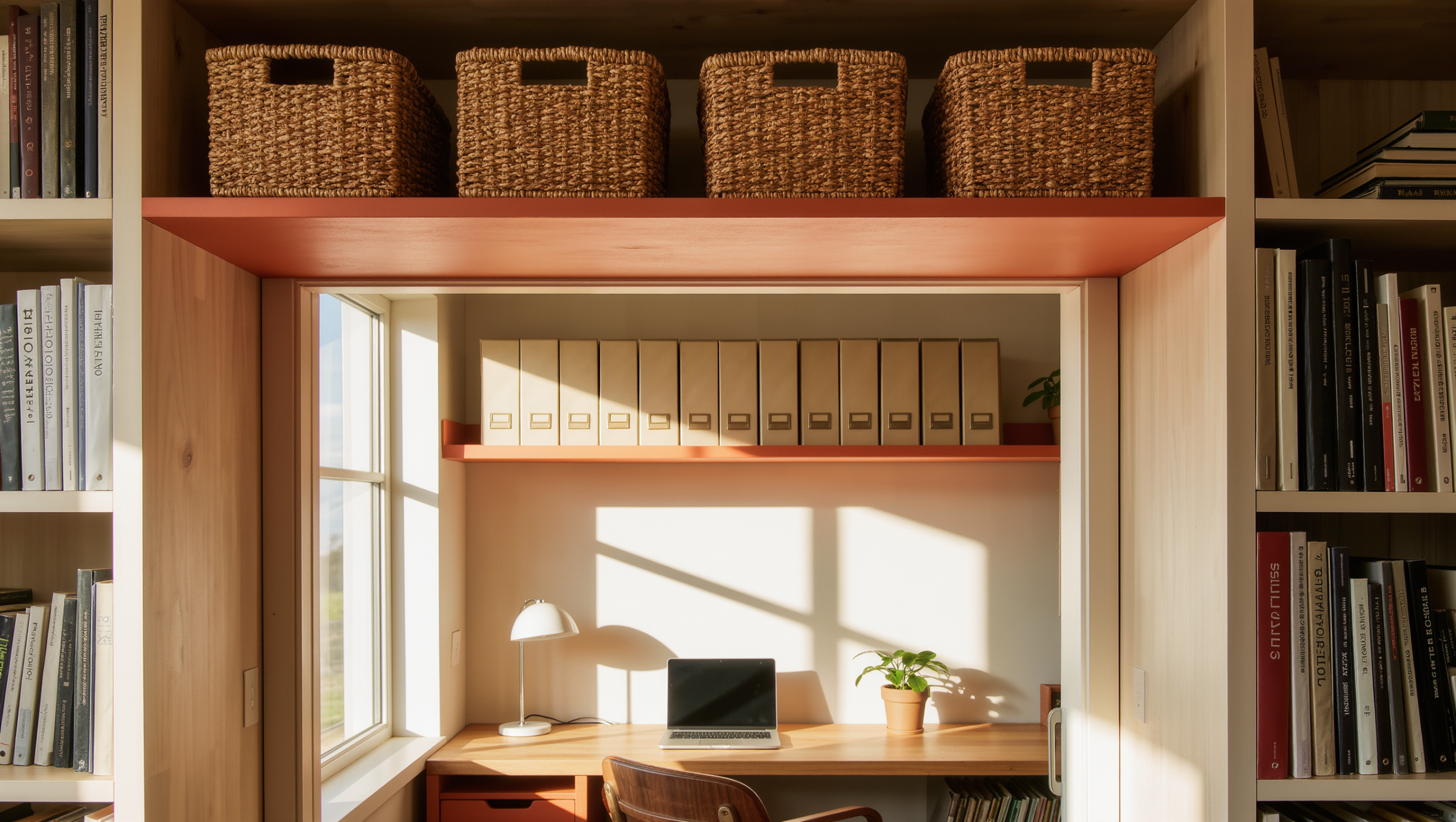
The wall above a door is one of those spaces that becomes visible the moment storage gets tight. Suddenly every lintel looks like an undeveloped parcel.
It can be useful. It can also make a room look as though the cabinets continued upward after everyone stopped supervising the project.
Use over-door storage for the right frequency
High storage is best for things used occasionally: extra linens, archive boxes, luggage accessories, seasonal decor, spare paper goods, or display objects. Daily-use items should not require a step stool and a small act of faith.
If you reach for the contents weekly, they are in the wrong place, and no shelf bracket will fix that. The same frequency logic applies to knee walls, eaves, and closet ceilings.
Tie the shelf or cabinet to an architectural line

A shelf that aligns with the door trim, extends to the adjacent wall, or becomes part of a full-height built-in reads more deliberately than a short board hovering over the frame. The eye is already aware of the opening. Let the storage reinforce that geometry.
Watch visual weight
Closed cabinets above a door can feel top-heavy in a low room. Open shelving feels lighter but exposes the contents. A shallow ledge with a few large objects may add character without creating a second attic at eye level.
Choose for what the room needs visually. Physical fit is merely the admission ticket.
Do not create falling-object theater
Store lightweight, stable items. Use proper anchoring for shelving and cabinetry, and avoid precarious stacks above a path people walk through constantly. This is not the place for a loose tower of cast-iron cookware, heavy planters, or anything that requires risky reaching.
The test is simple and slightly morbid. Stand in the doorway, look up, and ask what lands on you if the bracket gives. A basket of spare napkins is a comedy. A stack of stoneware is an insurance claim. Store accordingly.
Consider wrapping the doorway
In a library, office, or bedroom, shelving that runs above and down one or both sides of a door can transform the opening into part of a storage wall. The move works best when proportions are generous enough that the doorway still feels clear rather than squeezed.
A narrow room with a low ceiling may need the opposite: no added mass above the door at all.
Use color to decide whether it disappears or performs
Paint closed cabinets the wall color to make them recede. Use wood or a contrasting finish when the storage is meant to read as furniture. Open shelving can match trim for an architectural effect or match walls for a quieter one.
The mistake is accidental contrast: a shelf in one finish, visible bins in five others, and a door frame trying to hold the composition together.
Think about dust before open storage
High shelves are inconvenient to clean. That matters. If the room is prone to dust, grease, humidity, or pet hair, closed storage may be the more realistic solution. Maintenance is part of the design even when nobody photographs it.
The ceiling does not need to become a warehouse
Use over-door space where it solves a specific shortage and reinforces the room’s architecture. Leave it empty where extra storage would make the ceiling feel lower or the room feel crowded.
A doorway with nothing above it is still a perfectly good doorway. A doorway with a sagging shelf of unlabeled archive boxes above it is a warning that everyone walks under twice a day. If the room is short on storage, build the shelf properly and make it look like it was always meant to be there. If it is short on calm, leave the lintel bare.
Same problem, elsewhere in the house
Room notes
Keep the room on the record.
One useful note at a time: what to test, what to ignore, and what changed when the room got another vote.